
10 Shade Garden Bed Design Tips (Using Real Garden Examples)
These shade garden bed design tips show how to combine trees, shrubs, perennials and ground covers to create beautiful plantings with season-long appeal. Browse these real-life gardens to discover simple ways to add color, texture and layers that will make your own shade beds look lush and inviting.
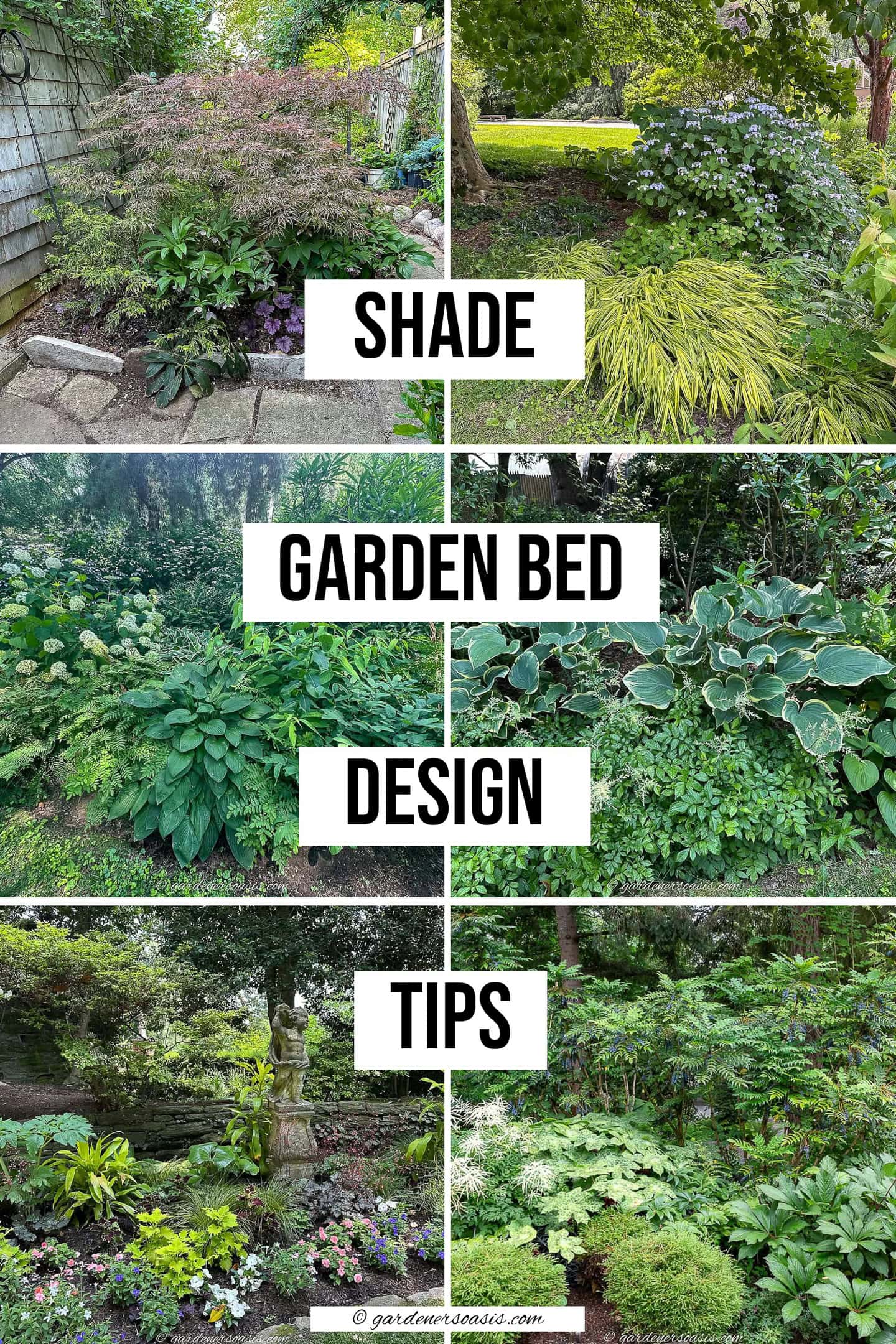
Creating a beautiful shade garden bed is about much more than choosing plants that tolerate low light.
By combining plants with different heights, leaf shapes, textures and colors, you can create a lush planting that looks attractive throughout the growing season, even when very few flowers are in bloom.
These shade garden bed ideas feature real gardens and design tips for doing that effectively.
So, whether you’re starting a new bed or refreshing an existing one, you’ll find plenty of inspiration you can use to create a shade garden that’s full of color, texture and year-round interest.
Looking for more shade garden ideas? You'll love Ground Cover Plants For Shade and Shade Loving Shrubs.
1 | Plant trees, shrubs and perennials
![A small, neatly maintained garden bed with a Japanese maple tree, various green plants, and stone edging, next to a wooden fence and paved walkway.]()
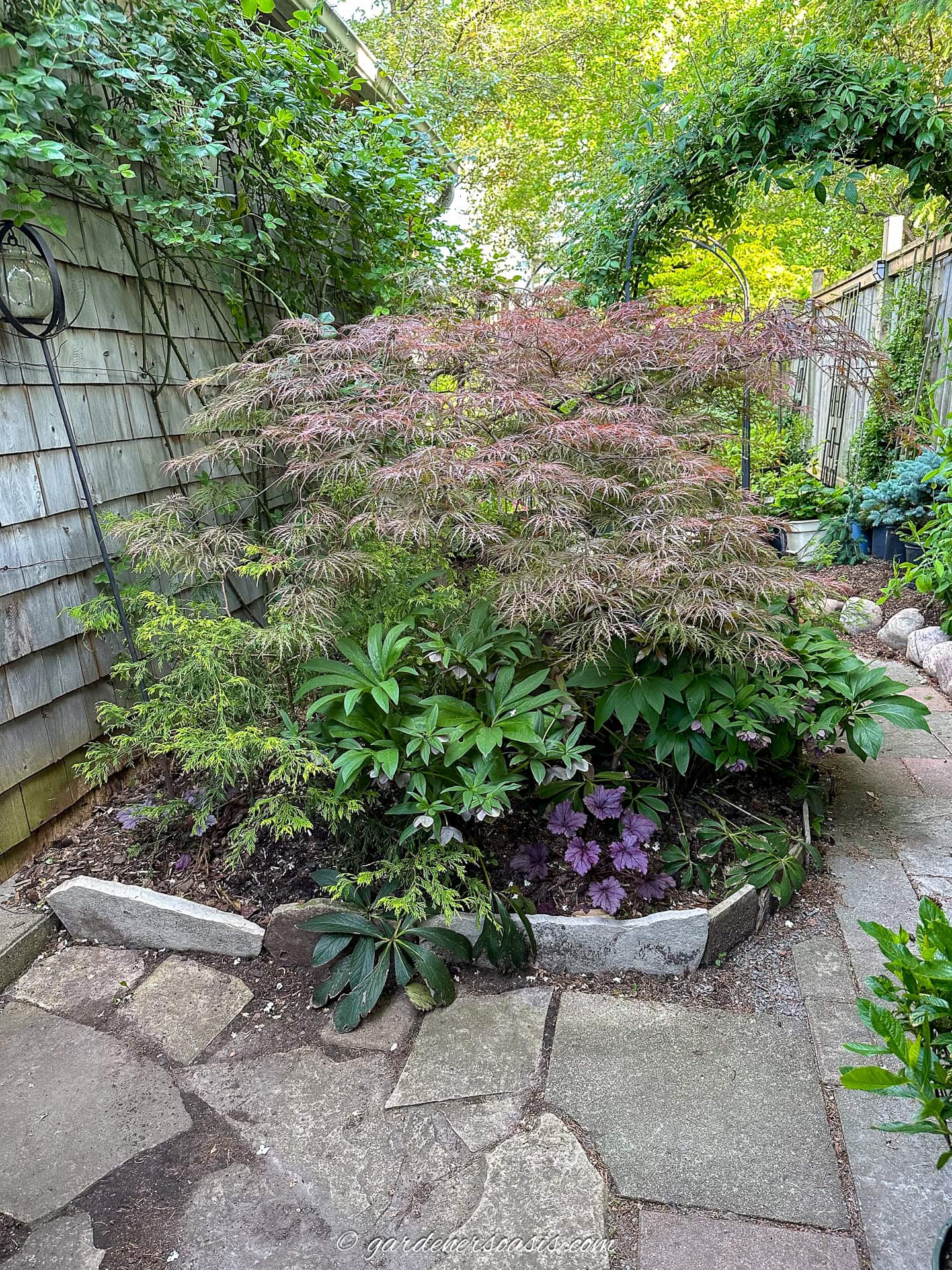
One of the easiest ways to make a shade garden look full and established is to layer plants by height.
Start with a small tree or large shrub to create the tallest layer, then add medium-sized shrubs and flowering perennials underneath.
Finish with lower-growing plants along the front edge to soften the border and hide bare stems.
This layered approach creates depth and gives your eye something interesting to look at from top to bottom.
The gently curved edging also helps the planting feel natural rather than rigid, making the entire bed appear larger and more inviting.
Layer plants by height, with trees in back, shrubs in the middle, and lower perennials along the front edge.
2 | Brighten shade with gold foliage
![A shaded garden area with leafy green trees, ornamental grasses in the foreground, and a flowering shrub with pale purple blooms in the background.]()
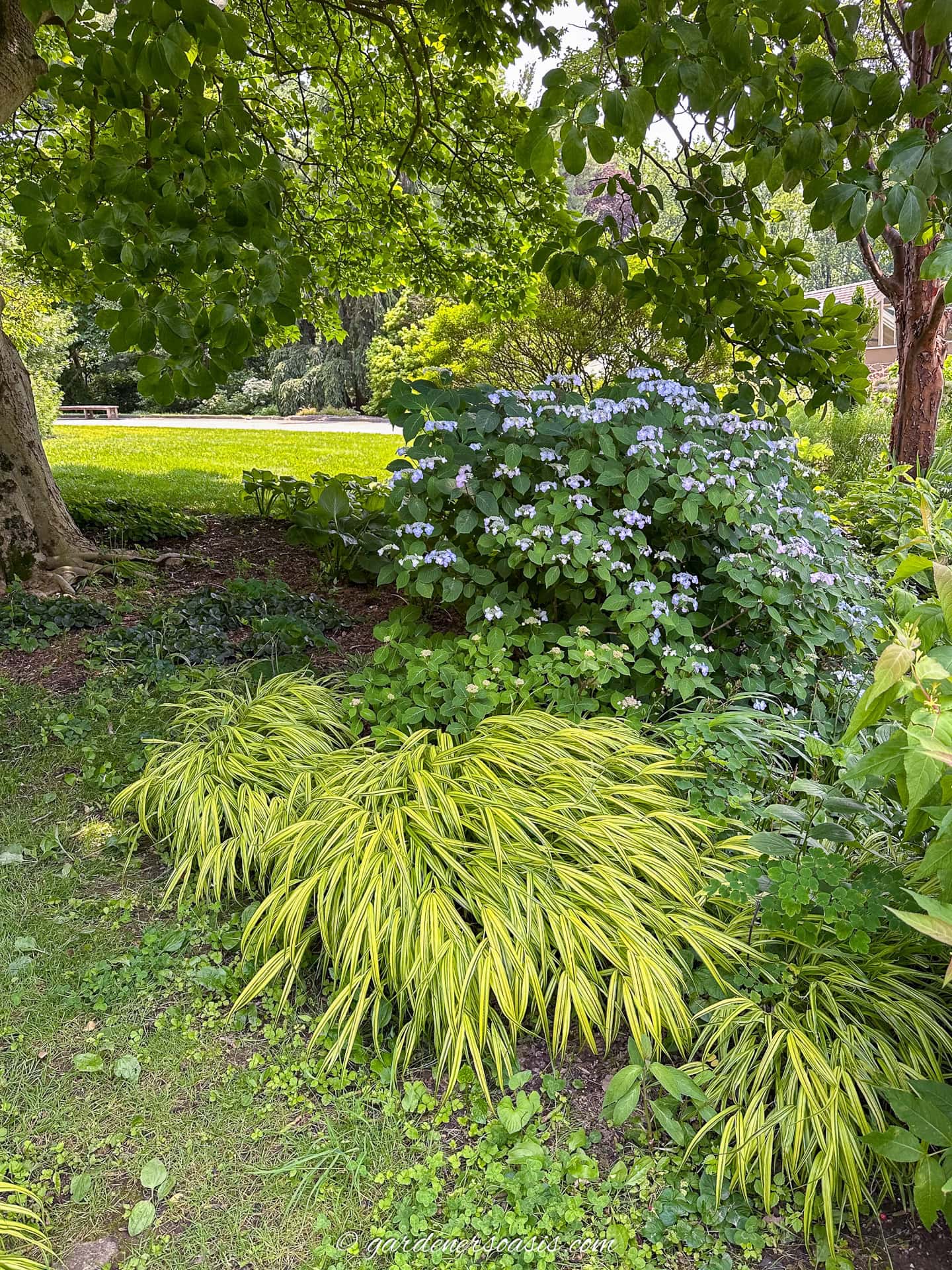
Photograph taken at Meadowbrook Farm, PA Shade gardens can sometimes feel dark, especially beneath mature trees.
One of my favorite ways to brighten these areas is by using plants with golden or chartreuse foliage.
They almost seem to glow in the shade and naturally draw your eye through the garden.
Here, the bright Japanese forest grass becomes the focal point long before the hydrangea begins flowering.
Notice how the gold foliage is surrounded by darker greens.
The contrast makes both colors stand out even more, while the soft blue Hydrangea flowers add just enough color and contrast without competing for attention.
Gold and chartreuse foliage can brighten even the darkest corners of a shade garden. Use these plants as focal points or repeat them throughout the bed to guide the eye from one area to another.
3 | Mix bold and fine textures
![Dense garden bed with green leafy plants, ferns, and clusters of white hydrangea blooms surrounded by tall shrubs and trees in an outdoor setting.]()
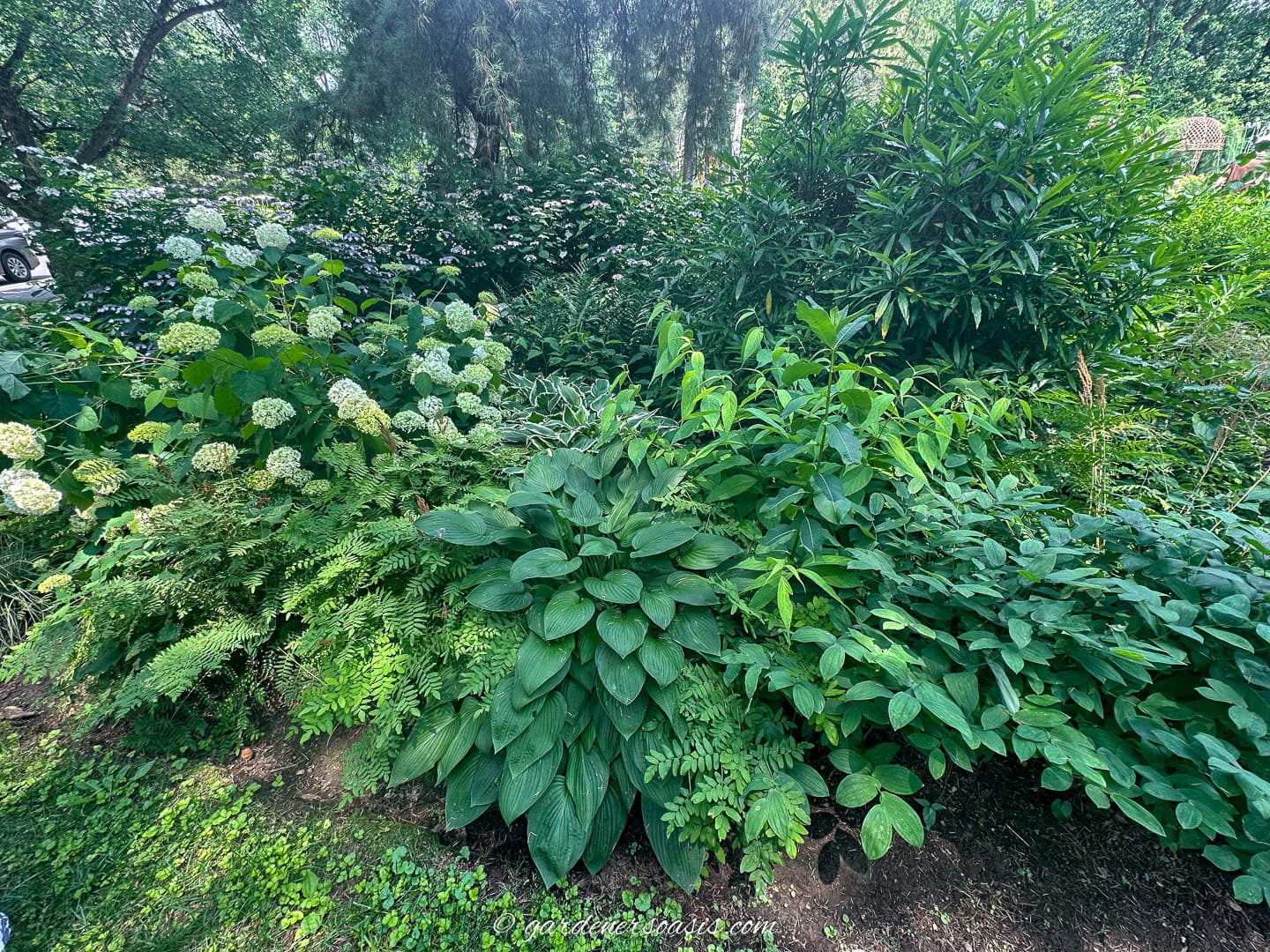
Photograph taken at Meadowbrook Farm, PA Flowers may only bloom for a few weeks, but interesting foliage lasts all season.
That’s why combining plants with different leaf sizes and textures is one of the most important design principles for shade gardens.
Large hosta leaves, airy fern fronds, rounded hydrangea blooms and narrow pointed foliage each contribute something different to the overall composition.
The contrast between bold and delicate textures keeps the planting from feeling flat or monotonous.
Even though many of the plants share similar shades of green, the variety of leaf shapes creates enough interest that the bed never looks boring.
Pair bold foliage with delicate textures to create contrast throughout the garden. A variety of leaf shapes adds just as much interest as flowers and lasts much longer.
4 | Plant in drifts
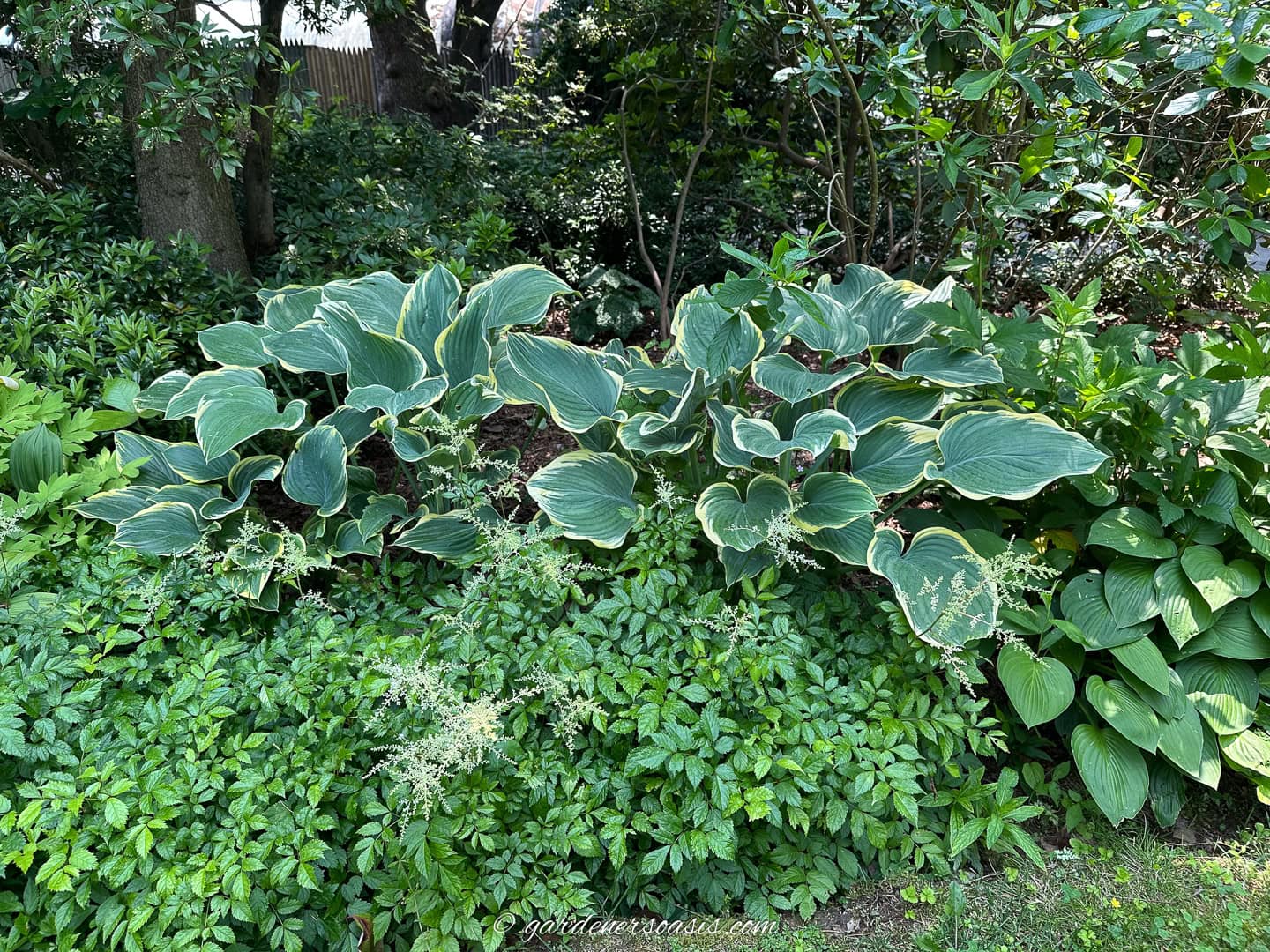
![A cluster of large green hosta plants with white-edged leaves grows in a shaded garden area surrounded by other green foliage.]()
Photograph taken at Meadowbrook Farm, PA It’s tempting to buy one of every plant you like, but planting groups of the same varieties allows the eye to move naturally across the planting.
Large drifts of hostas provide a calming foundation while allowing smaller plants to become accents.
And the astilbe in the front of this bed reinforces that sense of rhythm.
The result is a garden that feels serene instead of busy, even though it’s filled with lush foliage.
Large drifts of a few favorite plants look more cohesive and serene than many isolated specimens.
5 | Add a focal point
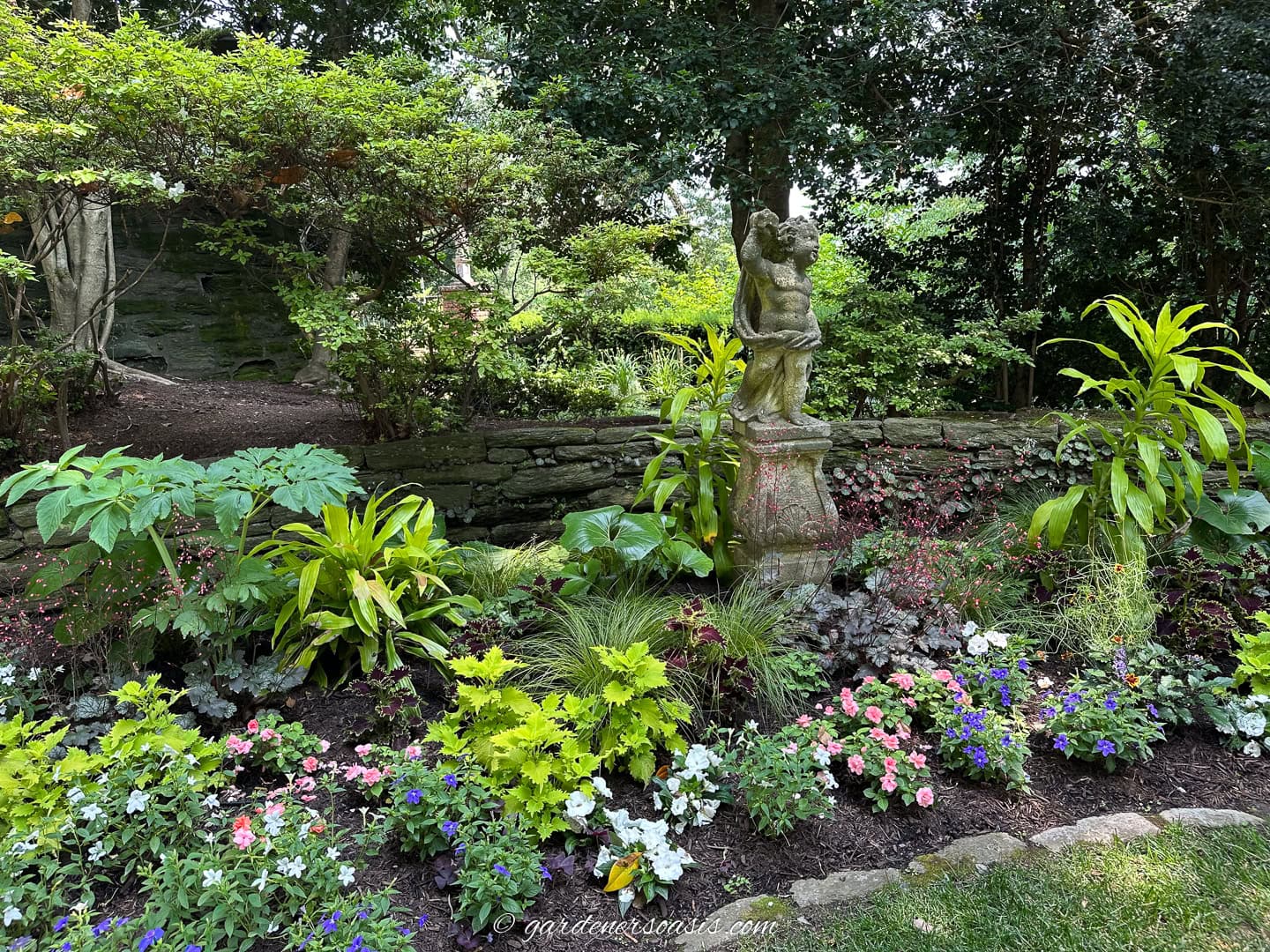
![A stone statue stands in a lush garden bed, surrounded by flowering plants and greenery, with a stone wall and trees in the background.]()
Photograph taken at Meadowbrook Farm, PA Every garden benefits from having something that immediately catches your attention.
While a specimen tree or flowering shrub can serve this purpose, a decorative element like a statue, birdbath or fountain provides year-round interest, even when plants aren’t at their peak.
Surrounding the focal point with plants of varying heights helps frame it without hiding it.
Here, colorful annuals brighten the front of the bed while foliage plants create texture around the base of the statue.
The stone wall behind the planting adds another layer of structure and helps anchor the entire design.
Give every garden a focal point that draws the eye. Decorative features work especially well in shade gardens because they provide interest throughout every season.
6 | Use shrubs as the backbone of the garden
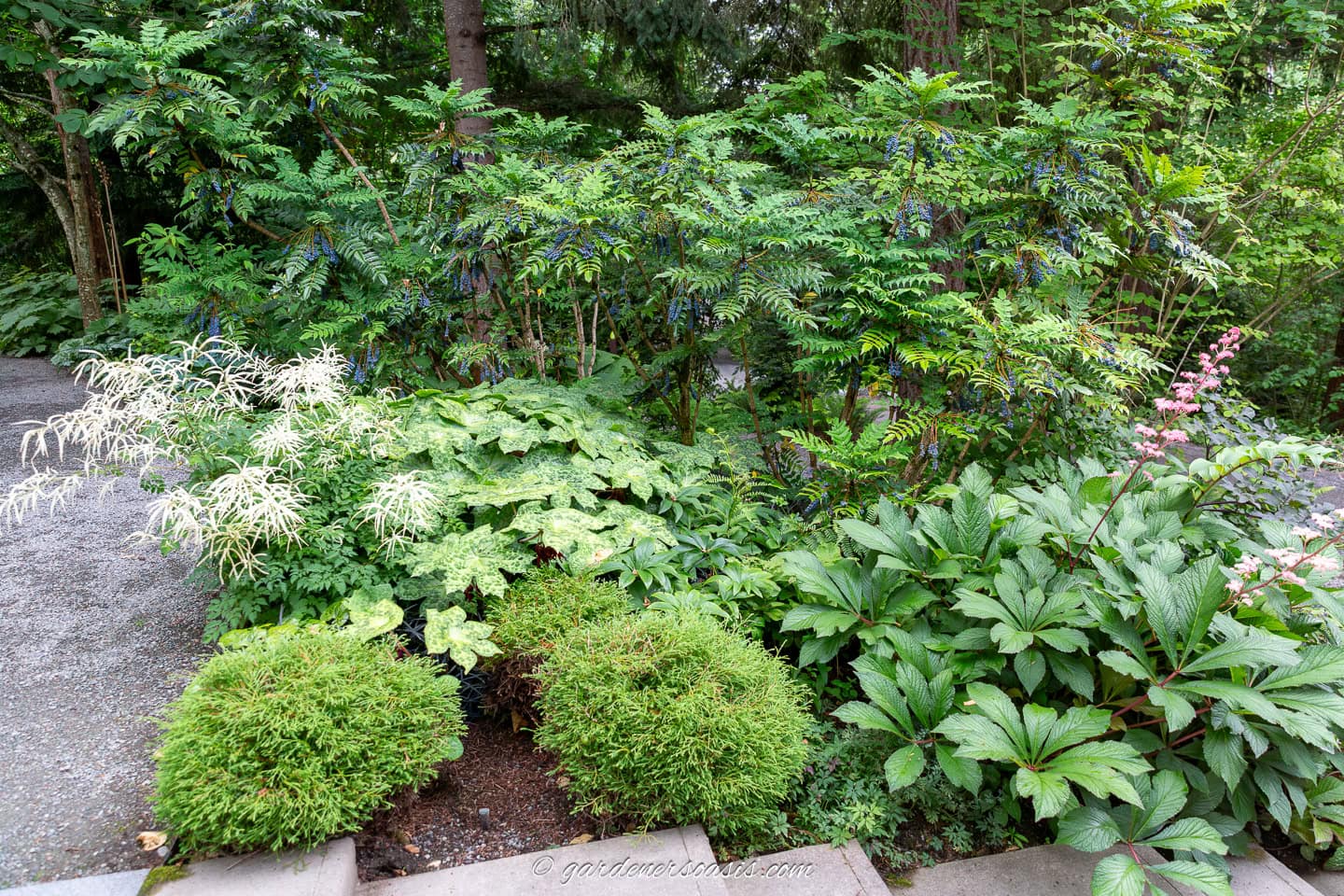
![A variety of green shrubs and plants, including some with white and pink flowers, grow beside a gravel path in a shaded garden area.]()
Photo taken at Bellevue Botannical Gardens, WA Shrubs provide the structure that holds a garden together.
While perennials come and go throughout the growing season, shrubs add height, shape and substance all year round.
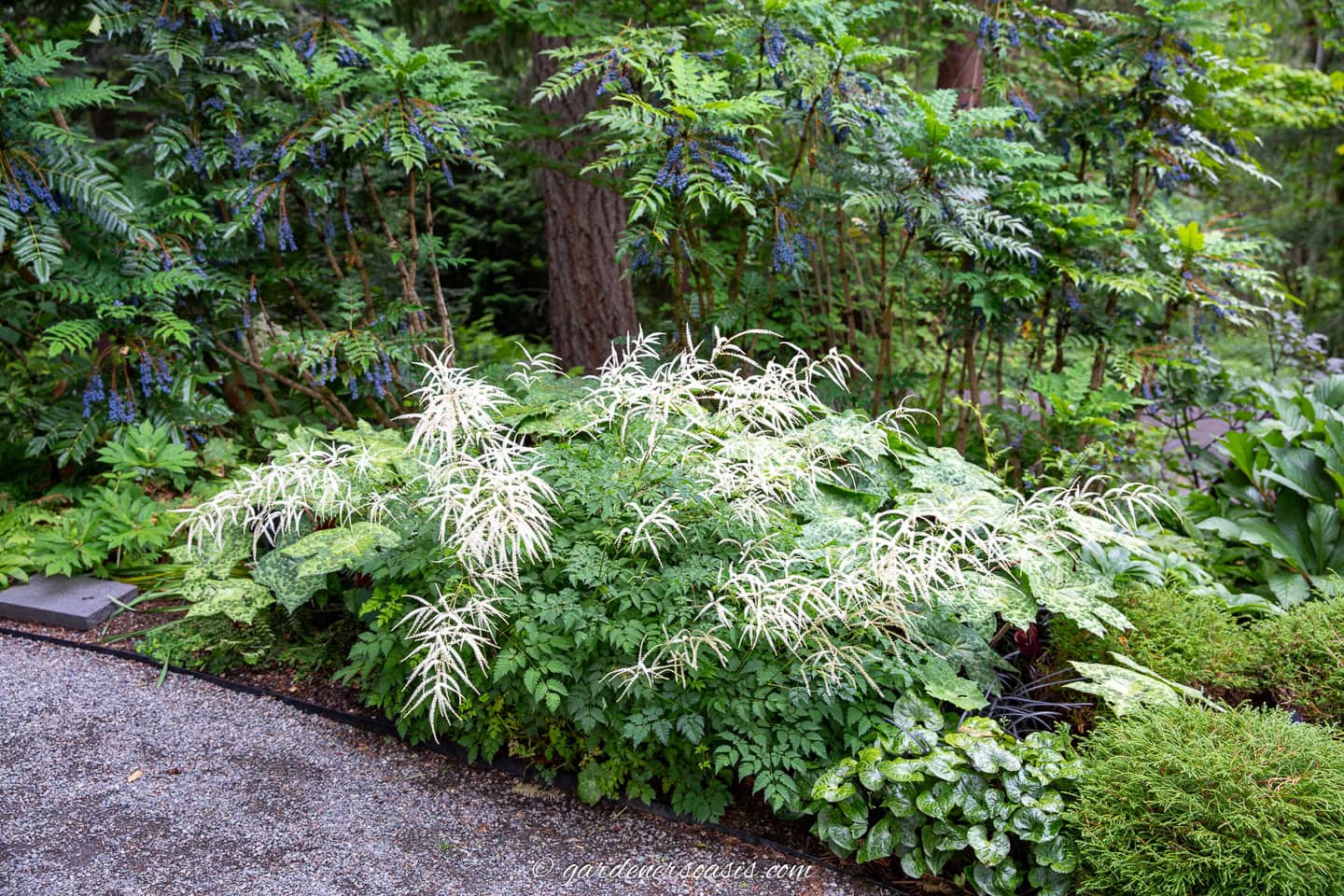
![White Goatsbeard, wild ginger and Fatsia growing under Mahonia in a shade garden bed]()
Photo taken at Bellevue Botanical Gardens, WA They also create a beautiful backdrop that allows flowering plants and interesting foliage to stand out (like the white Goatsbeard and blue Oregon Grape berries in this picture).
Mixing evergreen and deciduous shrubs extends the season of interest even further.
Evergreen foliage keeps the bed attractive during winter, while deciduous shrubs contribute flowers, colorful stems and attractive fall foliage.
Build your garden around shrubs first, then use perennials to fill the spaces between them. A strong framework makes the entire garden look more established.
7 | Soften edges with cascading plants
![A shaded garden bed with lush green ferns, hostas, and flowering shrubs next to a gravel path.]()
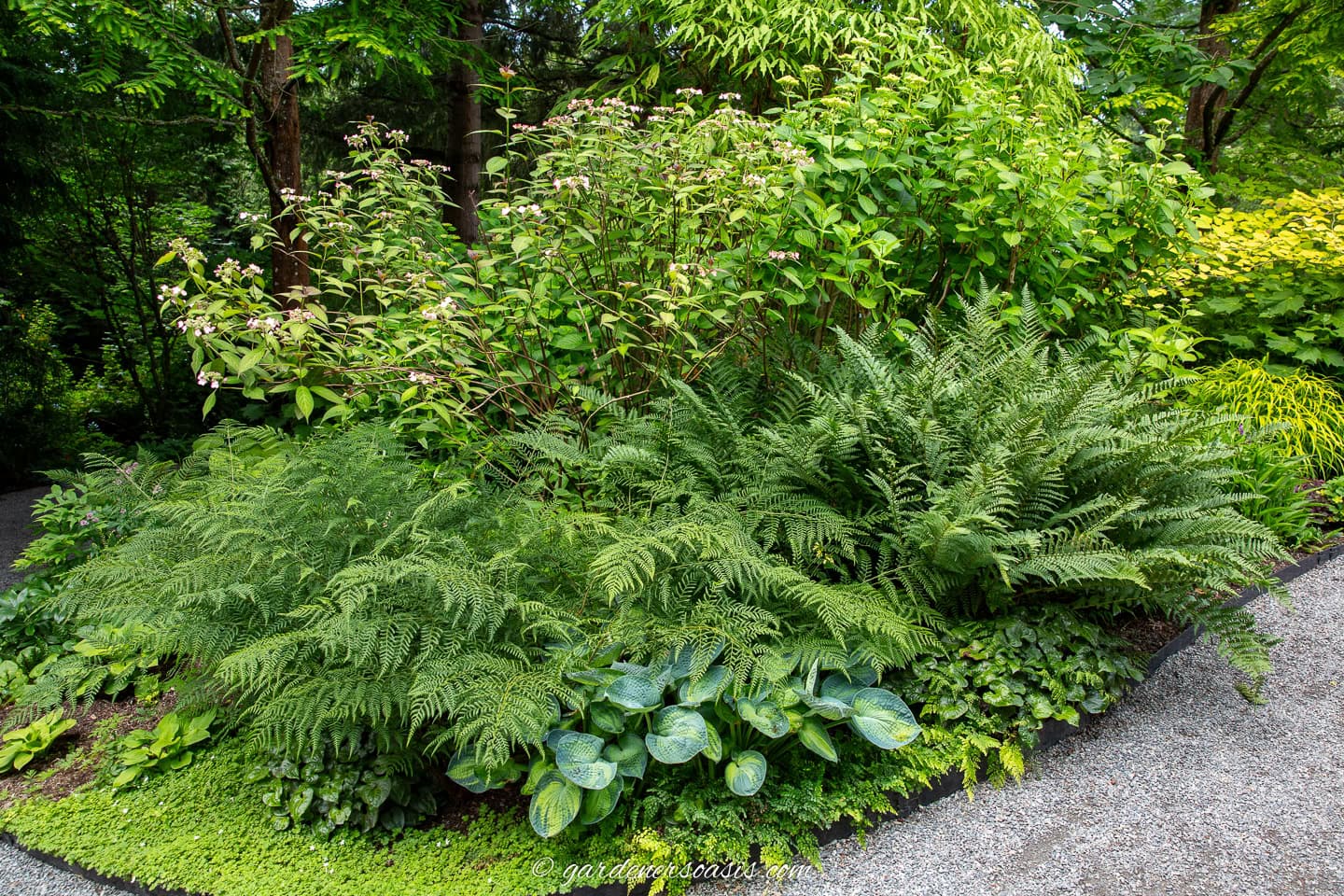
Photo taken at Bellevue Botannical Gardens, WA Plants with graceful, arching growth soften the lines of a garden bed and create a more relaxed appearance.
Ferns are especially effective because their finely divided foliage naturally spills over the edge of the bed and blends the planting into nearby paths or lawns.
Repeating broad-leaved hostas underneath the ferns creates another layer of texture while reinforcing the sweeping curves.
Instead of ending abruptly at the border, the planting appears to flow outward, making the entire bed feel larger and more natural.
Use arching or cascading plants to soften paths, borders and edging. Flowing foliage helps blend the garden into the surrounding landscape.
8 | Create contrast with leaf color
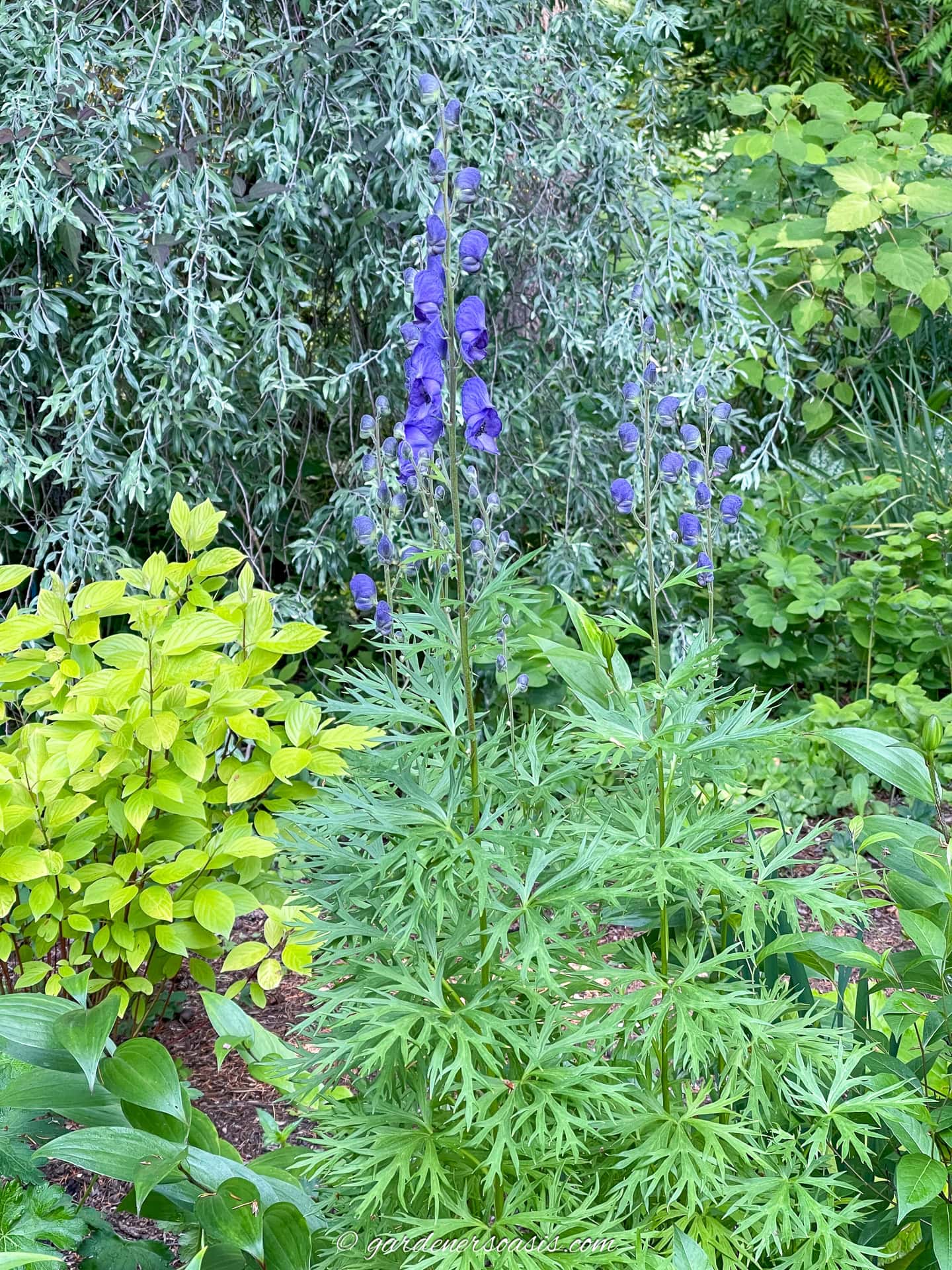
![Tall green plant with narrow, deeply lobed leaves and spikes of purple-blue flowers growing in a garden surrounded by other leafy plants and shrubs.]()
Photo taken at Herronswood, WA Flowers aren’t the only source of color in a shade garden.
Mixing plants with green, burgundy, blue, silver and variegated foliage creates a colorful landscape that lasts from spring until frost.
Variegated leaves are especially useful because they brighten shady areas while providing contrast against darker foliage.
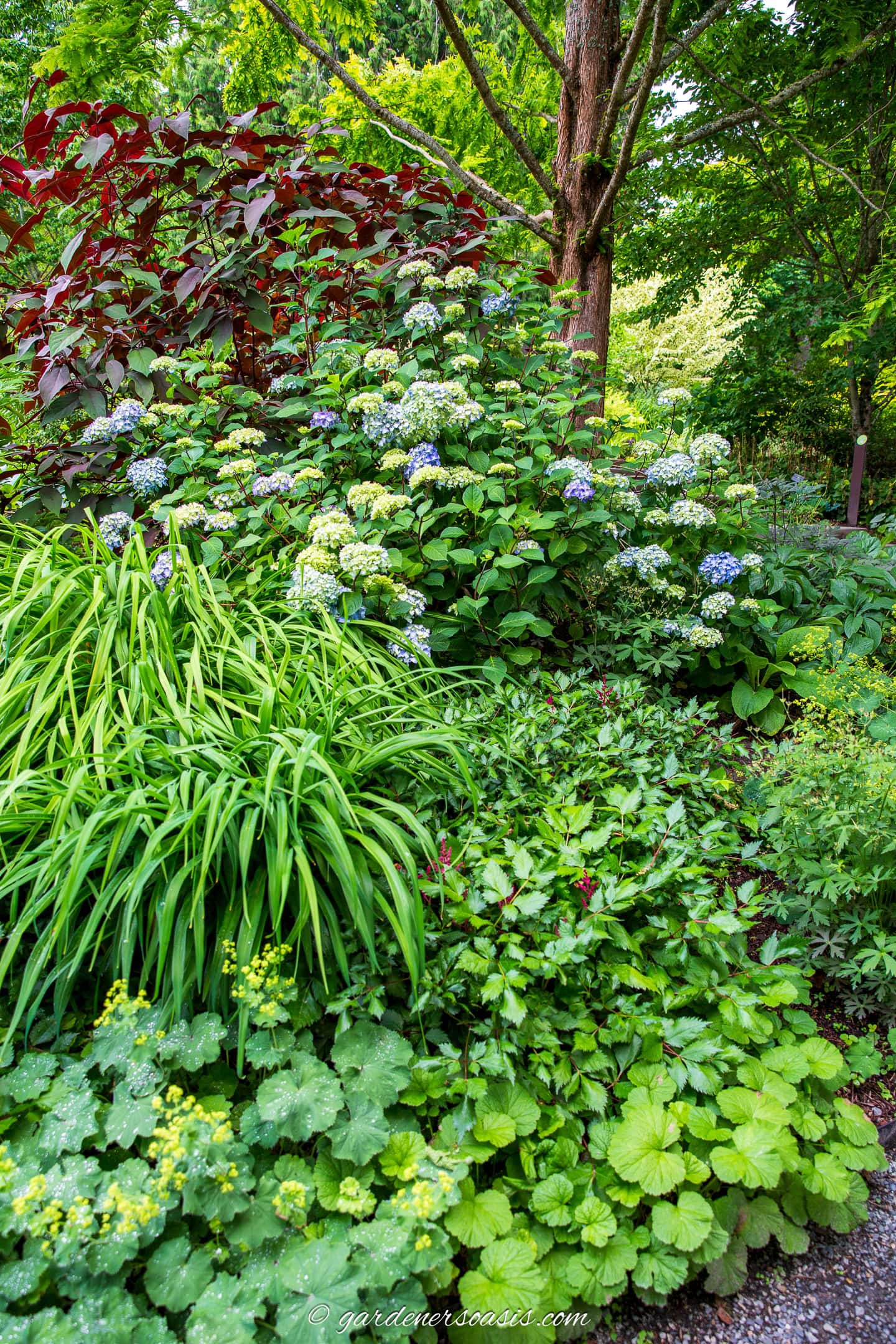
![Shade garden bed with different colored leaves and flowers.]()
Photo taken at Bellevue Botanical Gardens, WA By focusing on foliage color first and flowers second, the garden remains interesting throughout the growing season instead of peaking for only a few weeks.
Build your color palette with foliage as well as flowers. Variegated, blue and burgundy leaves provide long-lasting color in shady gardens.
9 | Design with repeating plants
![A curved garden border with mixed green foliage plants and ornamental grasses, beside a neatly maintained lawn, surrounded by trees and shrubs.]()
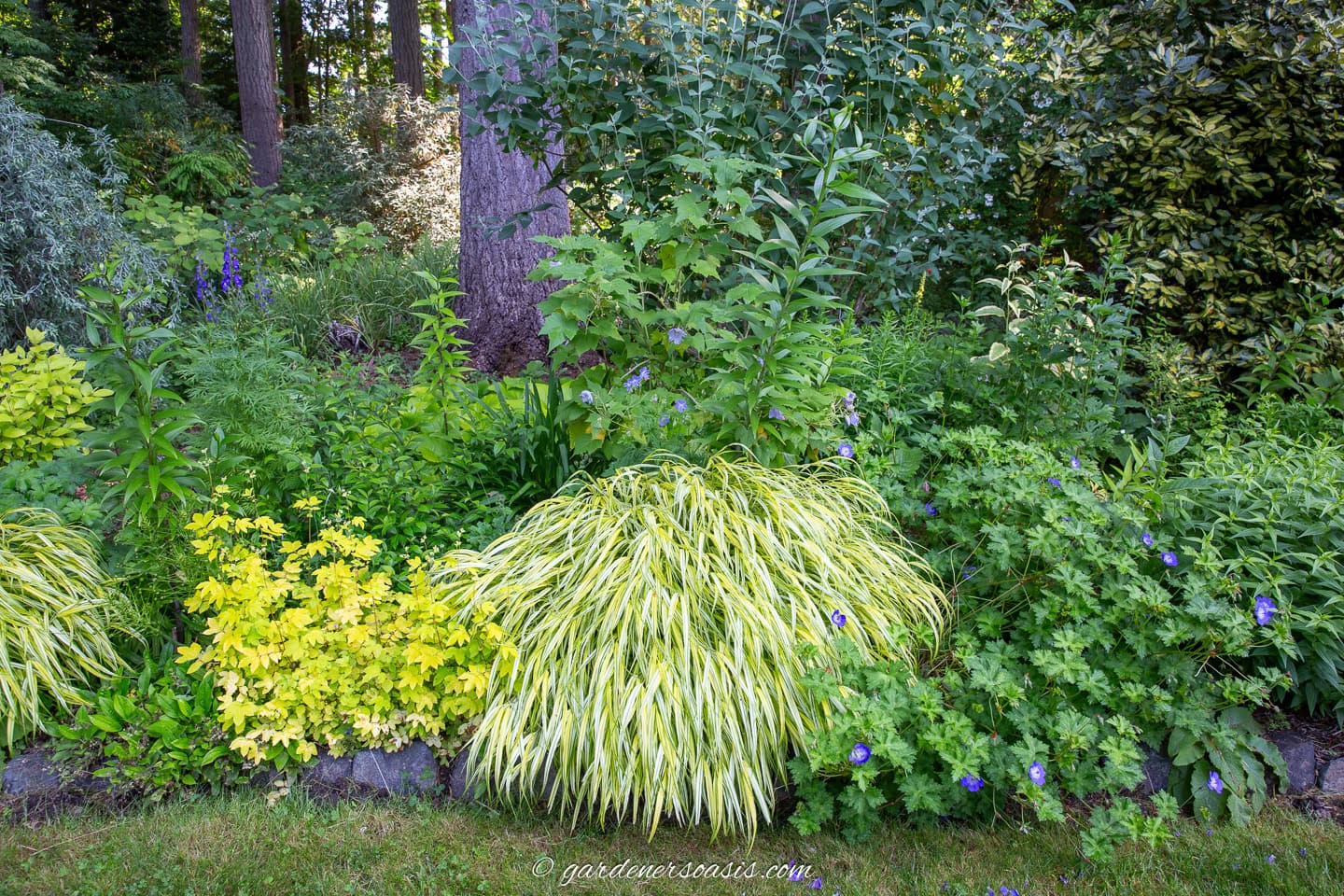
Photo taken at Herronswood, WA Repeating groups of the same plant throughout a long border helps unify the design.
Instead of placing one specimen here and another there, repetition creates a rhythm that naturally guides your eye across the garden.
The repeated mounds of Hakone grass act like visual anchors, tying the entire planting together.
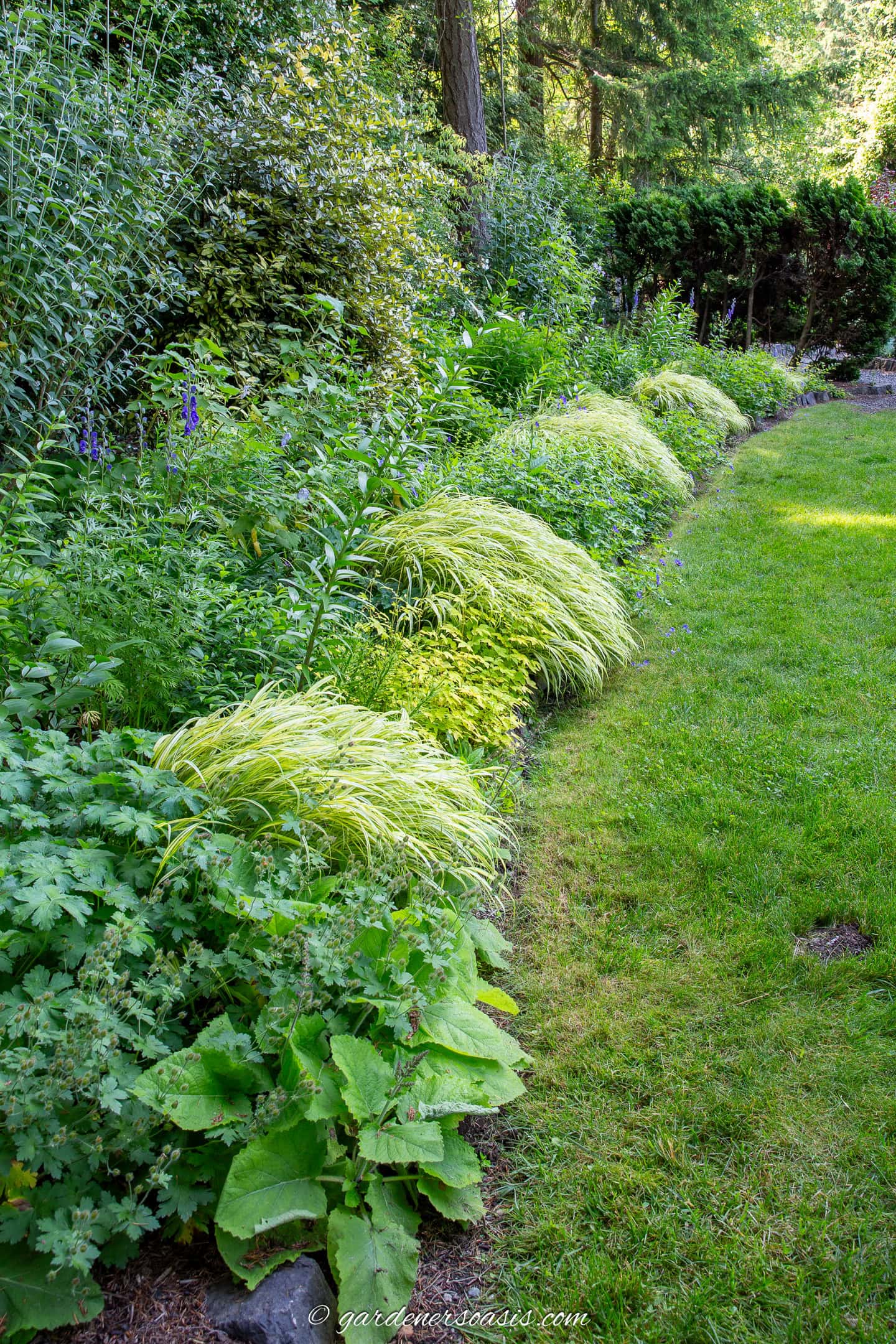
![A shady garden bed with variegated Japanese Forest grass, perennial geraniums and other plants with yellow, green and blue foliage]()
Photo taken at Herronswood, WA The spaces between these repeated plants are filled with other small shrubs and flowering perennials which add variety without making the border feel cluttered.
This balance between repetition and contrast is one of the simplest ways to make a garden look professionally designed.
Repeat the same plants throughout a border to create rhythm and unity.
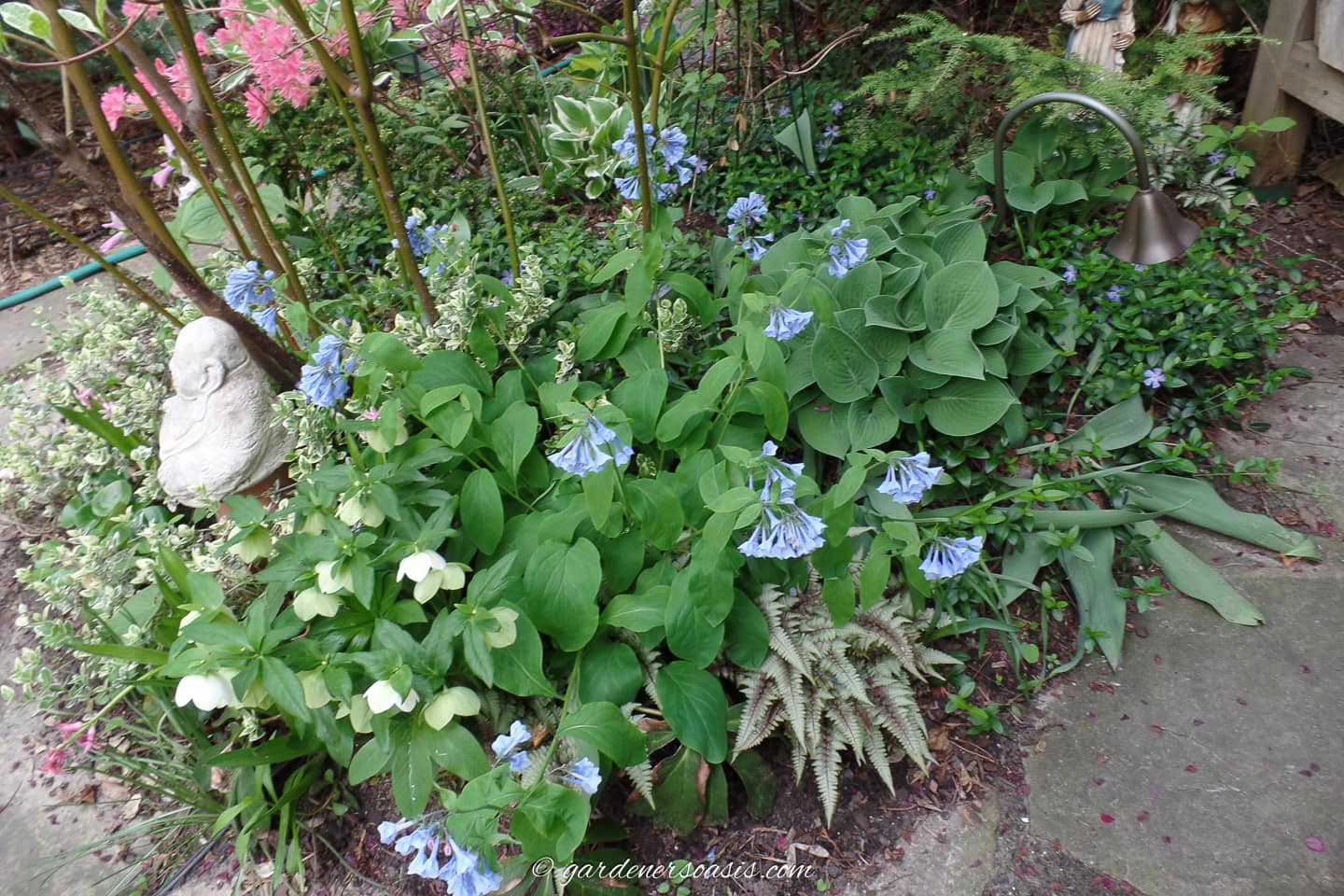
10 | Fill small spaces with layered planting
![A garden bed with green foliage, blue and white flowers, a small garden statue, and a metal light fixture beside a stone pathway.]()
You don’t need a large yard to create a beautiful shade garden.
Even a small planting area can feel lush when several layers of plants are combined in a limited space.
Taller shrubs create the backdrop, medium-sized perennials fill the middle, and low-growing ground covers weave everything together.
Because each plant occupies a slightly different height and spreads into the spaces around its neighbors, very little bare soil is visible.
This makes the garden look mature while also helping to suppress weeds and retain moisture.
The combination of flowers, foliage and ground covers ensures there’s always something interesting to enjoy.
Small shade gardens feel fuller when plants are layered closely together. Combining several heights and leaf textures creates the look of a mature garden, even in a compact space.
Have comments or questions about our shade garden bed design tips? Tell us in the section below.