
17 Low-Maintenance Edging Plants For Your Garden
Edging plants can transform the look of your garden by creating clean, defined borders that are both attractive and practical. This list of easy-to-maintain perennials offers options for every spot. Whether you need something evergreen, flowering, deer-resistant, or suited for shade or sun, these border plants will make your garden look beautiful without a lot of work.
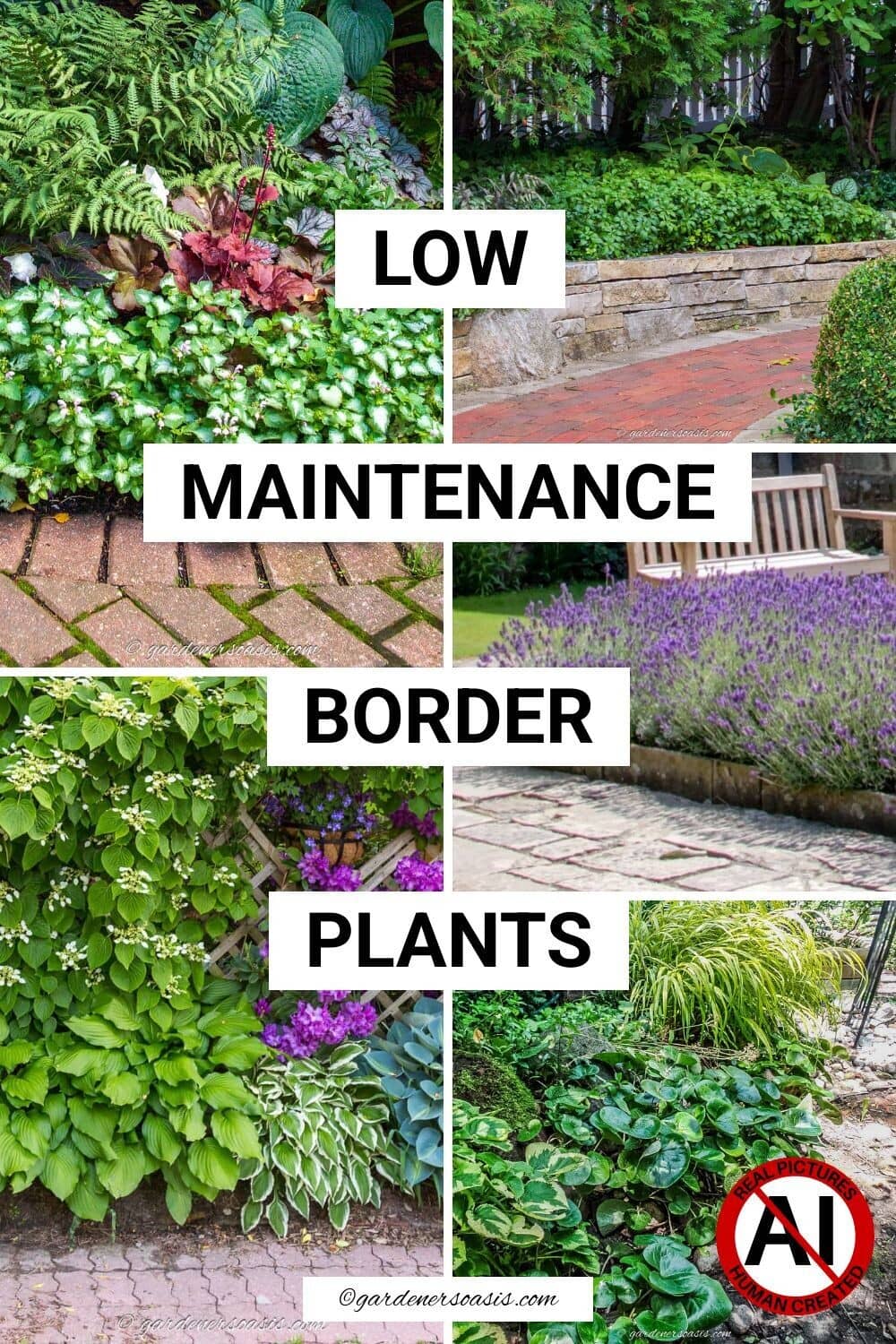
Edging plants are one of my favorite ways to make a garden look finished without a huge investment of time or money.
The right border plants soften the line between your flower beds and the lawn. And help define sidewalks, pathways, and even driveways so everything feels more pulled together.
Since they’re all low growing perennials, they won’t block the plants behind them or need to be replanted every season, which makes them a practical choice for the front of the flowerbed.
Most of the time, they aren’t the stars of the show, but they’re what make the transition from your flower beds to grass, gravel, or hard surfaces feel smooth and intentional.
I’ve gathered a few low maintenance favorites that are friendly to different climates and styles, so you can find the perfect match for your garden.
Looking for more edging ideas? You'll love Garden Edging Ideas.
Looking for more edging ideas? You'll love Garden Edging Ideas.
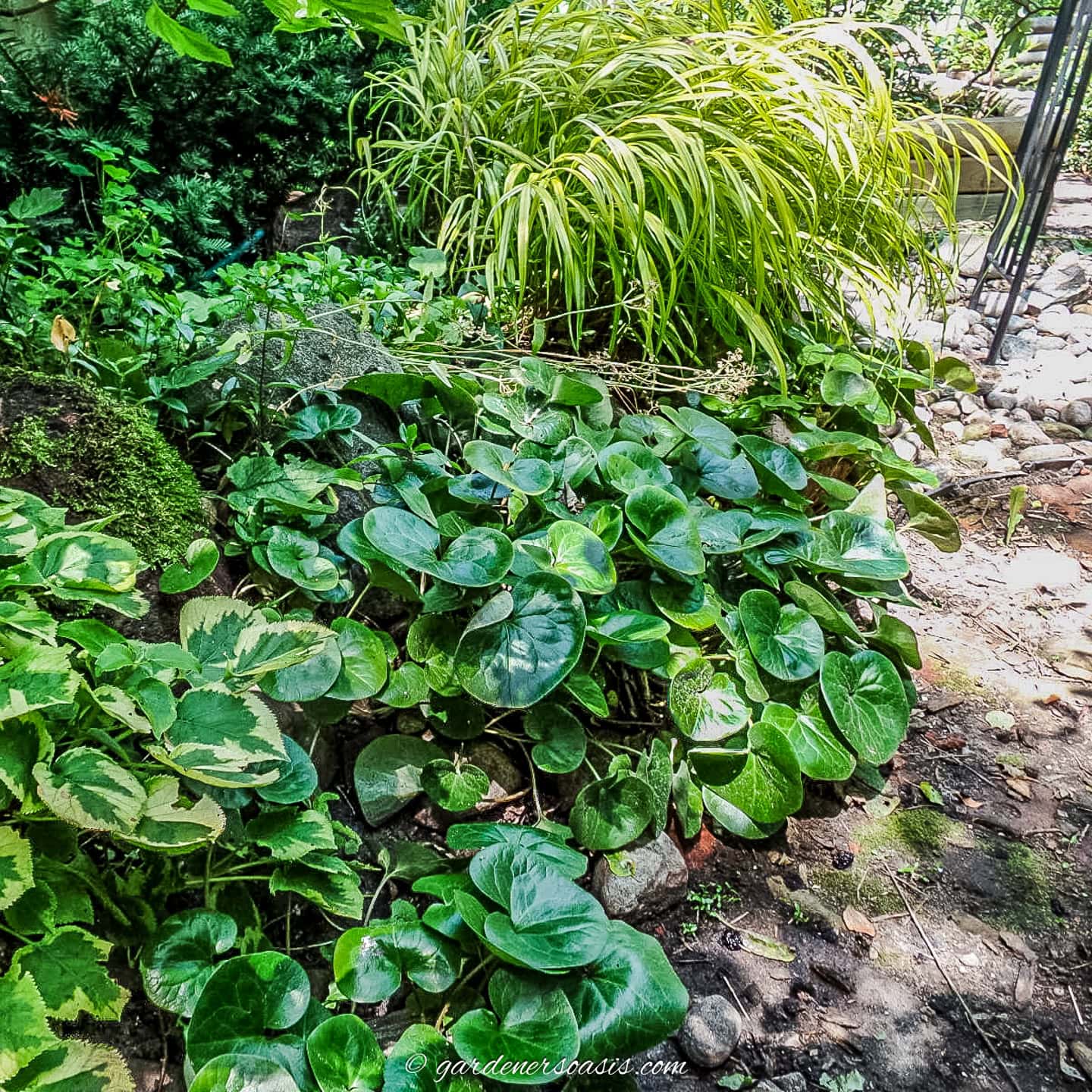
1 | European Ginger
![European Ginger growing along the edge of a shade garden pathway]()
Create a lush, low-growing border with European ginger.
Its glossy, heart-shaped leaves form a dense, evergreen carpet that stays vibrant year-round.
This perennial is a well-behaved ground cover that thrives in shaded spots and needs only minimal pruning.
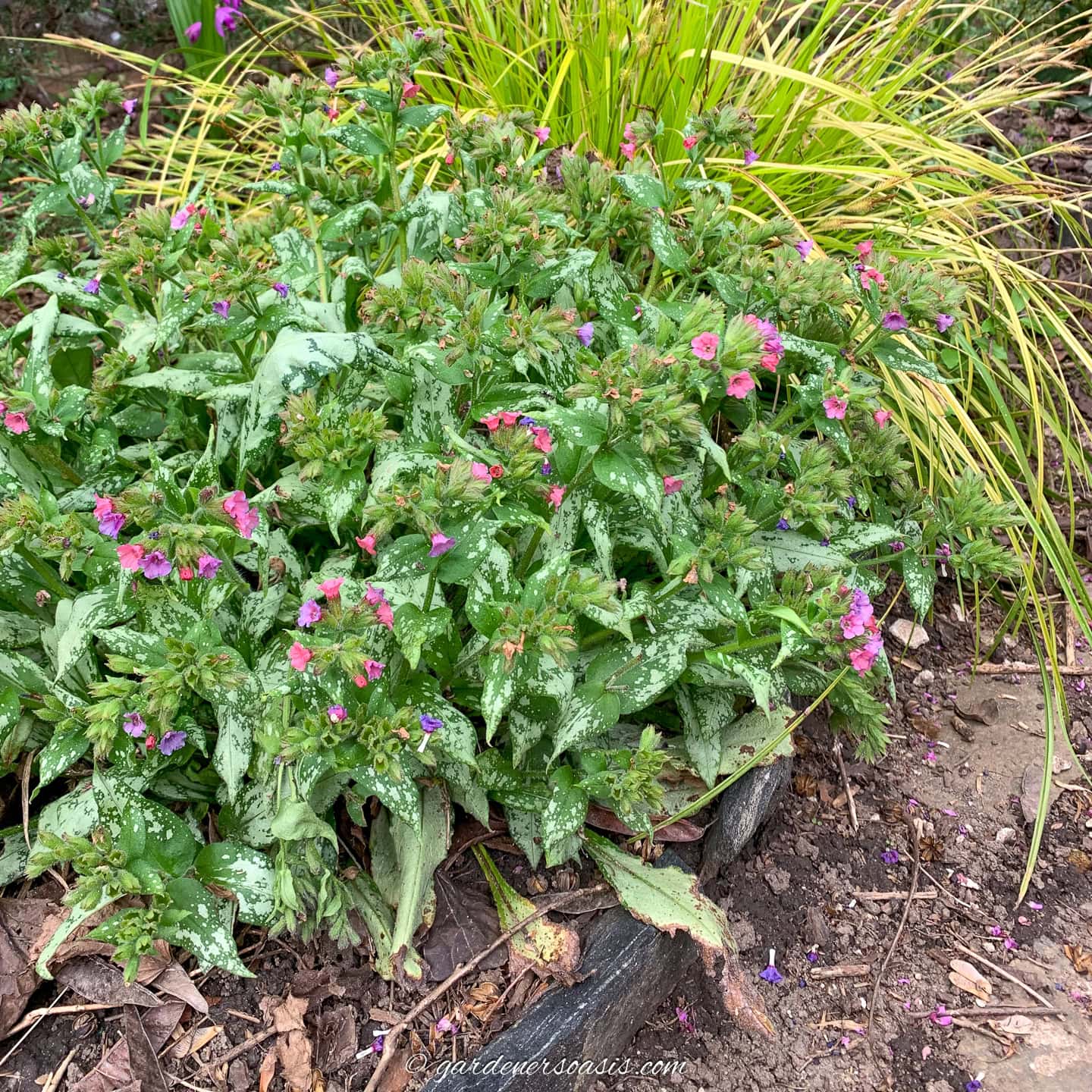
2 | Lungwort
![Pulmonaria growing with Japanese Sedge along the edge of a patio]()
If you want a low-maintenance border plant that brings early spring color and stays interesting for months, Lungwort is worth trying.
Its pink and blue flowers bloom in spring, and its spotted or silver-dappled foliage adds visual appeal even when it’s not flowering.
This edging plant is also resistant to deer and rabbits, making it a reliable choice for shaded areas.
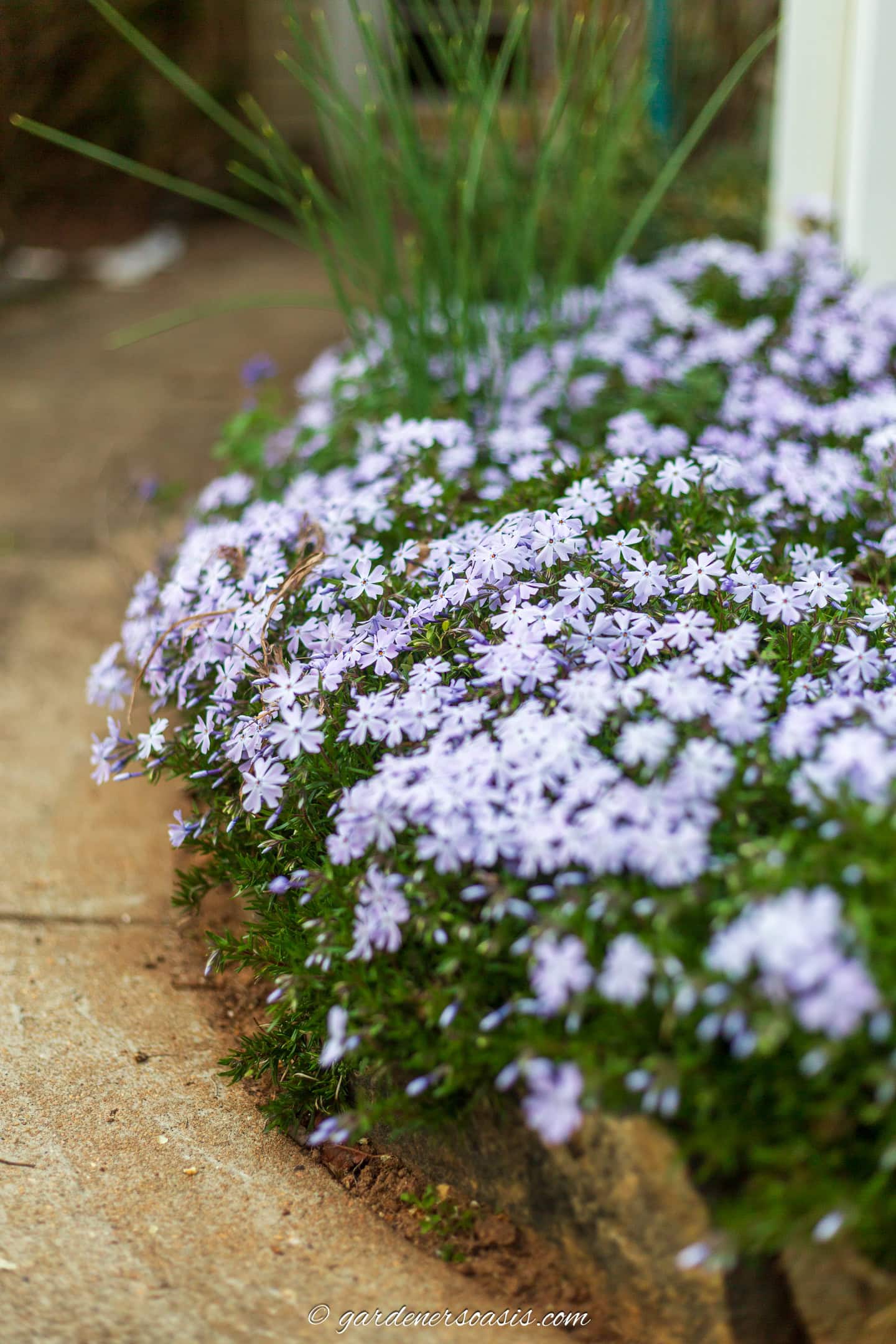
3 | Creeping Phlox
![Creeping phlox growing over the edge of a garden bed beside a sidewalk]()
With its dense, spreading habit and evergreen foliage, creeping phlox makes a lovely border plant for sunny spots.
Its colorful flowers bloom in early to mid spring, adding a splash of pink, lavender, or reddish-purple.
This low maintenance perennial is not invasive and looks especially pretty spilling over edging or filling in rocky areas.
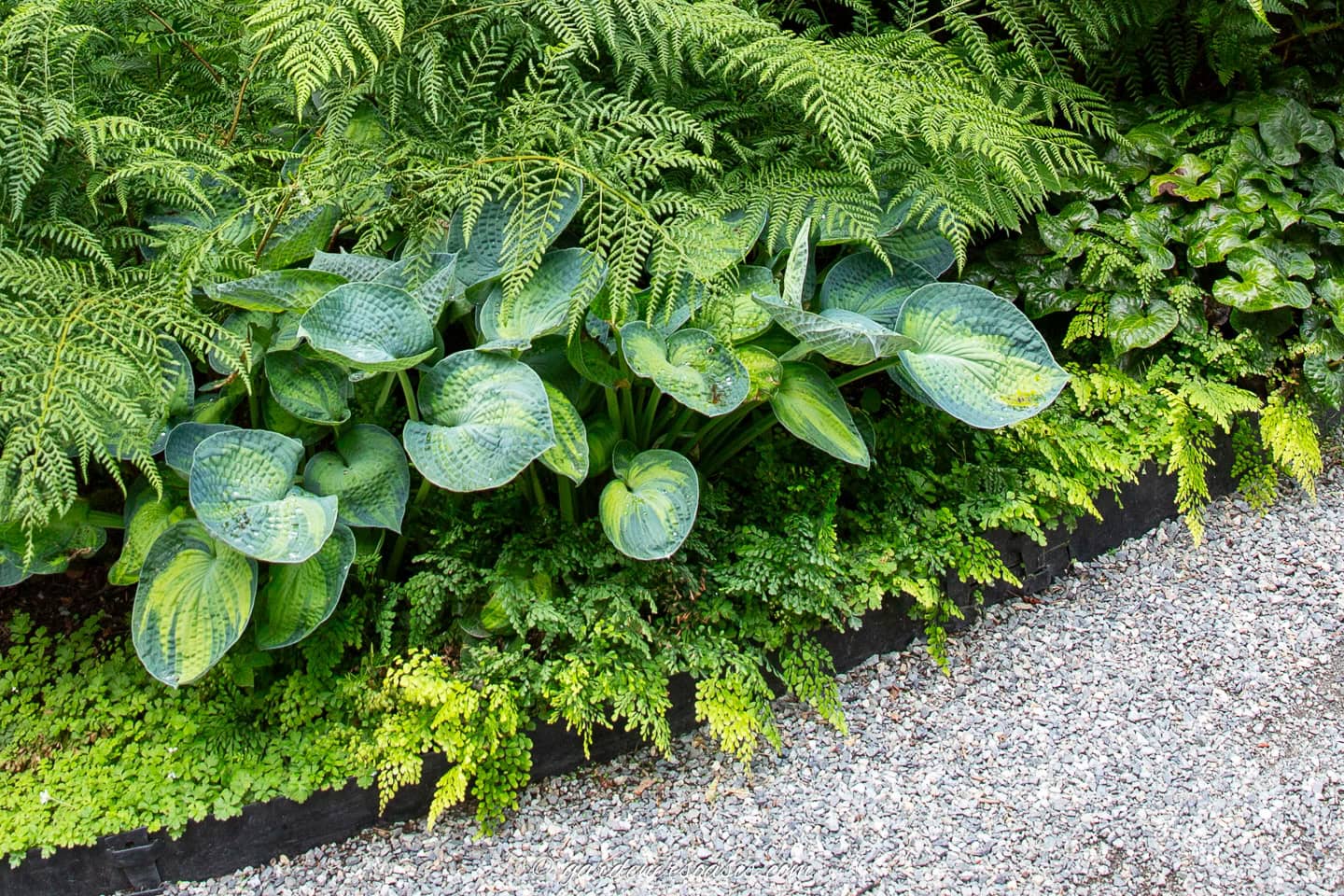
4 | Southern Maidenhair Fern
![Hostas and larger ferns growing above maiden hair fern edging a gravel path]()
I love to use Southern maidenhair fern as a border plant because of its delicate, lacy leaves that spill over the edge of a walkway.
Its bright green to yellow fronds add a soft, tropical feel to shady spots.
And it’s low maintenance and deer resistant, making it a smart choice for shaded garden edges.
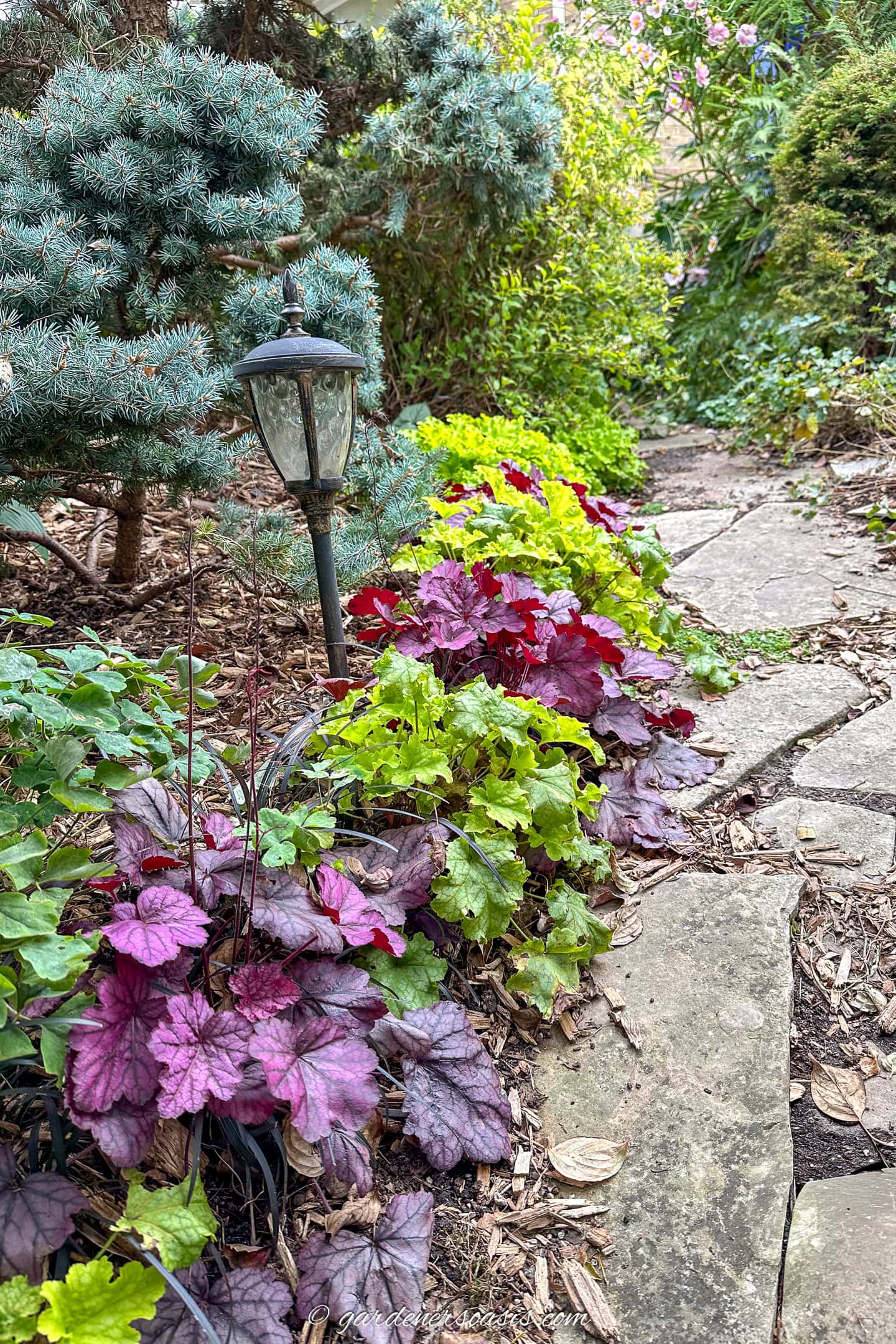
5 | Coral Bells
![Purple and green coral bells growing in a garden bed along a flagstone path]()
When you want a border plant that adds color and texture all season, try Heuchera for its vibrant, long-lasting foliage and summer blooms.
Its bell-shaped flowers attract pollinators like bees and hummingbirds, while the colorful leaves make a statement even when it’s not flowering.
It’s a versatile low-growing perennial that works well in sun or shade, and is deer and rabbit resistant.
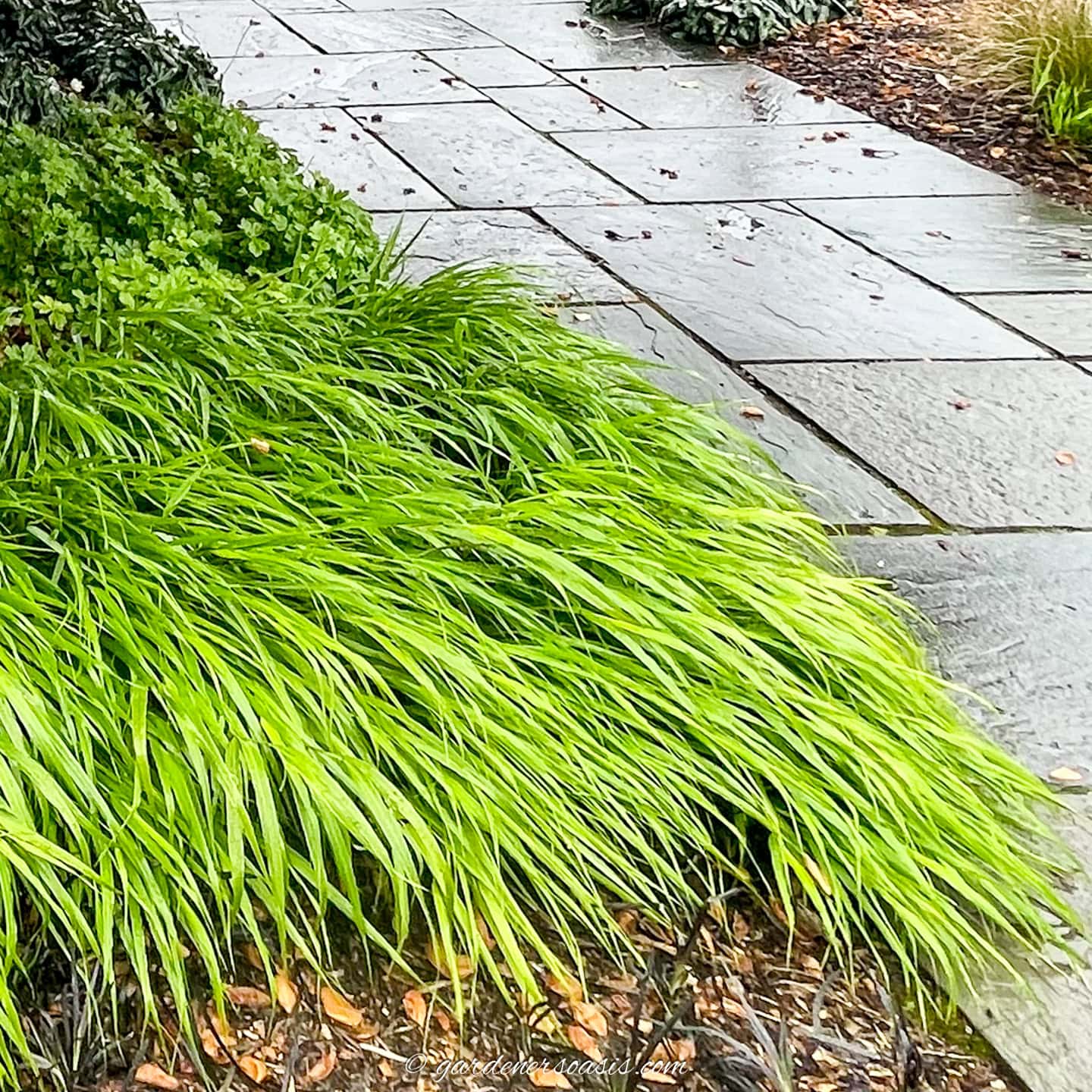
6 | Japanese Forest Grass
![Japanese Forest Grass growing along the edge of a sidewalk]()
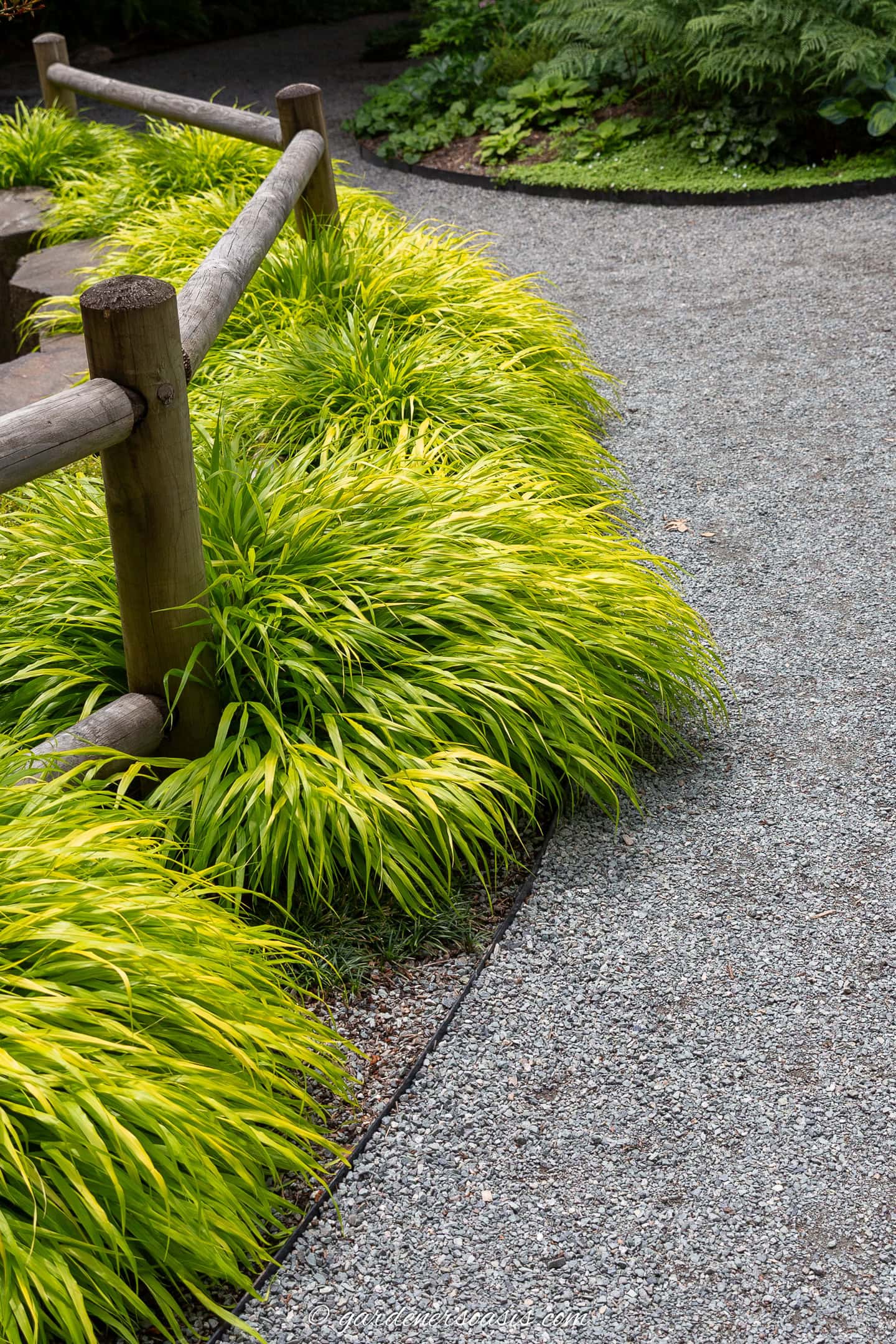
For a border that stays lush and interesting in the shade, try Japanese forest grass.
Its arching leaves bring a soft, flowing look that’s so pretty cascading over a pathway.
This perennial is low maintenance, deer resistant, and thrives in moist, well-drained soil, making it a reliable choice for woodland or shaded garden edges.
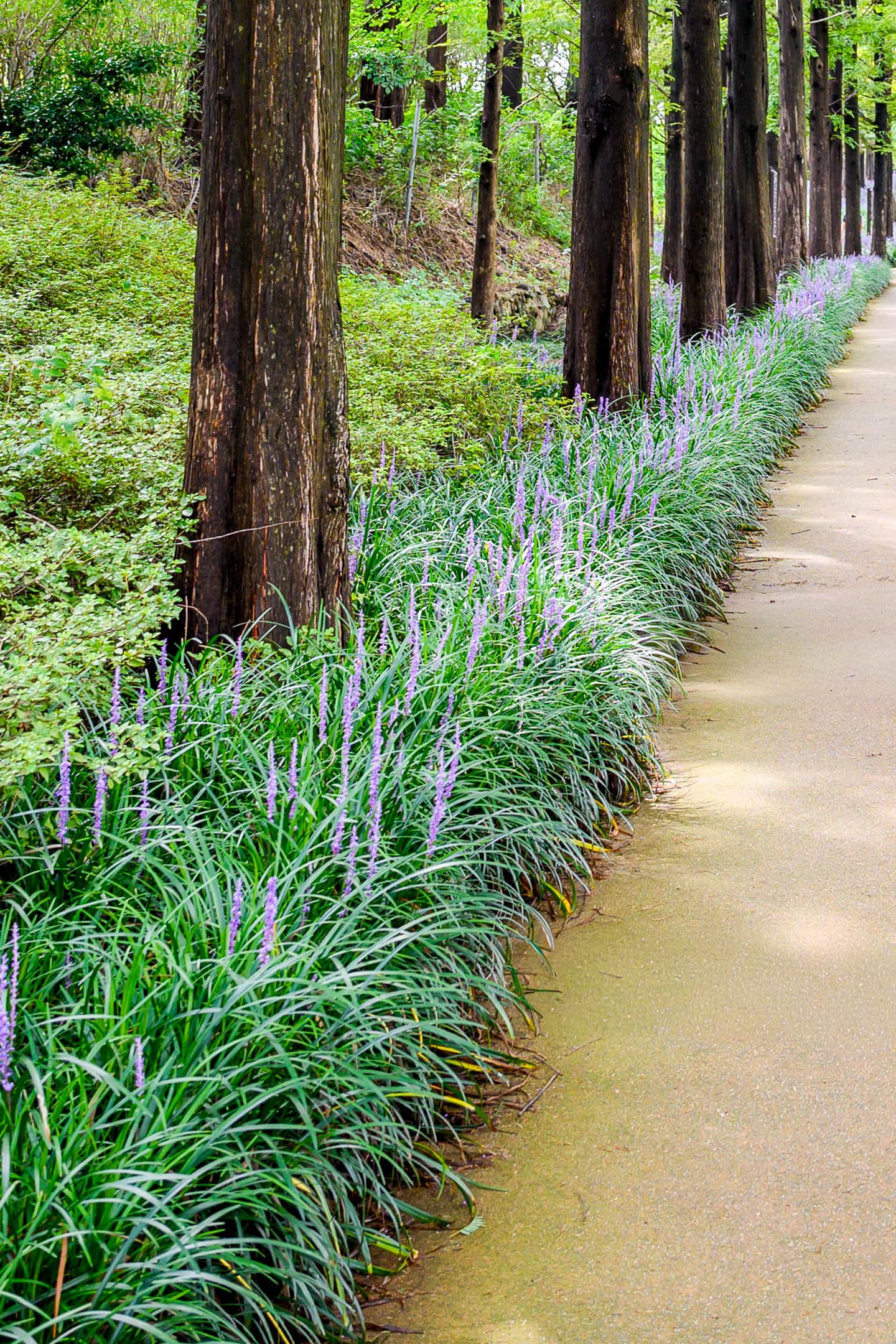
7 | Monkey Grass (or Lilyturf) Border
![A row of Monkey Grass edging a sidewalk in the shade]()
© 제범 류 – stock.adobe.com Monkey Grass is a low-maintenance, evergreen ground cover that stays attractive year-round.
Its dark green or variegated leaves form dense clumps that work well in shade or woodland settings.
However, this plant is invasive in some areas, so check with your local nursery before buying.
8 | Black Mondo Grass Border
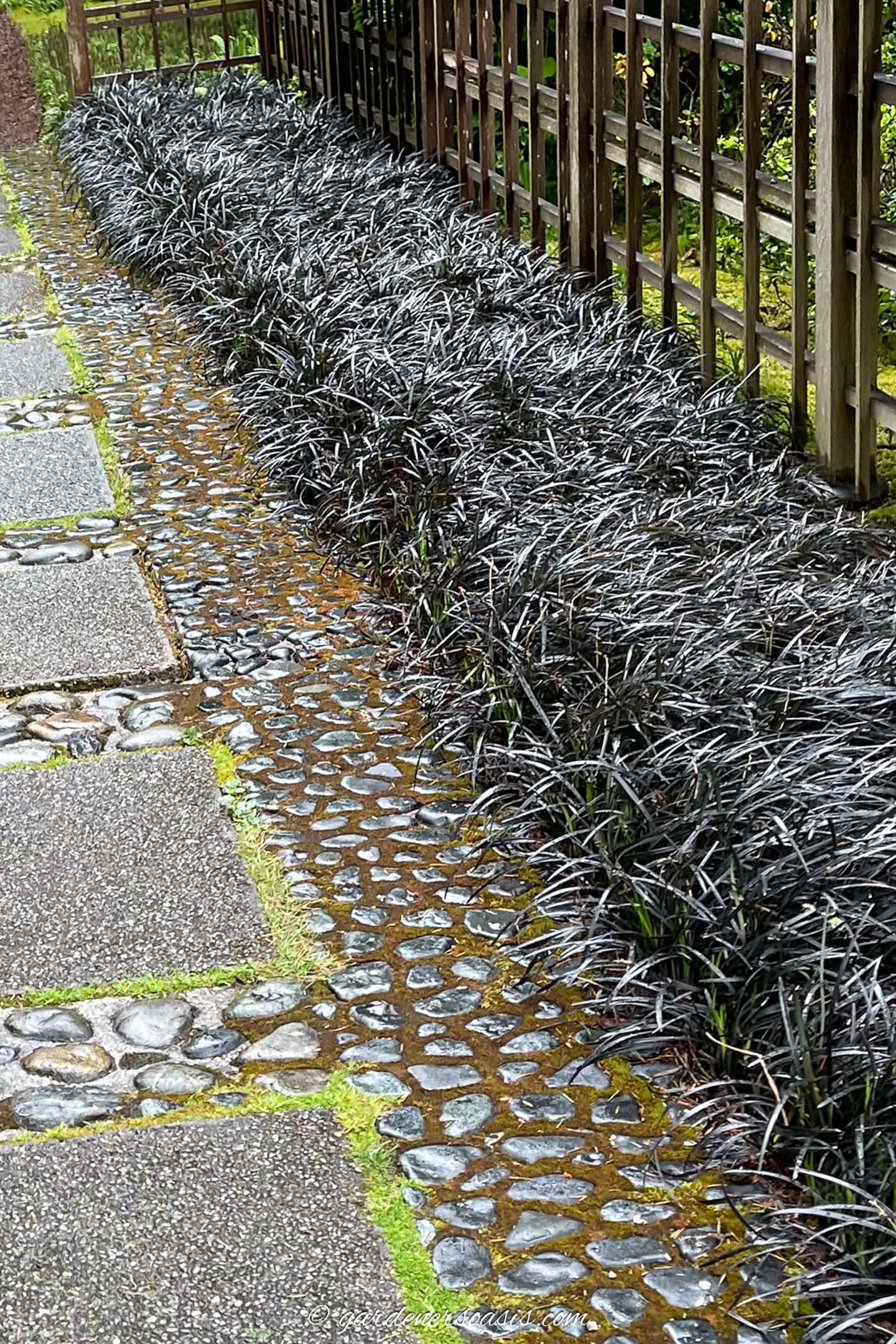
![Black mondo grass edging a walkway at the Bloedel Reserve in Seattle]()
Try using Black Mondo Grass along borders for its dark, glossy foliage that creates a dramatic contrast.
Its slow growth and pest resistance make it a low-maintenance choice.
It thrives in part shade with moist, well-drained soil, making it a versatile addition to shaded garden edges.
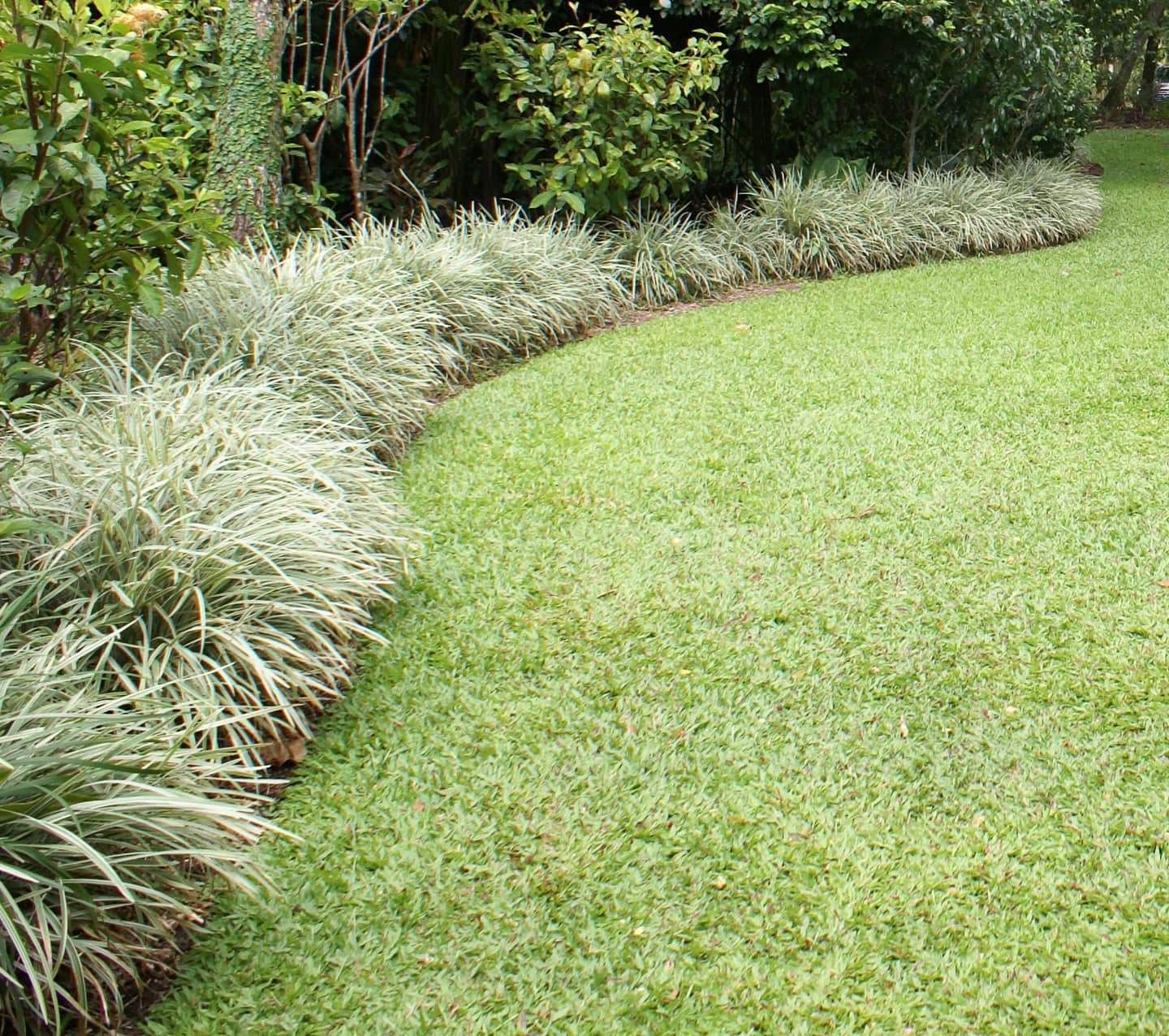
![variegated mondo grass growing along the edge of a lawn]()
© bellass – stock.adobe.com Or if black plants aren’t your thing, try the variegated variety instead.
9 | Lemon Coral Sedum
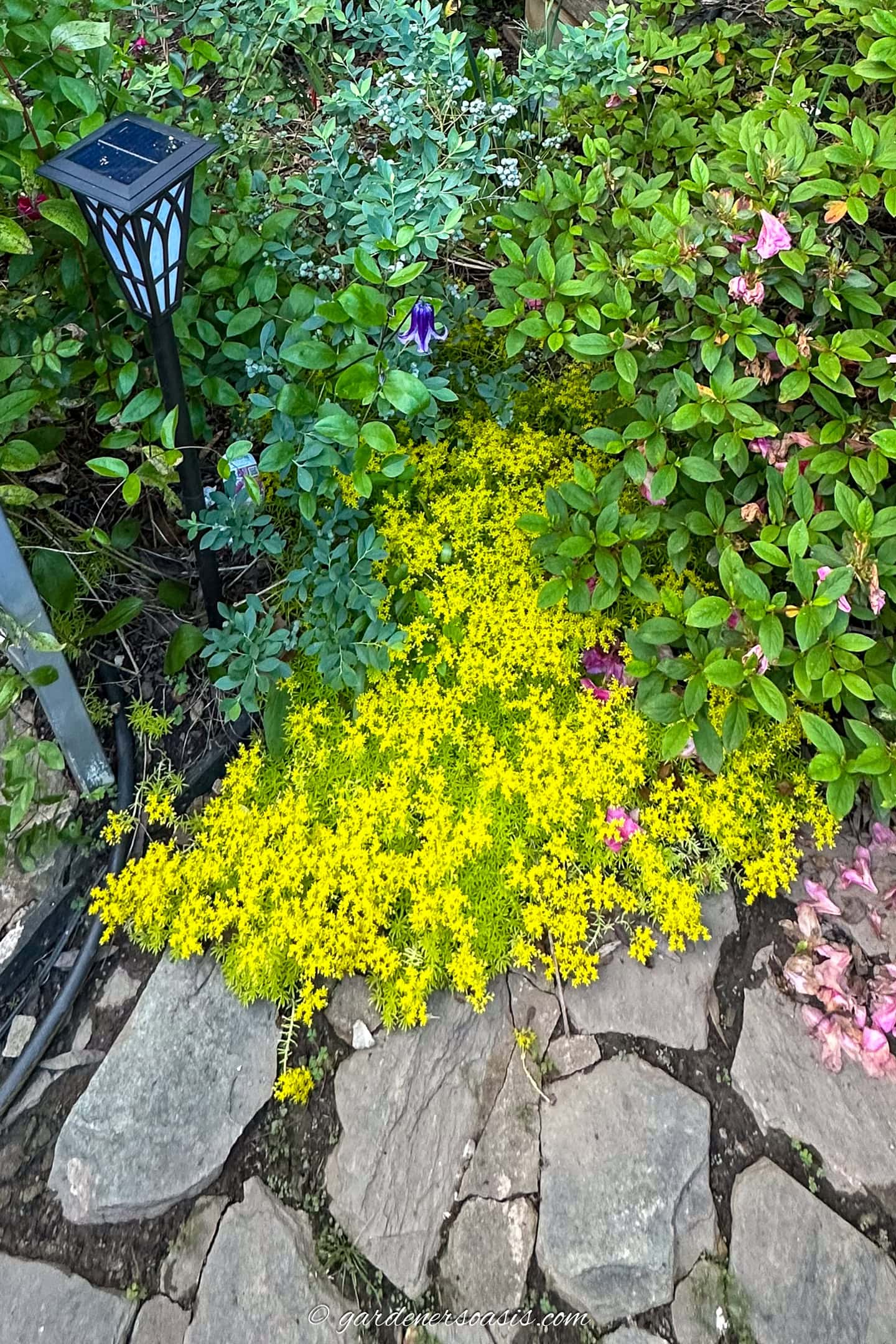
![lemon coral sedum growing at the edge of a flagstone walkway]()
Lemon Coral Sedum creates a lively border with its bright chartreuse foliage that stays colorful all season.
Its leaves form a mound that adds texture and color to landscape edging.
It is also easy to grow, drought tolerant, and deer resistant, making it a reliable perennial choice for warmer zones. (Or it can be used as annual in colder zones.)
10 | Catmint
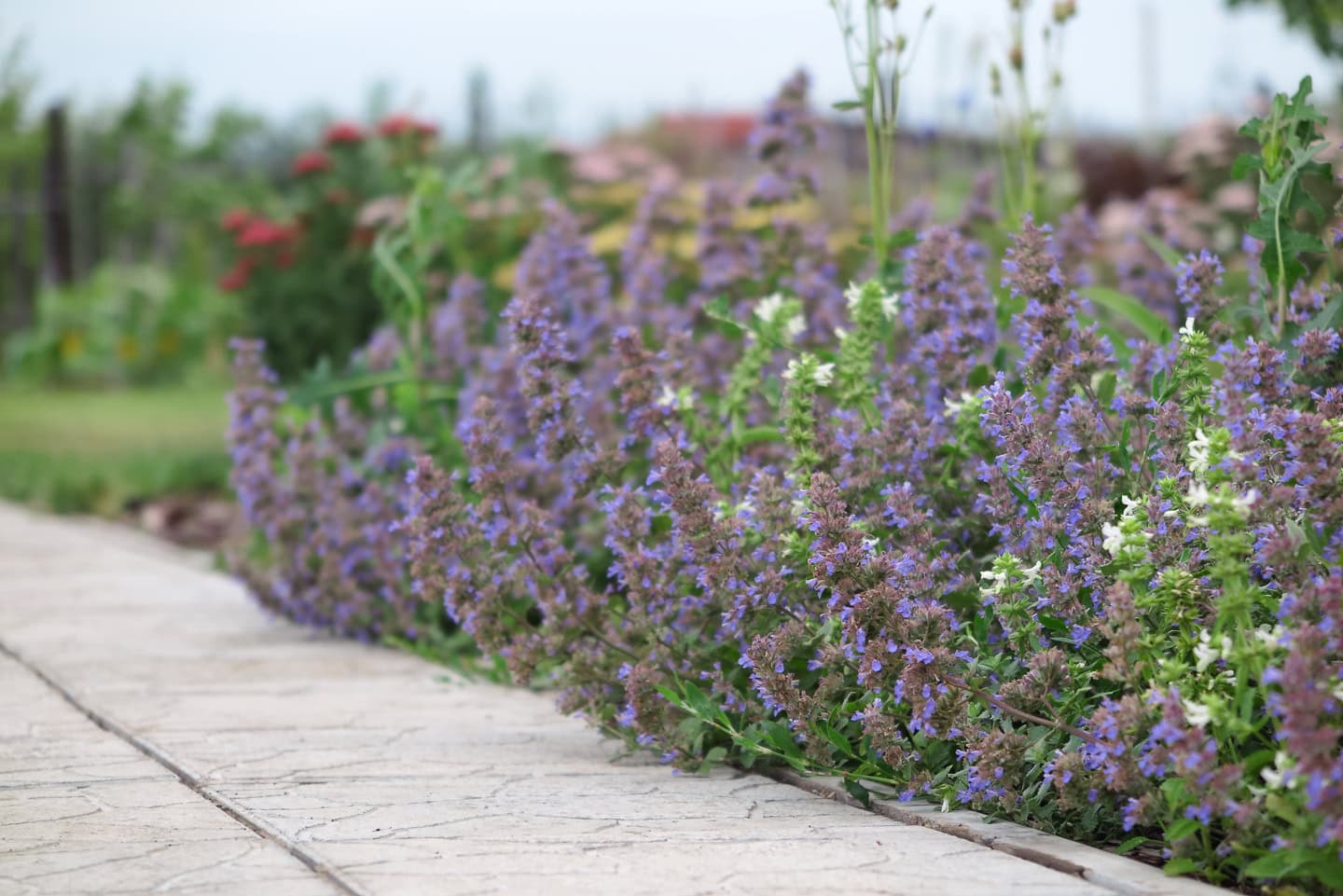
![Blooming catmint (Nepeta x faassenii 'Blue Wonder') planted along a path in the summer garden]()
© argot – stock.adobe.com This border plant offers a long season of lavender-blue, pink, violet, or white flowers that bloom from late spring to summer.
Its aromatic, fuzzy leaves add a pleasing scent, and it attracts bees, butterflies, and pollinators.
With its low-maintenance nature and resistance to deer and rabbits, Catmint is a good choice for sunny or lightly shaded garden beds.
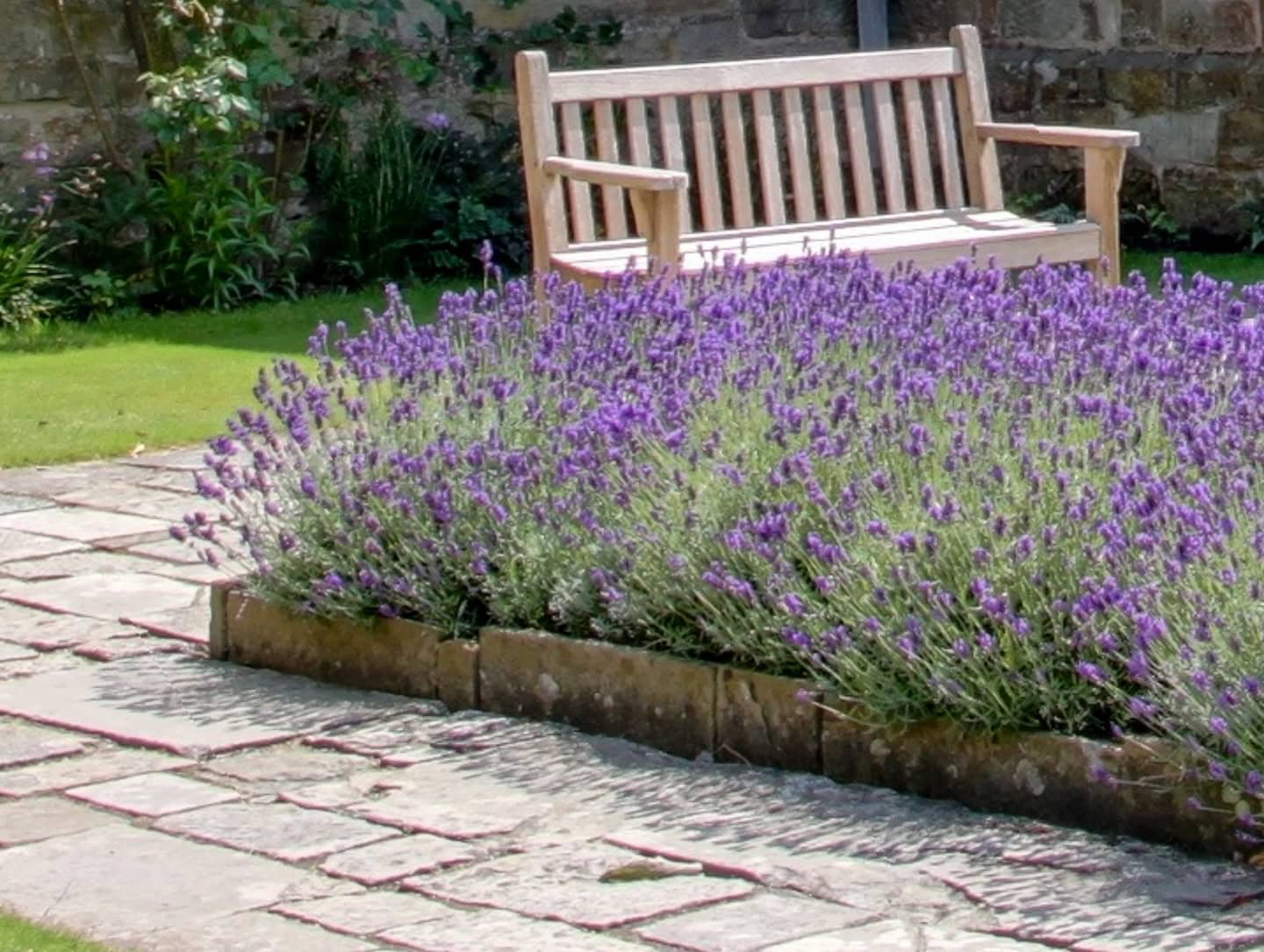
11 | English Lavender
![A wooden bench sits behind a rectangular bed of blooming lavender flowers on a stone patio in a garden.]()
© Lotharingia – stock.adobe.com To add a fragrant, long-blooming element to your borders, try English lavender.
Its purple to pink or white flowers attract bees and butterflies, and its drought tolerance makes it easy to care for.
This edging plant is a resilient choice that resists deer and rabbits, thriving in full sun with well-drained soil.
If you live in a warmer zone, try French Lavender instead. It has the same basic characteristics but thrives in hotter weather.
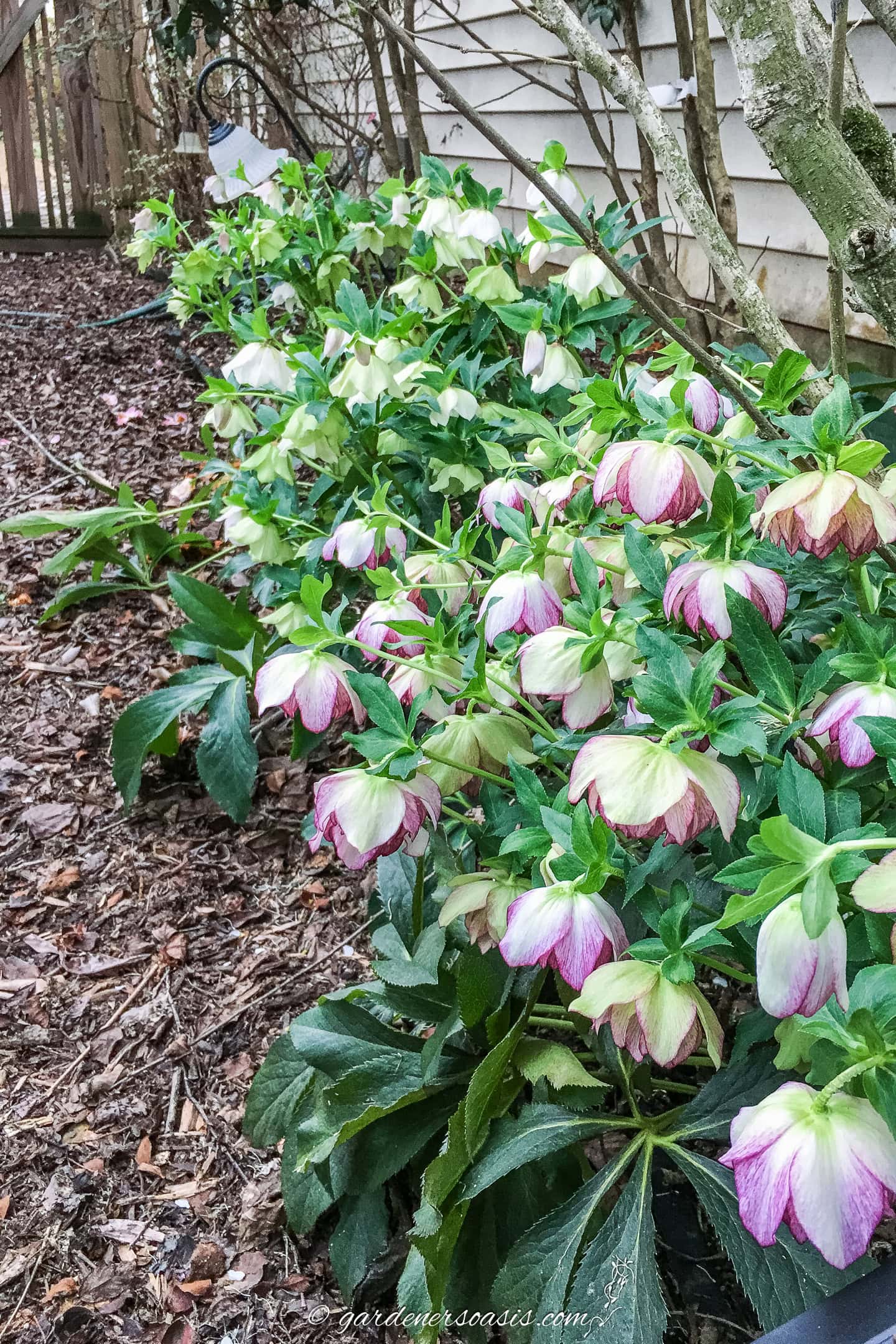
12 | Hellebores
![A row of Hellebores growing along the edge of a mulch path]()
When you want a border plant that blooms early and lasts for months, hellebores are a great choice.
Their evergreen leaves stay lush year-round, and their late winter to late spring flowers bring color when many other plants are still dormant.
With minimal care and resistance to deer and rabbits, they’re a reliable addition to shaded gardens.
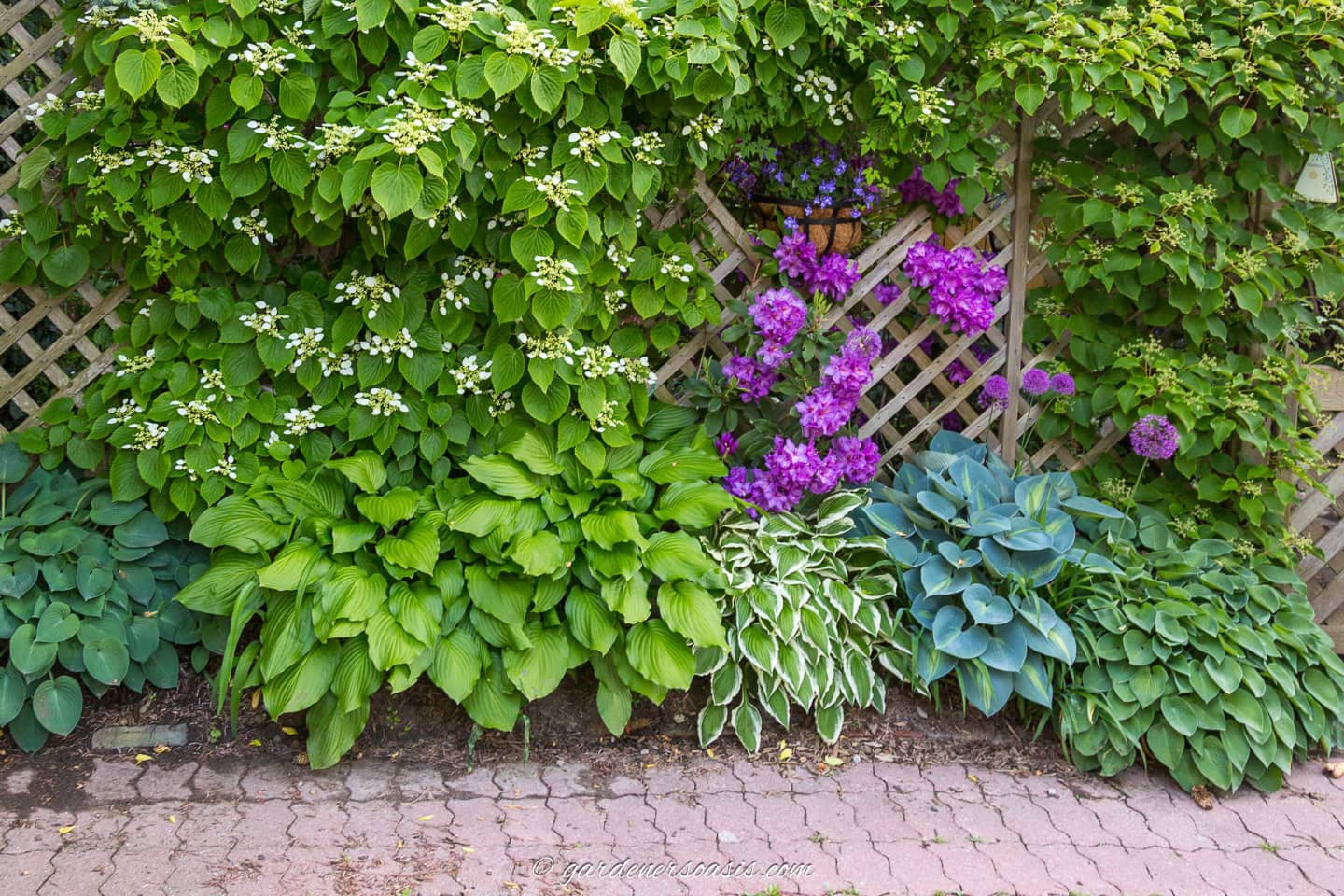
13 | Hosta
![Hostas growing along the edge of a brick driveway]()
If you want a border plant that thrives in shade, Hostas are a great choice for their lush foliage and low maintenance.
Their diverse sizes, colors, and textures make them versatile for many garden styles.
However, they are a favorite plant of slugs and deer, so may not be the best edging choice if you have a lot of those pests in your area.
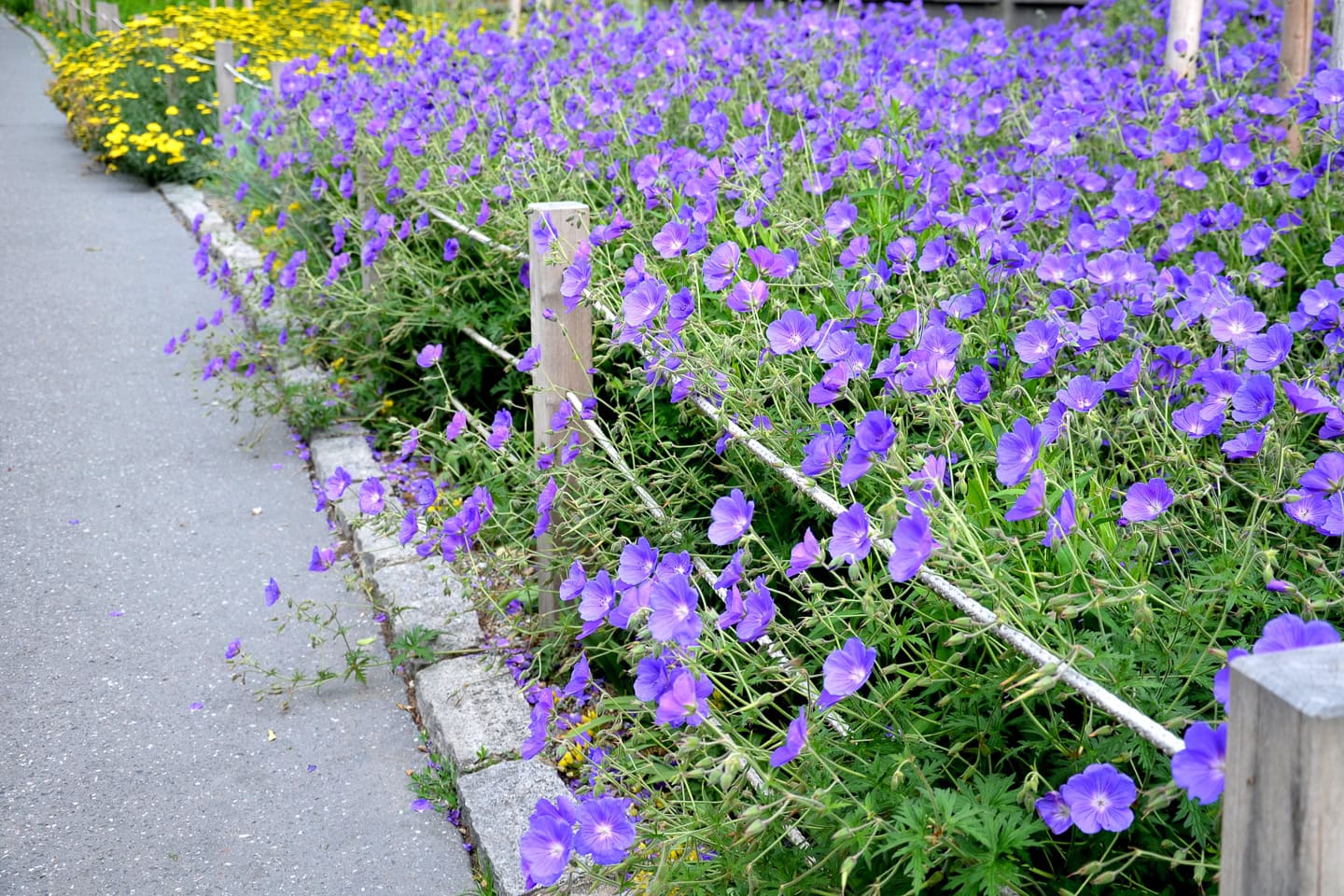
14 | Cranesbill
![perennial geraniums planted along a sidewalk]()
© Michal – stock.adobe.com Create a vibrant border with hardy geraniums known for their long-lasting blooms that extend from late spring to fall.
Their dense, carpet-forming foliage adds a lush ground cover, while attracting bees, butterflies, and pollinators.
They are low maintenance, pest resistant, and thrive in a variety of garden settings, making them a versatile choice for many landscapes.
15 | Japanese Sedge
![Japanese Sedge growing along the edge of a gravel path at Bellevue Botanical gardens in Seattle]()
This ground cover adds vibrant, evergreen foliage to shaded borders with its colorful leaves that stay attractive year-round.
Its slow spreading growth and low maintenance habit make it a good choice for shaded gardens.
Plus both the color and the foliage texture provide a nice contrast in landscape settings where grass doesn’t thrive.
16 | Lamium
![Lamium growing at the edge of a shady flower bed beside a brick walkway]()
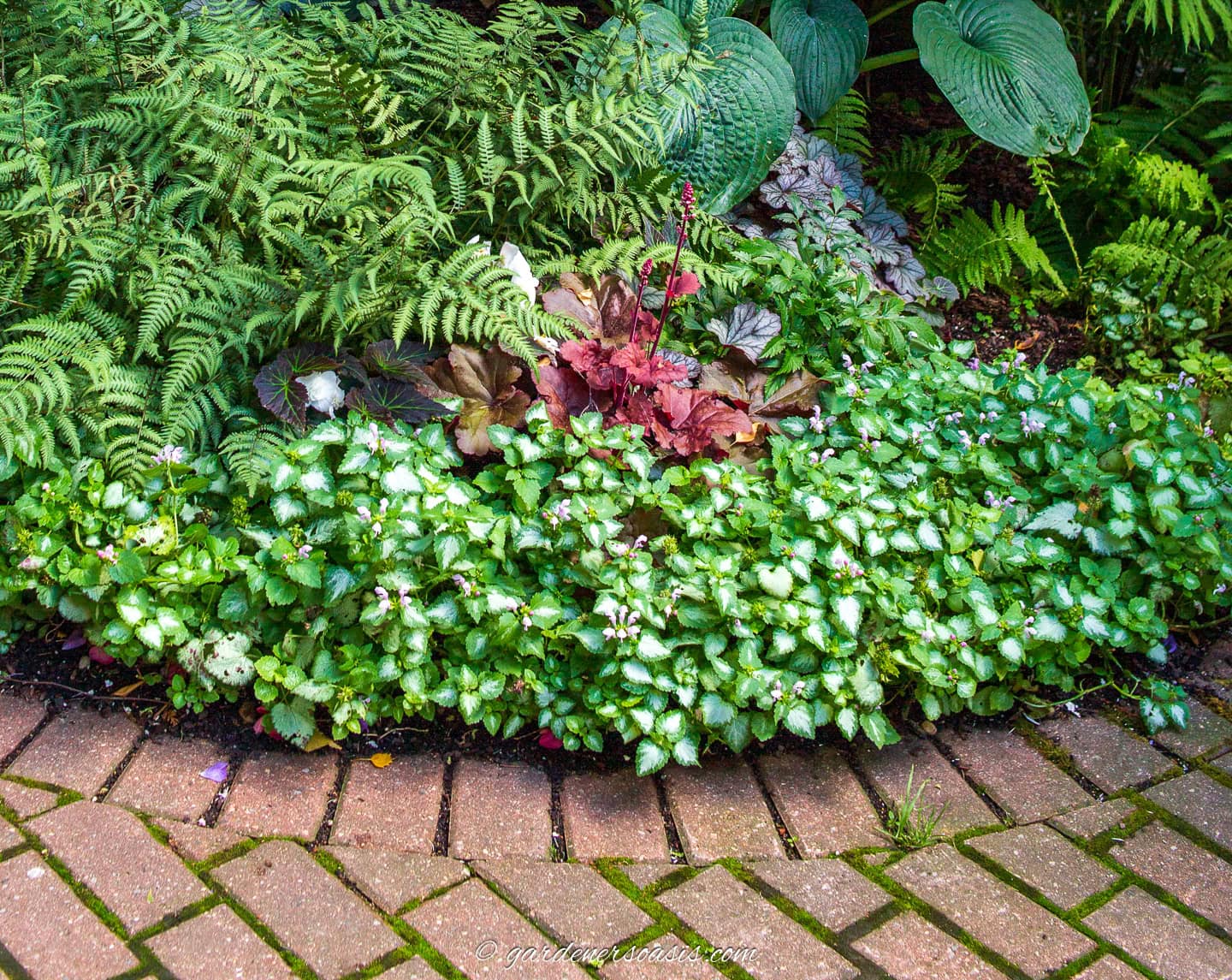
For a quick and simple way to fill in shady or partly sunny spots, try planting lamium along the border.
Its silvery leaves look nice even when it’s not blooming, and it’s super easy to grow.
Just keep in mind, it can spread aggressively in some areas.
17 | Pachysandra
![Pachysandra growing along the edge of a retaining wall beside a brick pathway]()
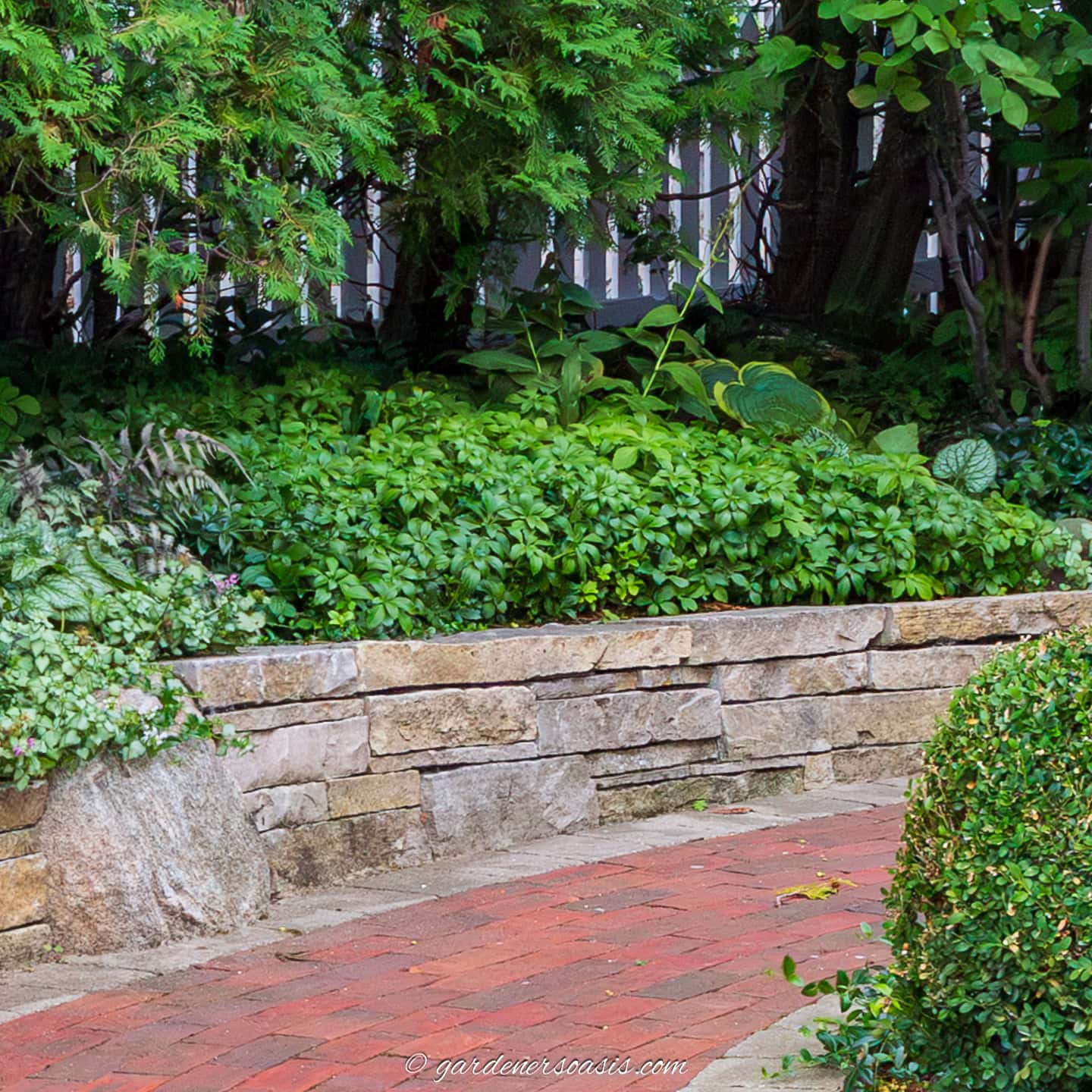
To keep a lush, low-maintenance border, try pachysandra for its dense mats of evergreen, blue-green foliage.
It spreads via rhizomes and stolons, so it quickly fills in shady spots with little effort.
However, it can be aggressive. So it’s best in areas where you can manage its spread (such as mowing over it) and make sure to pair it with plants that it can’t take over.
Have comments or questions about edging plants? Tell us in the section below.