12 of the Best Deer Resistant Trees
Add beauty and structure to your garden with these deer resistant trees. From evergreens to colorful flowering varieties, there’s something to fit every garden.
Looking for beautiful trees that won’t become a buffet for the local deer?
You’re not alone.
Gardeners in deer-prone areas know the frustration of planting something new, only to find it chewed to the ground the next morning.
While no tree is completely deer-proof (because a hungry deer will eat just about anything), some varieties are far less appealing to them.
Like the plants on this list of the best deer resistant trees.
These trees are known to be less tasty to deer, making them a smart choice if you want to add structure, color, and seasonal interest to your landscape without constant damage.
One important tip: if you’re planting young trees, it’s still a good idea to protect them with chicken wire or a physical barrier. Even deer-resistant trees can fall victim to nibbling before they get established. Once they’re larger and more robust, they’ll be much better equipped to withstand occasional browsing.
Ready to find the perfect trees for your garden? Let’s dig in.
Looking for more deer-resistant plants? You'll love Deer Resistant Shade Plants.
1 | American Holly
Scientific name: Ilex opaca
Zone: 5 to 9
Exposure: full sun to part shade
Height: 15′ to 30′
Width: 10′ to 20′
Bloom time: May
Flower color: insignificant creamy white
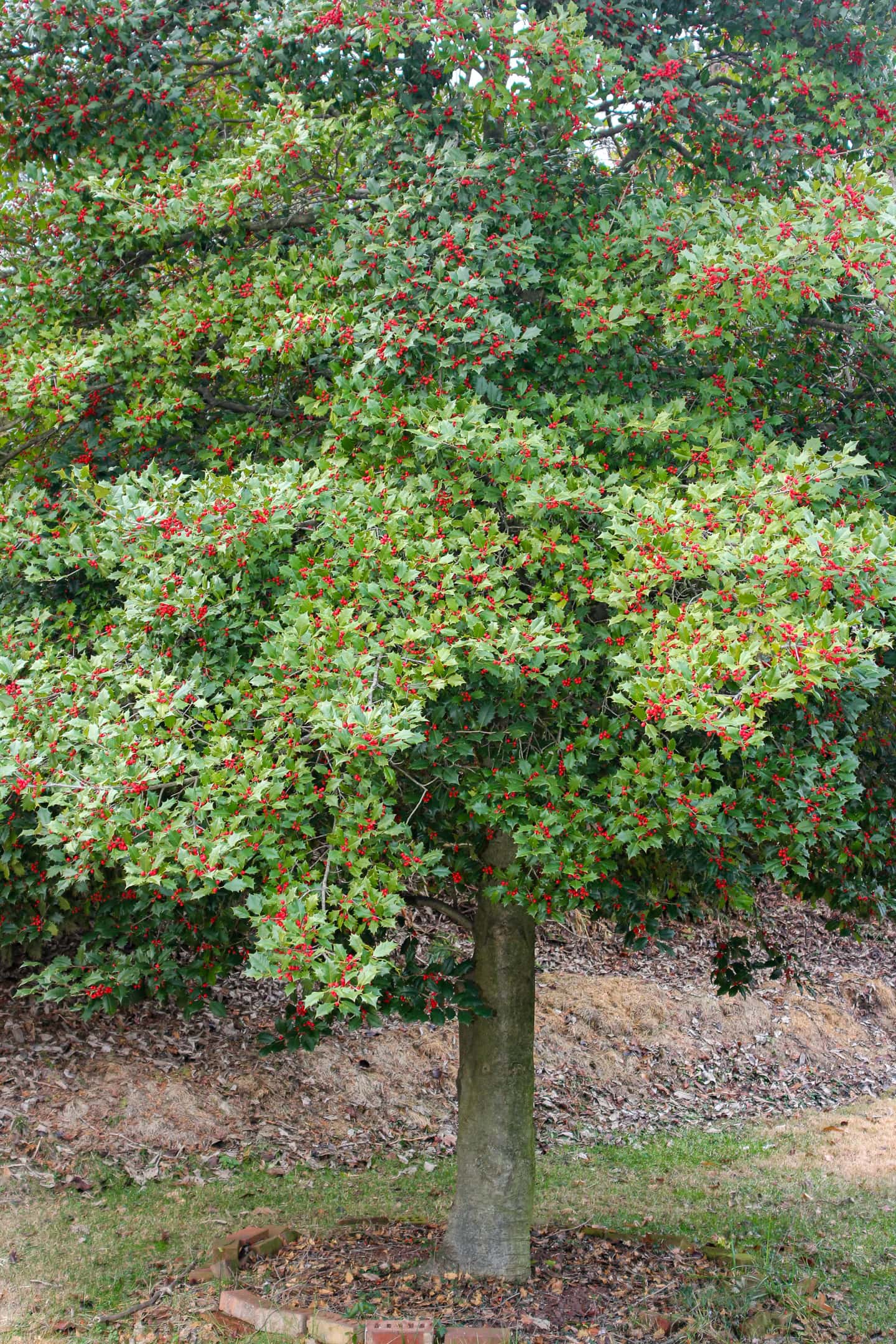
American Holly is an evergreen native tree that has bright red berries — a good winter food source for birds and small mammals.
This is the holly with the berried branches that are often used for Christmas decorations.
The tree has a pyramidal shape with the branches reaching all the way down to the ground. They are smooth and gray and quite tender when the tree is young but get tough with age. The dark green leaves are shiny, curved, spiny, and sharply pointed.
This slow growing dioecious tree (male and female trees are separate) produces the red berries on the female of the species only. The small whitish-green spring flowers on both male and female trees are insignificant to look at but have a pleasant aroma.
Plant this tree in neutral to acidic, well-drained soil. Once established, it will withstand moderate dry spells. Prolonged drought will cause leaf drop.
2 | Dwarf Alberta Spruce

Scientific name: Picea glauca ‘Conica’
Zone: 2 to 8
Exposure: full sun, partial sun
Height: 8′
Width: 5′
Bloom time: evergreen
Flower color: N/A
Dwarf Alberta Spruce is a very popular slow growing evergreen with a perfect, natural conical shape.
It not only makes a statement in the border but is an easy care, no pruning necessary, specimen.
Grow in neutral to acidic well-drained soil and thoroughly water the first year when the top 2 inches of soil is dry.
The green needles are small and very dense, which provide good protection for birds as well as deterring deer.
Note: The non-dwarf variety is also deer resistant but grows to be much too large for most city gardens.
3 | Japanese Black Pine

Scientific name: Pinus Thunbergiana
Zone: 5 to 8
Exposure: full sun
Height: 20′ to 60′
Width: 12′ to 20′
Bloom time: needled evergreen
Flower color: grayish brown cones
Japanese black pine is an easy to grow large, evergreen conifer that does not have a central leader.
Its characteristic flat top has dense, dark green needles on a curvaceous black trunk that can be pruned into shapes or left to grow naturally.
It will grow in acidic, sandy, well-drained soil and is drought tolerant once established.
The original species variety is very difficult to source from local nurseries, partly due to the fact that it is subject to beetle devastation.
However, ‘Thunderhead’ Japanese Black Pine is a good and readily available variety, .
It is a smaller, more compact, and shrubbier than the species with attractive whitish candles in spring and an interesting green shape that will reach 10′ height by 15′ width at maturity. Which is a more manageable size in the urban landscape.
It is rabbit as well as deer resistant.
4 | Silk or Mimosa tree
Scientific name: Albizia julibrissin
Zone: 6 to 9
Exposure: full sun
Height: 10′ to 50′
Width: 20′ to 50′
Bloom time: summer
Flower color: pink
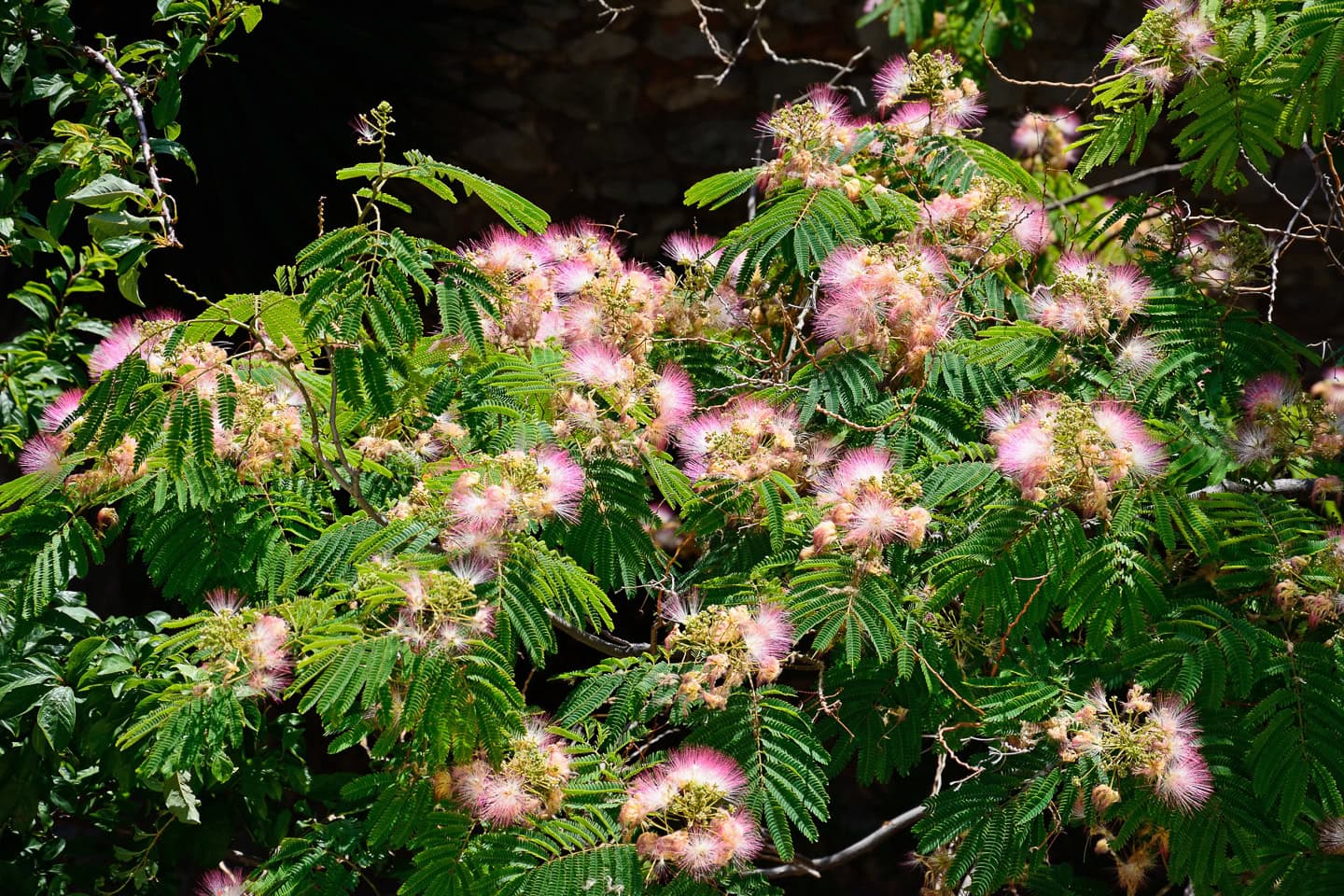
The silk or mimosa tree was introduced into the USA from the orient as an ornamental because of its fern-like foliage and fragrant pink flowers that cover the canopy in early summer.
It is a member of the legume family so it produces a multitude of pea-like brown seed pods.
It is a deciduous, rapidly growing, short lived (under 30 years) shrubby vase-shaped tree. And can be invasive in some parts of the country, so check with your local garden centers before planting.
It is also somewhat high maintenance since all those seed pods need to be picked up. And the branches may suffer from wind damage during storms.
Plant silk tree in any well draining soil in full sun. It will attract pollinators of all sorts but repel deer. The pods are toxic to dogs and livestock.
‘Ernest Wilson’ silk tree, introduced by Harvard Arboretum in New England, is an hardier, shorter, longer living variety that has more vividly pink aromatic flowers and may be worth consideration.
5 | Northern Pitch Pine
Scientific name: Pinus rigida
Zone: 4 to 7
Exposure: full sun
Height: 40′ to 60′
Width: 30′ to 50′
Bloom time: needled evergreen
Flower color: light brown cones
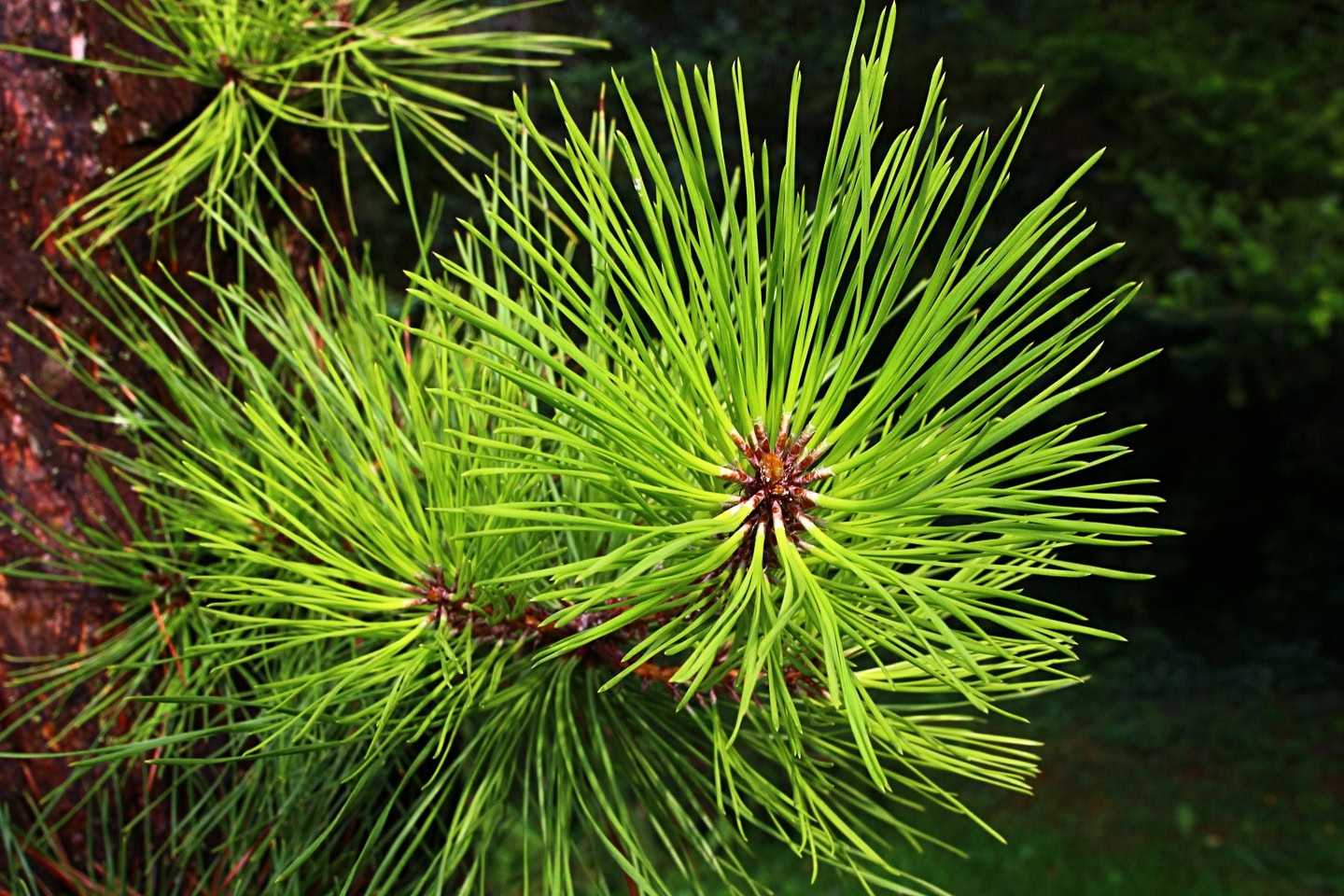
The Pitch Pine is native to northeastern US and Canada and is primarily used for lumber and wood pulp.
The young trees are somewhat pyramidal but as they grow the truck becomes gnarled and the branches grow irregularly and droop.
The needles are stiff, yellow-green maturing to green and grow in threes.
The numerous 1″ to 3″ light brown cones often stay attached to the branches for years.
Pinus rigida will grow in sandy, acidic, dry, poor soil, however it is susceptible to strong winds.
This tree is both deer and salt resistant, and adds an interesting structure in a winter or nighttime garden.
6 | River Birch
Scientific name: Betula nigra
Zone: 4 to 9
Exposure: full sun, partial sun
Height: 30′ to 70′
Width: 20′ to 60′
Bloom time: early spring
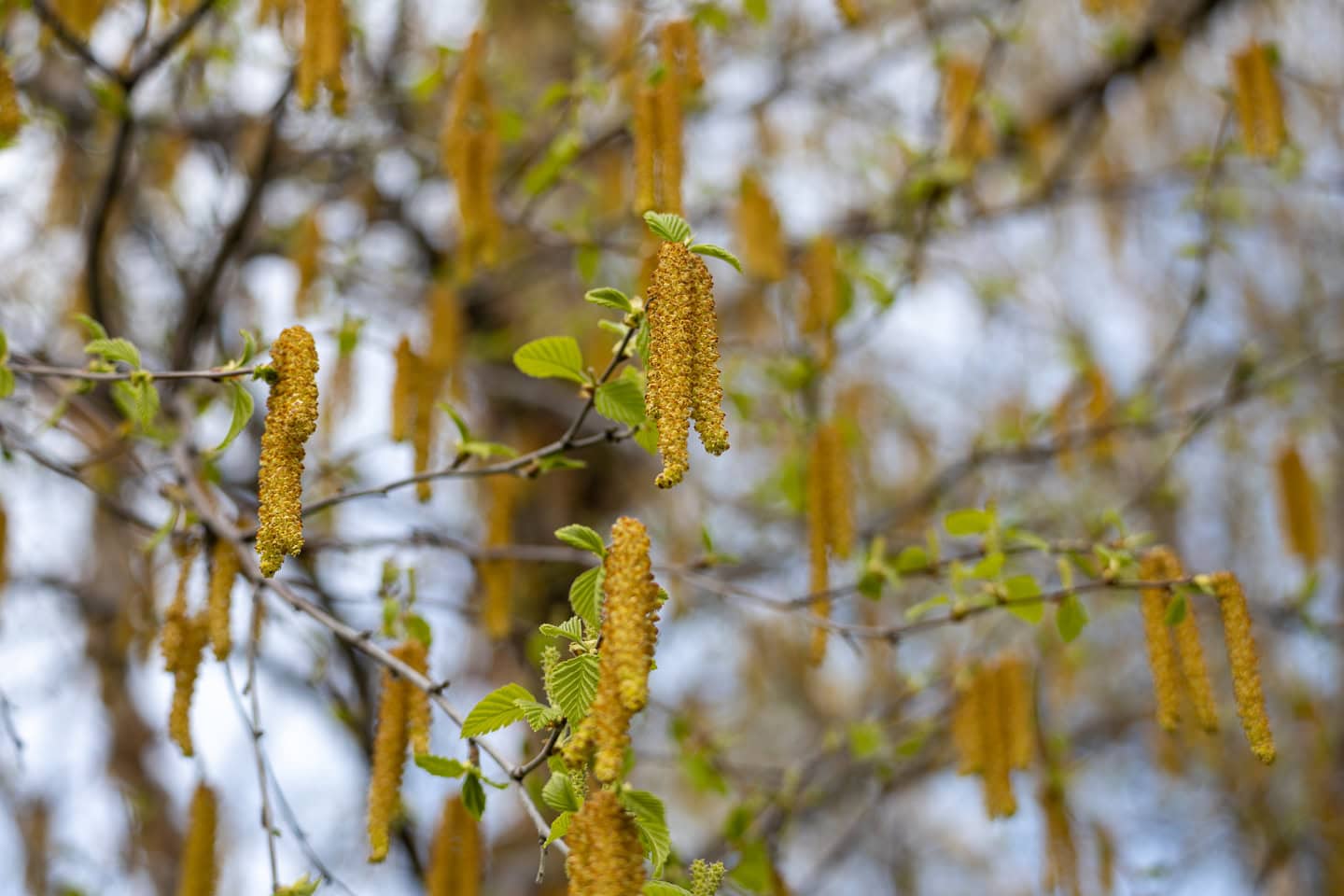
Flower color: light green/yellow flowers and catkins
River birch is an ideal native tree to plant in small groups in a wet area of a deer path in the garden.
It provides 4 season interest with yellow-green flowers in early spring, followed by 3″ long catkins, small nut-like yellow fruit that contains 3 edible small seeds, green foliage that turns yellow/gold in the fall and year round exfoliating silver/brown bark (which is most obvious in paper-like layers in the winter). The most attractive variety is the heritage one.
While this tree will adapt to any soil time, it needs consistent moisture and will require a drip water system as well as good mulching in the urban garden setting.
The best foliage color is achieved when planted in full sun exposure. River birch is the best birch to plant for heat and cold tolerance.
This deciduous tree requires some ground clean-up maintenance and should not be planted close to the house because the dropping twigs, foliage, and branches will clog gutters.
If you have the right growing conditions, river birch is an all around tough tree. In addition to being deer-resistant, it will also survive salt, fire, black walnut, wind and heat.
7 | ‘Vanderwolf’s Pyramid’ limber pine
Scientific name: Pinus flexilis ‘Vanderwolf’s Pyramid’
Zone: 4 to 7
Exposure: full sun
Height: 20′ to 30′
Width: 10′ to 15′
Bloom time: evergreen needles
Flower color: brown cones
Pinus flexilis is an easy care, slow growing evergreen conifer that is native to the Rocky Mountains.
Since it naturally grows at elevations above 5000′, it does not like extreme heat and will not grow well above Zone 7.
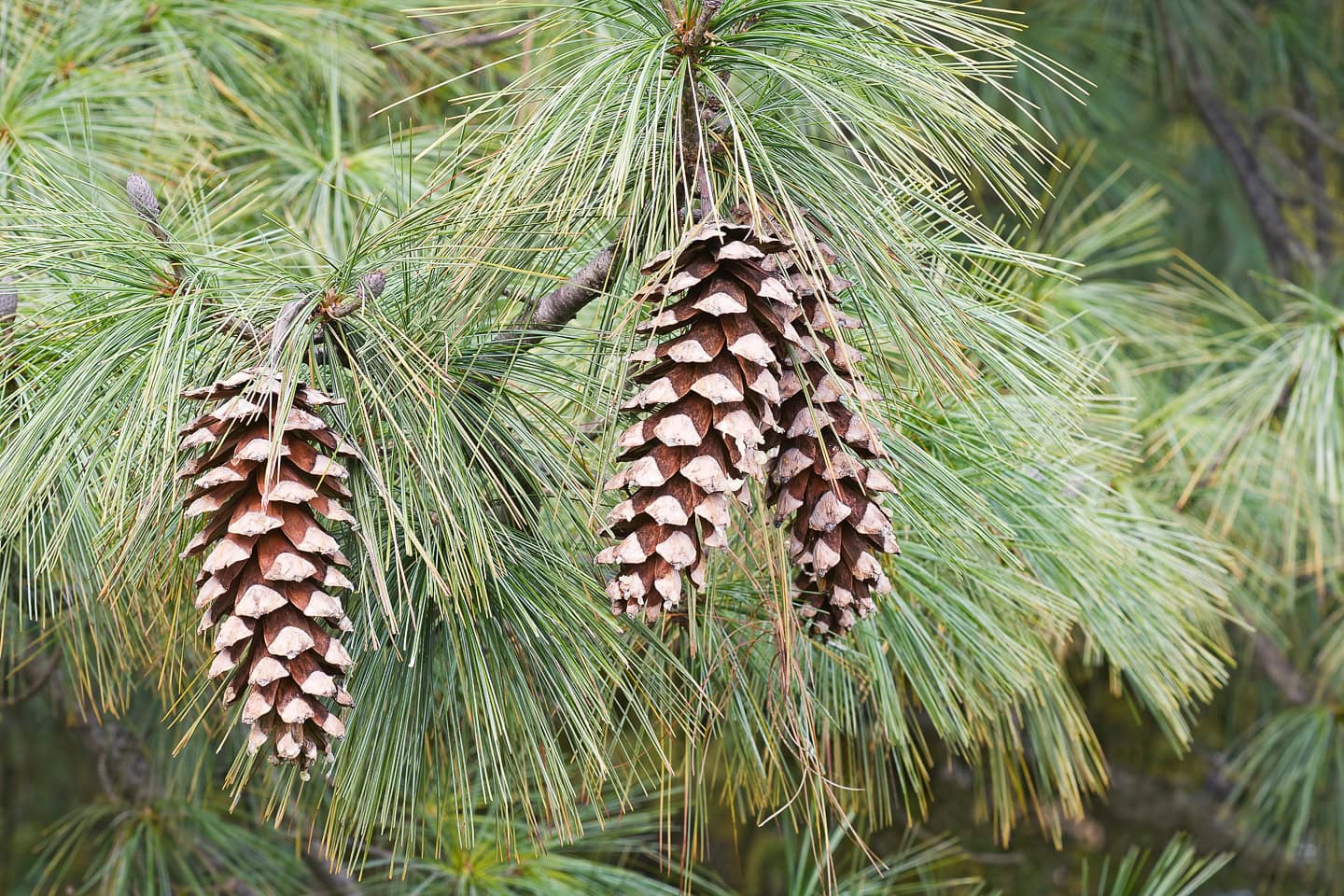
This tree is a pyramidal shape and has lovely long (3 1/2″) silvery blue green needles that grow in dense groups of 5.
The blunt cones have closely packed brown scales and can be up to 8″ long.
Limber pine like to be planted in moist, well-draining soil in their forever place. They have a long tap root that makes them difficult to transplant.
Do not plant gooseberry or currant bushes nearby because of the danger of introducing white pine blister rust — a fatal bark invader.
Deer tend to leave Vanderwolf’s Pyramid alone.
8 | Sweetbay Magnolia
Scientific name: Magnolia virginiana
Zone: 5 to 10
Exposure: full sun, part shade
Height: 10′ to 35′
Width: 10′ to 35′
Bloom time: mid-spring and occasionally through to autumn
Flower color: creamy white
Sweetbay Magnolia is a rapid growing, broad leaf evergreen or semi-deciduous native small tree.
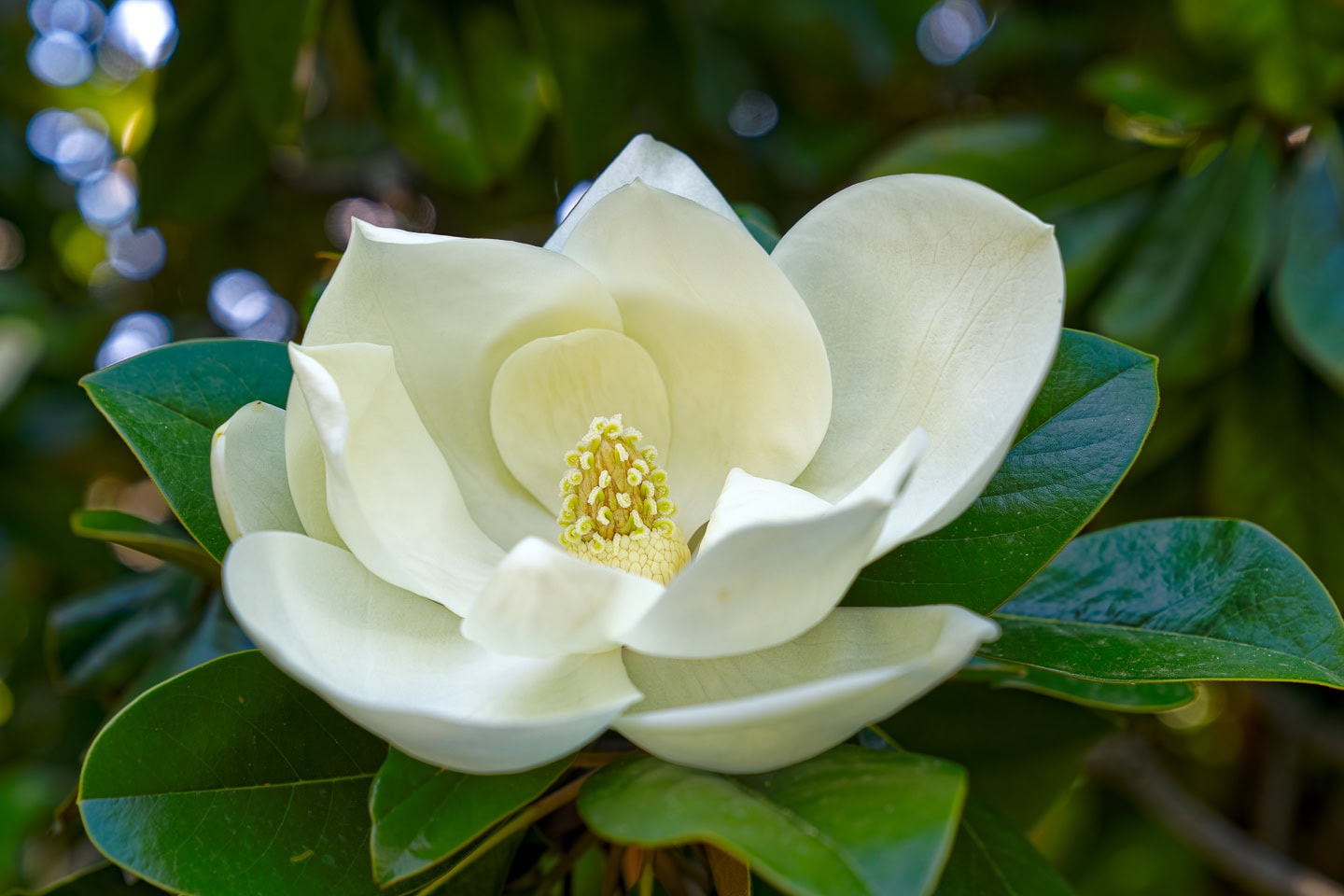
I has gorgeous cup-shaped, fragrant, creamy-white flowers that blossom in mid-spring before the leaves emerge.
Then give way to coppery brown or burgundy follicles that contain bright red seeds that are a food source for small wild life and birds.
The tree is also a host for 2 types of swallowtail butterfly larvae.
Deer will nibble on the leaves and small twigs in winter but it is generally considered deer resistant as well as resistant to wet, salt, pollution, and fire.
Plant Sweetbay Magnolia as a specimen, in consistently moist, acidic, high loam soil.
9 | Japanese umbrella pine

Scientific name: Sciadopitys verticillata
Zone: 5 to 9
Exposure: full sun
Height: 10′ to 20′
Width: 4′ to 10′ (depending on the variety)
Bloom time: evergreen conifer
Flower color:
The Japanese Umbrella pine has long rounded needles that form clusters on the branches.
As the name suggests, it is a Japanese native plant, and likes rich, acidic soil with good drainage and medium moisture.
It withstands heavy snow well and deer are not interested.
‘Joe Kozey’ is a beautiful small variety that really makes a lovely unique focal point particularly in the winter landscape.
The dark-green needles are dense and shiny, whorled on branches that grow close to the trunk.
Since it has a columnar shape, this variety is ideal for small garden borders in combination with finer or courser foliage trees or shrubs where it will have some sheltered protection.
10 | False Cypress
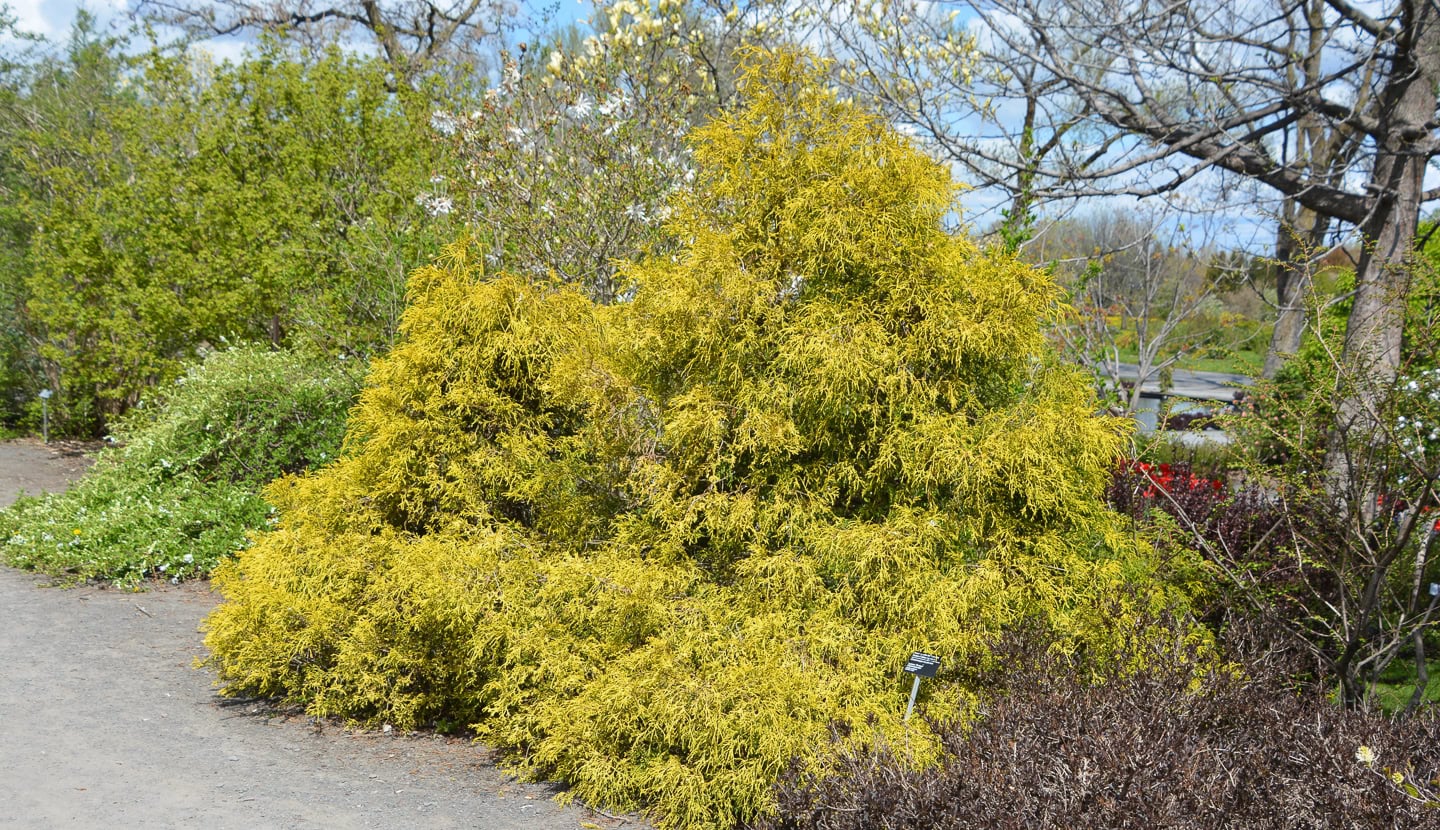
Scientific name: Chamaecyparis
Zone: 3 to 9 (depending on the species)
Exposure: sun, part shade
Height: 1′ to 99′(depending on the variety)
Width: 1′ to 50′ (depending on the variety)
Bloom time: needled evergreen
Flower color: reddish cones
There is a vast variety of false cypress trees that provide an array of aromatic, needled evergreen colors in the border.
Use the dwarf and compact ones for specimens and focal points in the winter garden.
Chamaecyparis are native to North America, Asia and Japan.
These easy care trees like slightly acidic, moist, well-drained soil and do best where the weather is cool.
They may be pruned to retain a conical shape but I find their natural shape interesting.
They are resistant to salt, drought, deer, and rabbits.
Varieties
‘Soft Serve’ from Proven Winners has a beautiful pyramidal shape and reaches 6′ – 10′ height
‘Soft Serve’ Gold –has gold foliage, available from Proven Winners
Golden Hinoki– can reach 15′ and is a bright golden yellow with a weeping habit
Dwarf Hinoki Cypress– green foliage on upright pyramid to 6′ height
Slender Hinoki False cypress– green foliage to 15′ high, 6″ wide, slow growing
‘Golden mop’– mounding to 5′ tall with yellow foliage
‘Pinpoint blue and gold’– upright columnar to 15′ with stunning bicolor foliage available from Proven Winners
‘Cedar Rapids’– narrow columnar to 30′ high with lime green foliage
11 | Crepe Myrtle
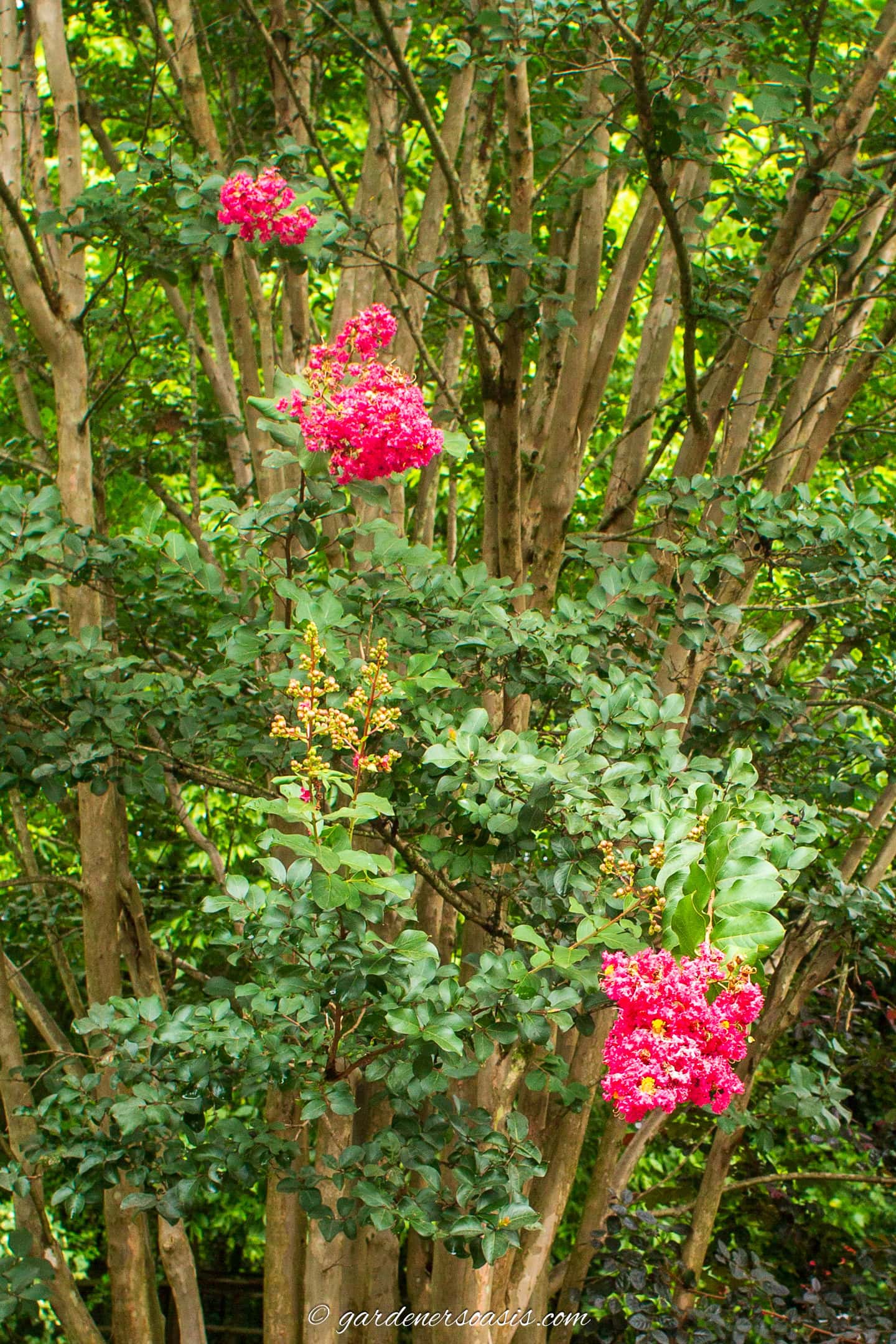
Scientific name: Lagerstroemia
Zone: 6 to 10
Exposure: Sun
Height: 15′ to 30′
Width: 10′ to 20′
Bloom time: late summer, fall
Flower color: pink, white, red
Crepe Myrtle is an easy to grow, low maintenance small tree or large bush that has big beautiful clusters of blooms, usually in white or pink.
They also have really interesting bark which makes them a good back drop for your garden even when they aren’t blooming. When I lived in Florida, they were called “tourist trees” because the colored, peeling bark looked like skin that had been sunburned.
These plants are deer-resistant, do well in the heat and humidity of the South, and are quite drought tolerant once established.
Some varieties self seed pretty aggressively so check with your local nursery before you plant them.
12 | Chaste tree

Scientific name: Vitex agnus-castus
Zone: 5 to 9
Exposure: Sun
Height: 15′ to 25′
Width: 15′ to 25′
Bloom time: summer
Flower color: blue, purple
The Chaste tree is an easy-to-grow, low maintenance large shrub or multi-stemmed small tree.
It has gray-green leaves and beautiful flowers that look like blue-purple crepe myrtle blooms.
And I find if you cut the flowers off when they are finished, you can get them to bloom again a second time.
These plants grow fast, so they can quickly provide some height (and shade) in the garden. Which is great if you are starting a new garden that needs some structure.
They are also fairly drought-tolerant once established. And are a member of the mint family, so the scent helps to keep the deer away.
Well, that’s it for our favorite deer-resistant trees. Hopefully you’ve found a few deer resistant trees that will work for your garden!


Have comments or questions about our deer resistant trees? Tell us in the section below.