
17 Wood Privacy Fence Ideas That Actually Look Good In Your Backyard
If you’re looking for wood privacy fence ideas that don’t leave your backyard feeling closed in, this post has plenty of inspiration. These designs focus on options that look good from both sides, so you don’t end up staring at the “back” of your own fence. It’s a good place to start if you want something that adds privacy and actually improves how your yard looks.
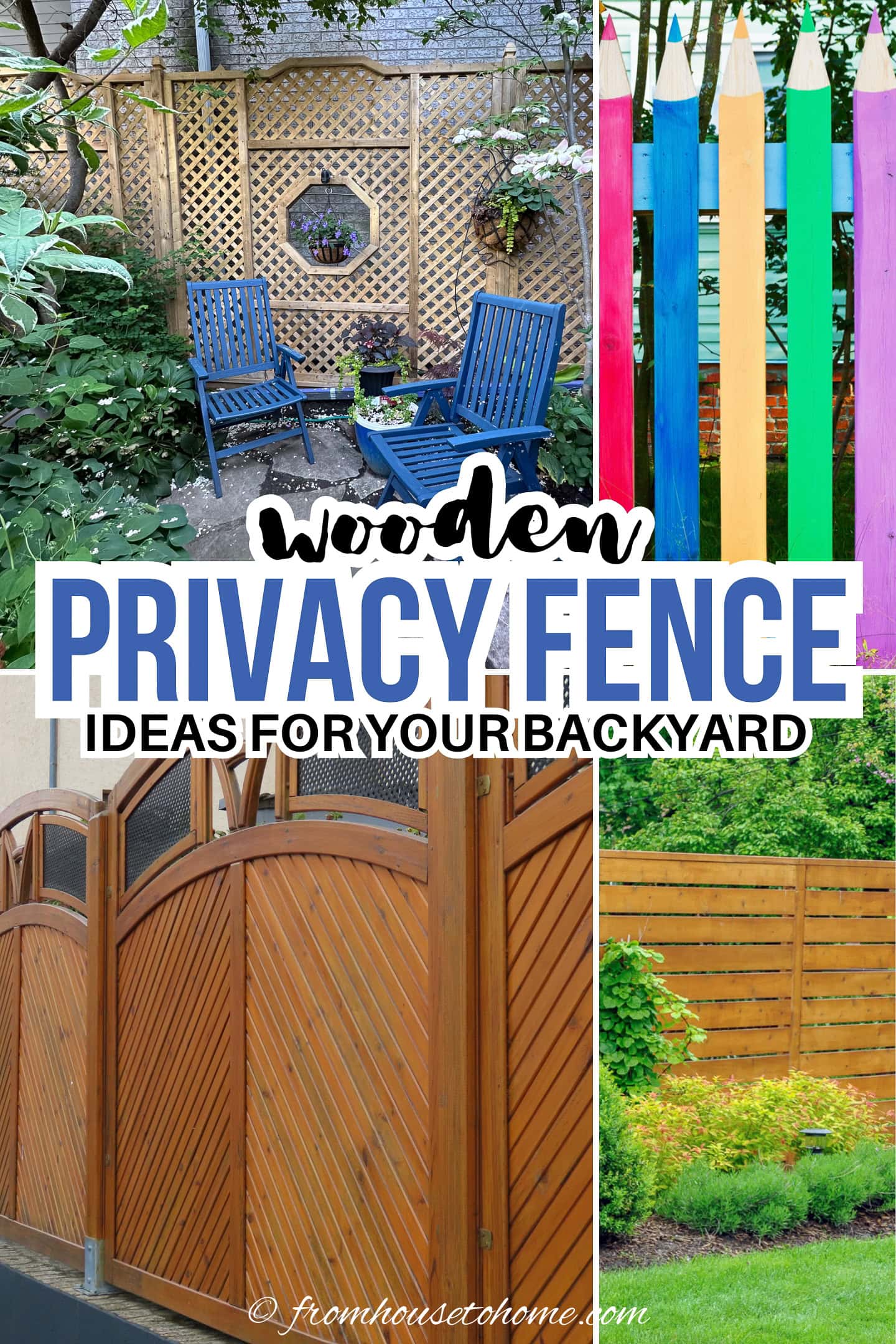
My backyard fence is about 20 years old now, and it’s definitely starting to show it.
Some of the boards are rotting, so I figured it was time to start thinking about a replacement.
Of course, once I started looking, I went down the rabbit hole of wood privacy fence ideas and found way more design options than I was expecting.
One thing that limits my choices a bit is my HOA.
They’re a little sticky about what kinds of designs we can use. And there’s a rule that the “good” side of the fence has to face out.
Which I get… no one wants to look at the back of a fence.
But I also don’t really want to be the one staring at the “ugly” side from my own yard either.
So most of the designs I ended up liking are ones that look just as good from both sides.
Which, honestly, is how I think all fences should be built anyway.
Looking for more privacy ideas? You'll love Privacy Hedge Ideas and Backyard Privacy Ideas.
1 | Custom wood privacy fence
![Outdoor grill area with a tiled counter, wooden pergola, hanging lanterns, and a custom privacy fence in the background.]()
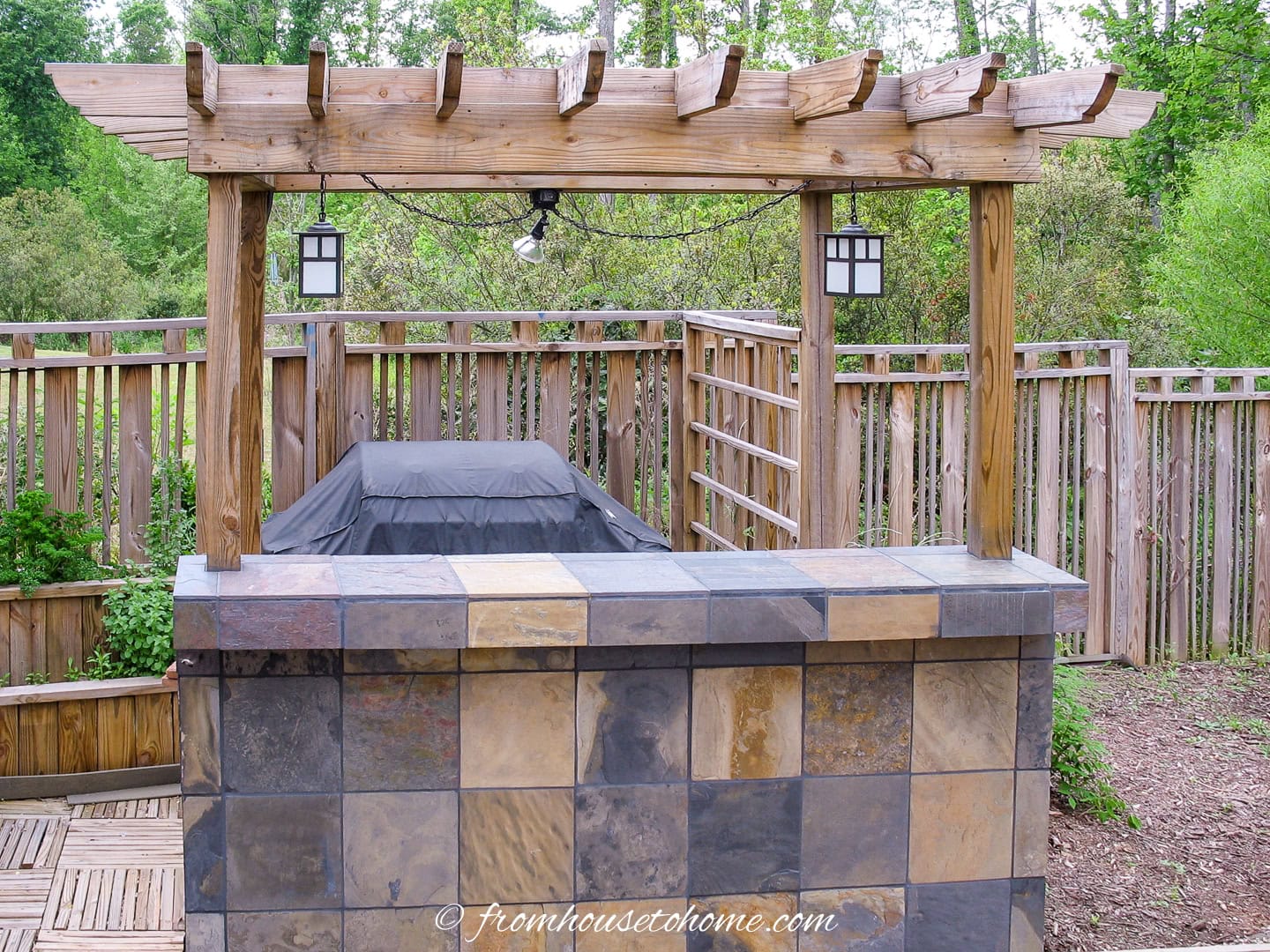
This is the fence I originally built in my backyard, and it has worked really well for a long time.
I didn’t want a standard, straight-off-the-shelf design, so I came up with something that has a little more detail than a basic privacy fence.
It does take a little more effort (and lumber) than the usual options, but I like that it feels more like a design choice instead of just something that’s there for privacy.
If you’re thinking about building your own, I also have a full tutorial that walks through exactly how I did it.
2 | Classic board-on-board privacy fence
![Wooden privacy fence with vertical planks and sturdy posts in front of a modern two-story house under a partly cloudy sky.]()
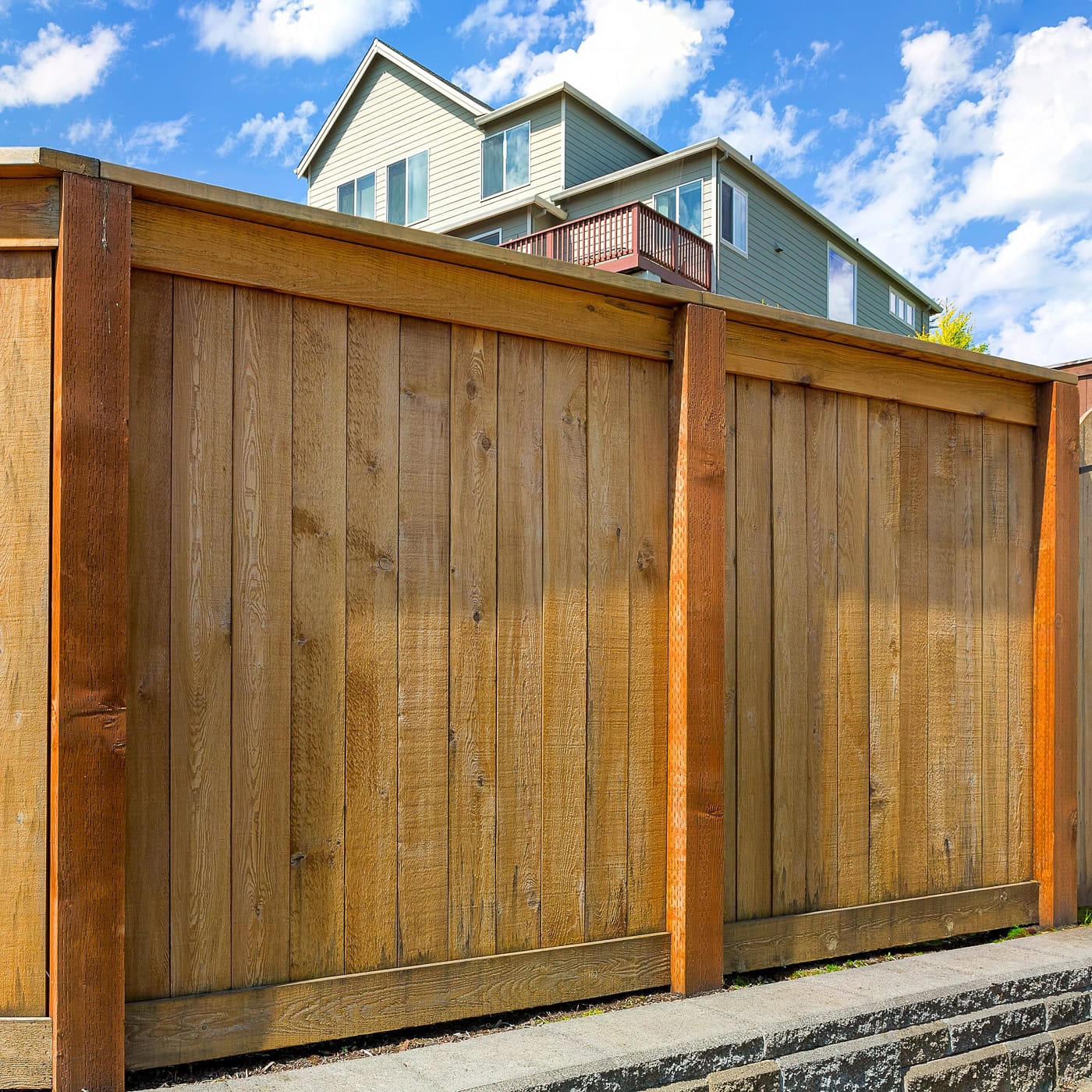
This is the standard privacy fence you see everywhere, and it definitely does its job.
The boards are installed close together so there aren’t any gaps, which gives you a really solid visual barrier.
However it can also feel a little like you’ve walled yourself into Fort Knox.
It blocks the view really well, but it’s not exactly inspiring to look at.
If privacy is your only goal, it works. But if you want your backyard to feel like a place you actually enjoy spending time in, this style can come across as a little heavy and plain.
3 | Privacy fence with contrasting posts
![A wooden privacy fence with black metal posts runs alongside a landscaped garden with green shrubs and stone edging under a partly cloudy sky.]()
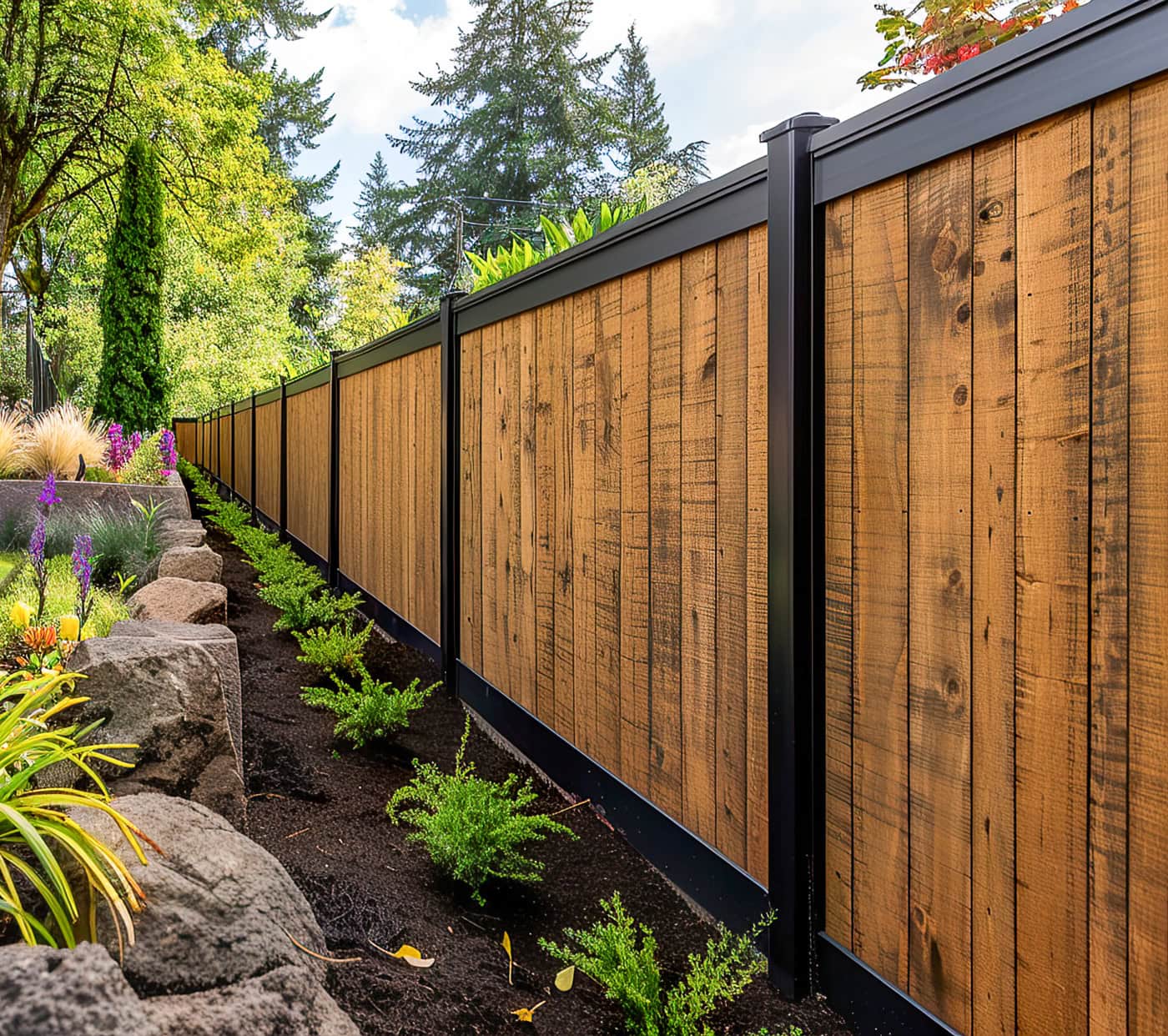
© Nikola – stock.adobe.com If you like the basic board-on-board look but want to make it a little more interesting, changing the color of the posts and frame helps a lot.
Whether that’s painting them a darker color or using a metal frame like this one, it gives the fence more definition.
Instead of one big wall of wood, you get some contrast that breaks it up and makes it look more custom.
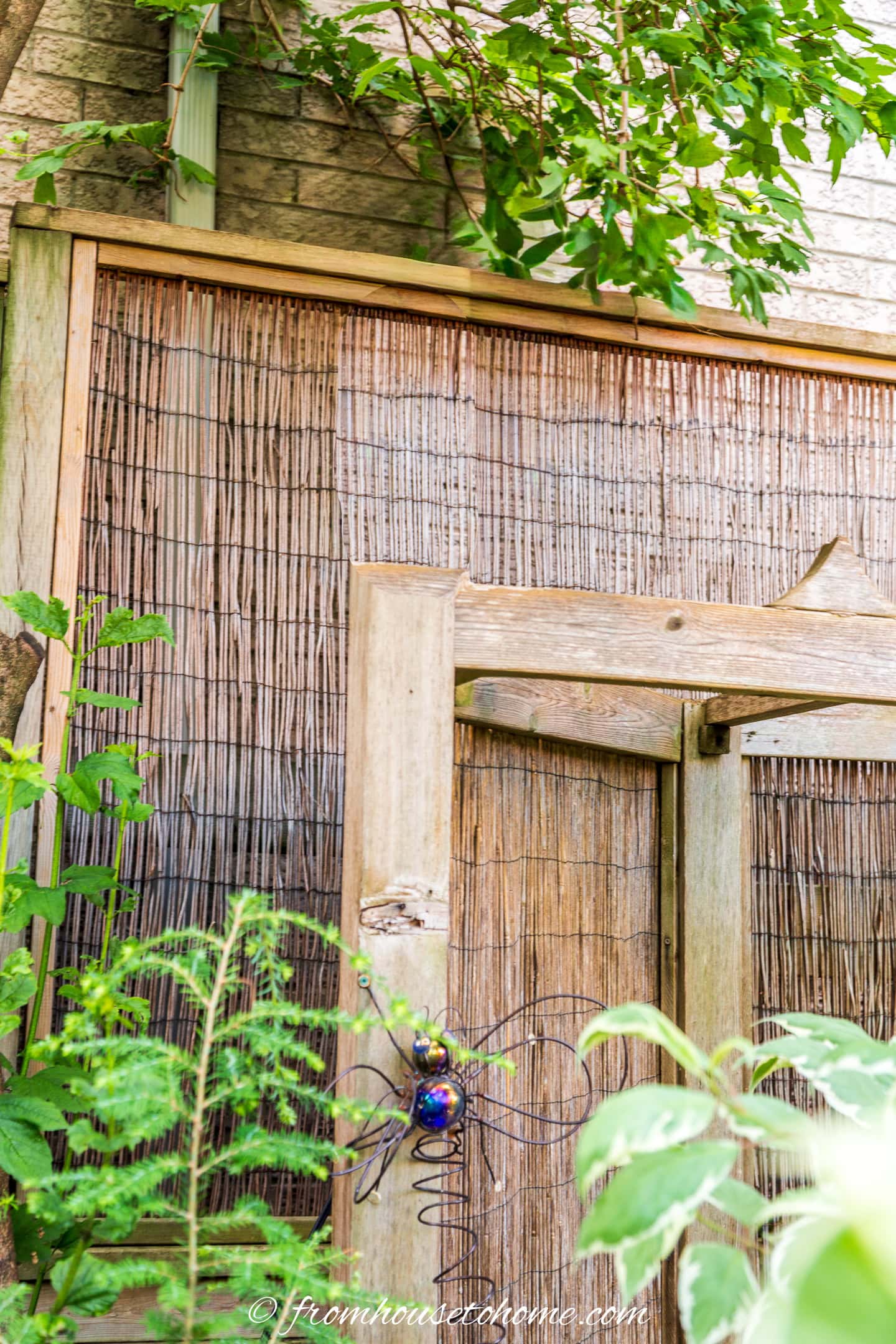
4 | Wood frame with bamboo infill
![A wooden pergola stands in front of a bamboo privacy fence, surrounded by green plants and foliage. A metal insect decoration is attached to the pergola.]()
My mother used this bamboo reed fence in her backyard and while it also provides total privacy, it has a totally different feel.
Using bamboo instead of solid boards softens the whole look and adds a lot more texture.
I think it has a more relaxed, garden-style vibe, and it doesn’t look as flat as traditional wood panels.
5 | Privacy fence with lattice top
![A landscaped backyard with a wooden raised bed, various drought-tolerant plants, gravel, rocks, and a wooden fence in the background under a cloudy sky.]()
© Bruce Shippee – stock.adobe.com Replacing the top section of a privacy fence with lattice is a really common way to make it feel a little less like a wall.
You still get full coverage where it matters, but the open pattern at the top keeps it from feeling so closed in.
It’s a nice balance if you want privacy without making your yard feel as boxed in.
I like the look of square lattice better than diagonal lattice because it echoes the shape of the fence and it’s not as common.
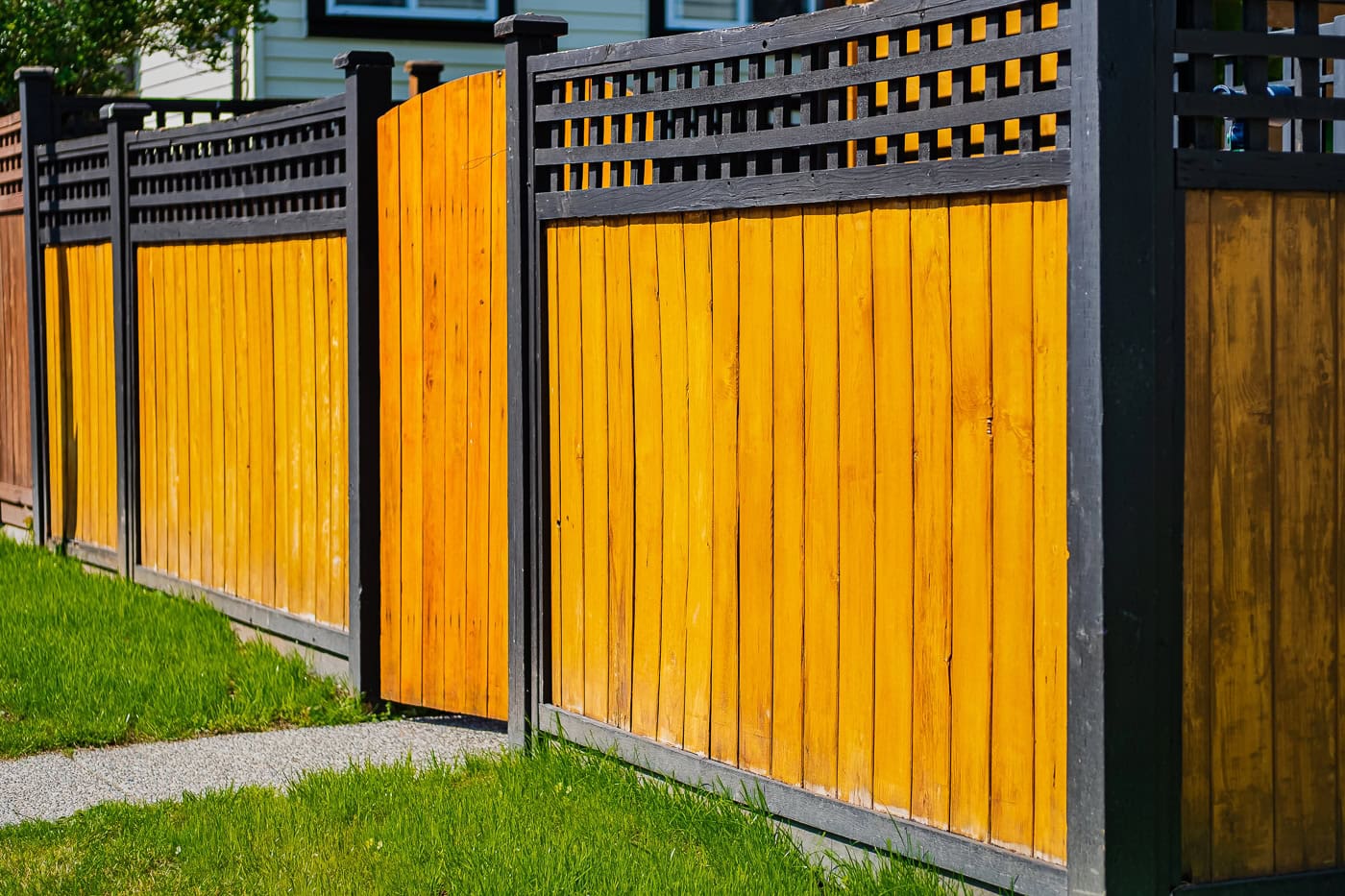
6 | Painted lattice-top fence
![A yellow wooden fence with dark trim and a latticed top section stands along a sidewalk with green grass on either side.]()
This is the same idea as adding contrast to the posts and frame… just applied to a lattice-top fence.
Painting both the lattice and the posts a different color helps define the structure and makes those details stand out more.
Without the contrast, the lattice can kind of blend into the rest of the fence.
But once you highlight it (along with the posts), it feels more like a design feature instead of just part of the construction.
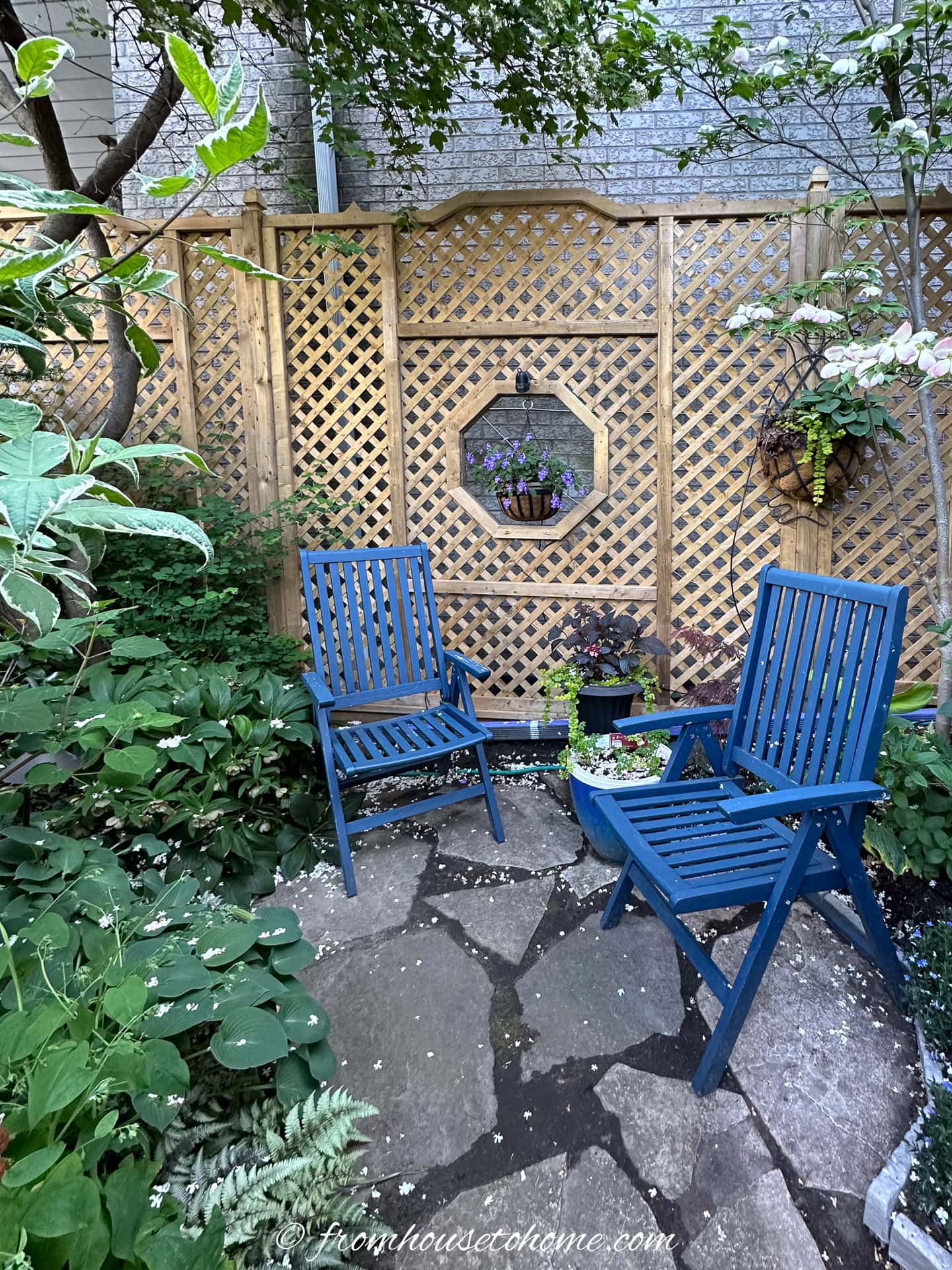
7 | Full lattice fence
![Two blue wooden chairs sit on a stone patio in a small garden, surrounded by green plants and a wooden lattice fence with potted flowers.]()
Of course, you can just go with a full lattice privacy fence.
My mother added color and interest to her fence by building in holes where she could hang flowering baskets.
Adding some architectural details to the top of the fence also gives it a custom look.
8 | Arched fence with decorative panels
![Wooden privacy fence with diagonal panels and decorative curved tops, installed along a concrete base next to a building.]()
This fence stands out because of all the little details working together.
The arched top gives it that custom look, but the real interest comes from the mix of materials… diagonal wood boards on the bottom and mesh panels at the top, separated by those curved wood dividers.
That combination adds a lot more personality and keeps it from feeling like just another solid wall.
And if the arched shape feels like too much work (or expense), you could use the same idea with straight panels. The mix of diagonal boards, mesh, and trim details would still give you that more custom, designed look without having to make curves.
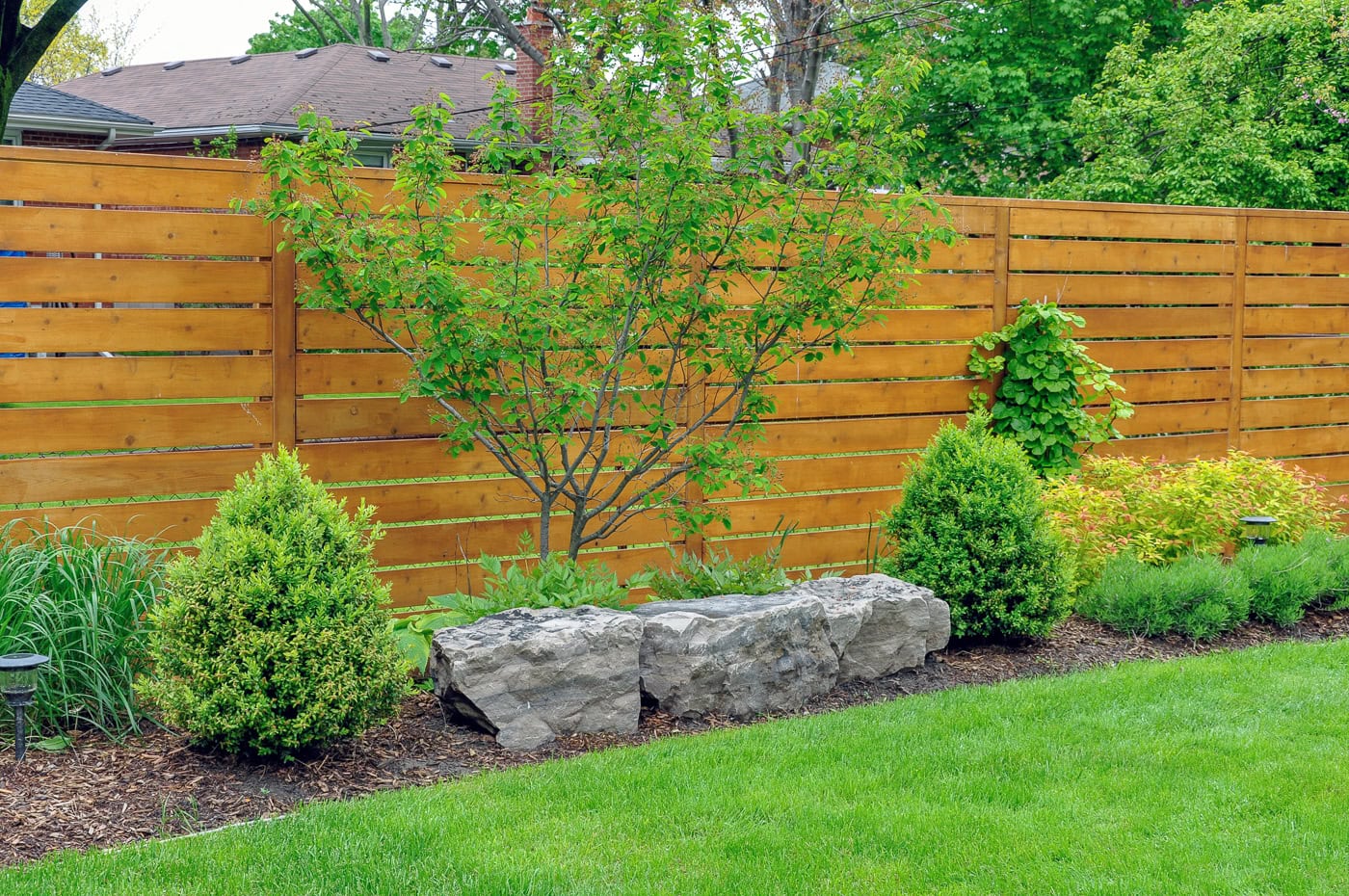
9 | Horizontal boards privacy fence
![A landscaped backyard with green grass, shrubs, a small tree, large rocks, and a wooden privacy fence.]()
© Joanne Dale – stock.adobe.com Switching the boards from vertical to horizontal is one of the easiest ways to make a fence look more modern.
Same basic idea, totally different feel.
This style of fence works really well in a more minimal landscape (like behind a Japanese garden) where the simple lines won’t distract from the structure and layout of the space.
It also has the added benefit of making a tall fence feel less imposing. Since your eye moves side to side instead of straight up, it doesn’t emphasize the height the same way vertical boards do.
10 | Horizontal fence with planter boxes
![Five rectangular wooden planter boxes with various plants are mounted on a dark wooden slat fence outdoors.]()
You can also install horizontal boards on opposite sides of the fence and then add planter boxes to make it look more interesting.
This still keeps the more modern aesthetic but breaks up the wide expanse of fence with some greenery.
Unless you live in a location that has cool, wet summers, I would use larger planter boxes than in this picture. It’s hard to keep the plants alive in the smaller ones because they dry out very quickly.
11 | Horizontal slat fence
![A wooden slatted fence with green ivy growing on the right side, surrounded by lush trees and foliage.]()
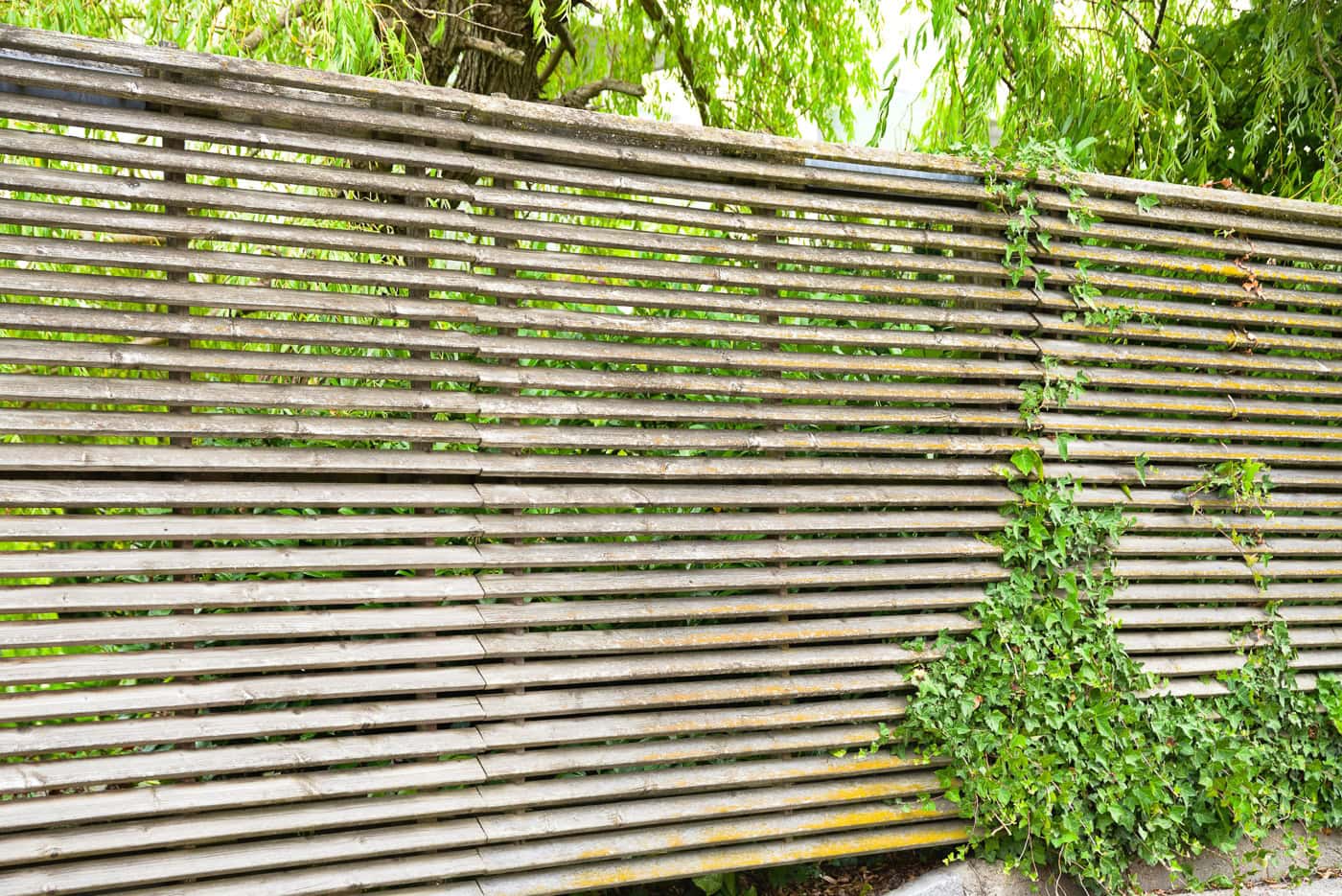
Using slats instead of horizontal boards produces a lighter version of a privacy fence.
You still get separation, but the gaps between the boards keep it from feeling too solid.
It’s also nice if you want to incorporate plants.
You can actually grow things through the slats, which helps the fence blend into the landscaping instead of just sitting behind it.
12 | Picket design on top
![A weathered cream-colored wooden fence with decorative trim, bare and budding branches, and some green ivy growing against it. A brick building and leafy tree are visible behind the fence.]()
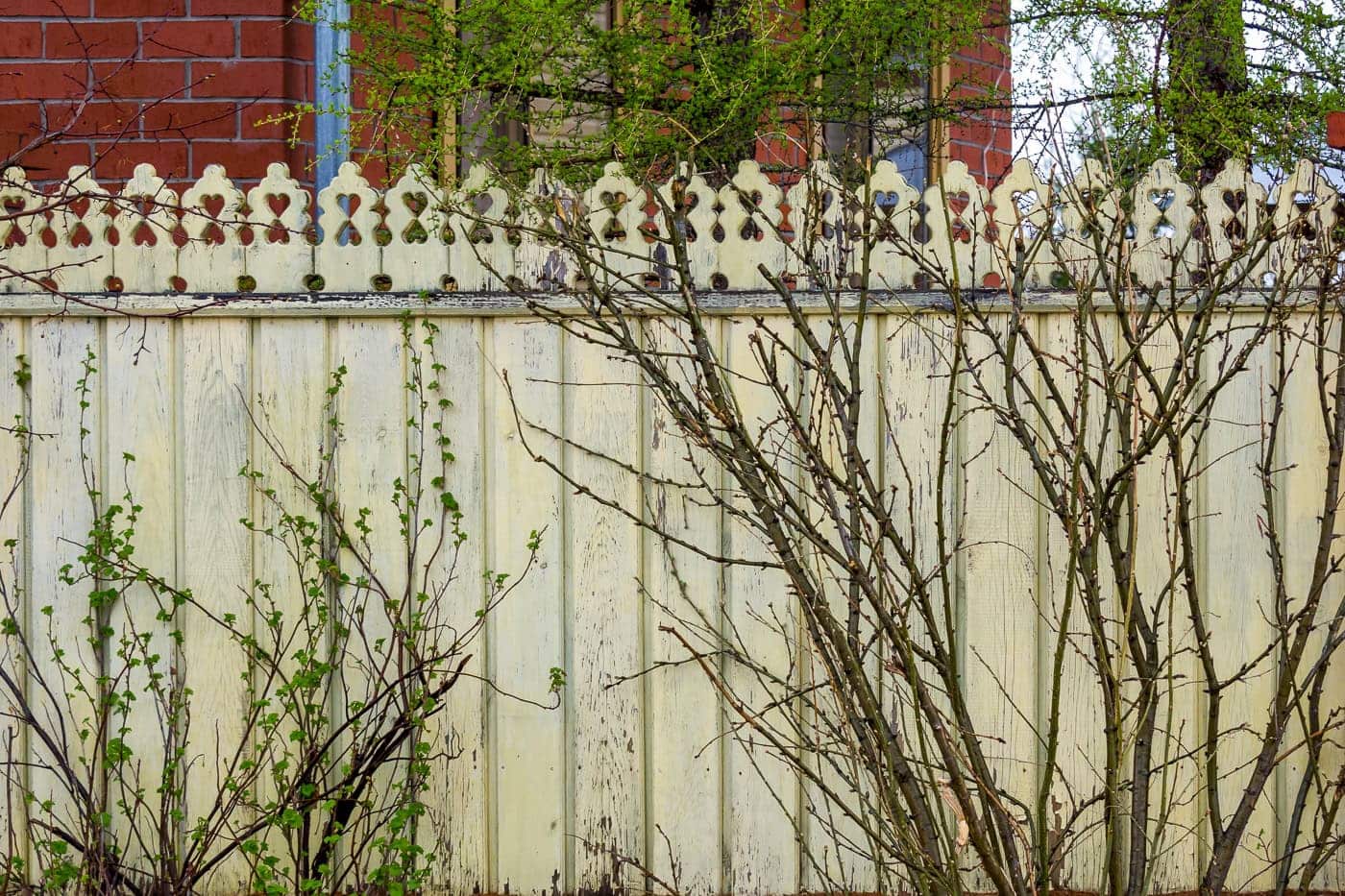
This one gives you the privacy of a solid fence on the bottom, but with a more decorative look at the top.
The picket detail makes it feel less heavy without giving up coverage where you need it.
If you like a more traditional style, this is a good way to keep that look while still getting the benefits of a full privacy fence.
13 | Tall picket fence
![A wooden garden fence with an arched trellis gate supports blooming pink and white climbing roses, surrounded by various green plants and flowers.]()
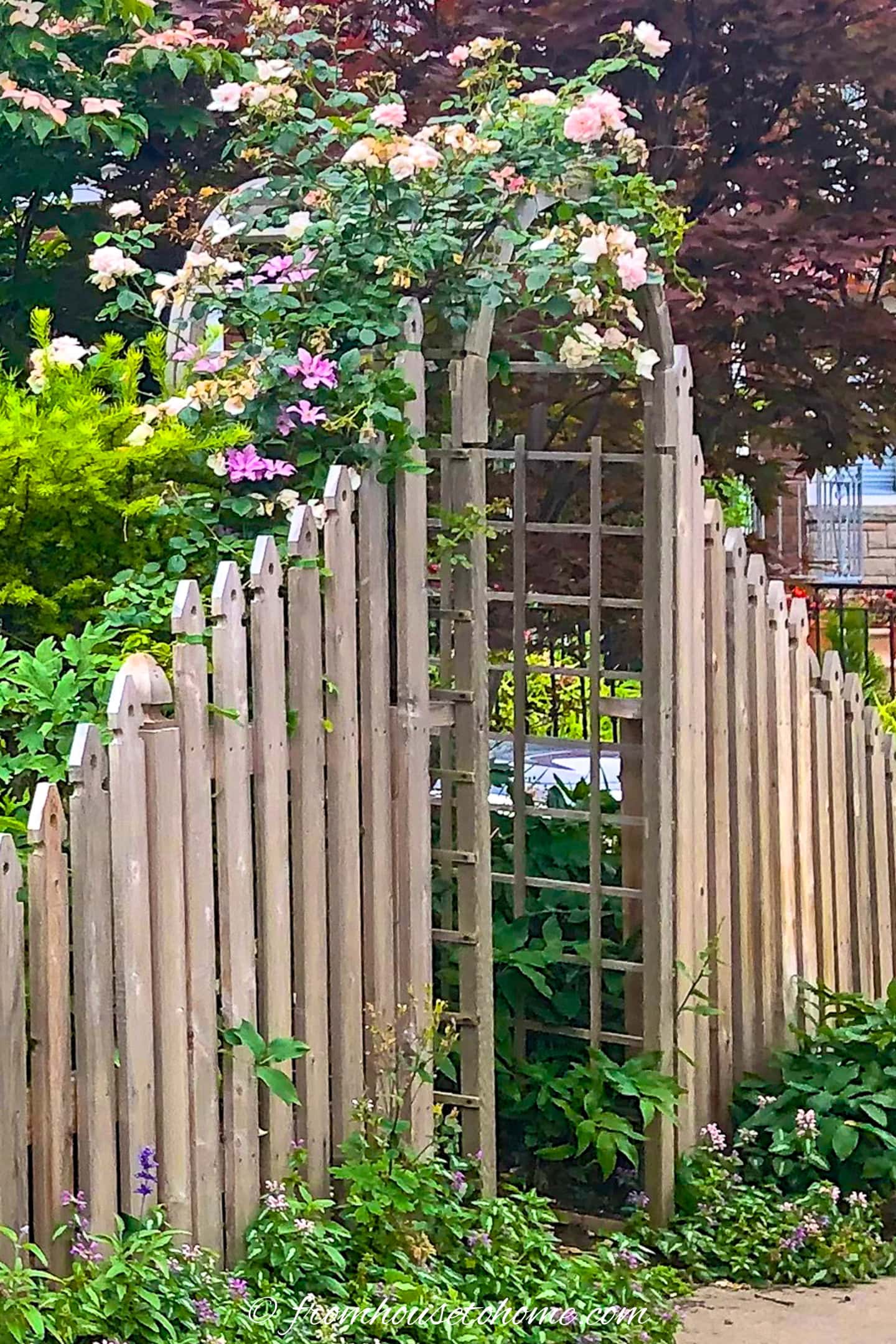
A picket fence doesn’t usually come to mind when you think of privacy, but it actually can work if you make the pickets taller and space them closer together.
You still get that classic look, just with a lot more coverage.
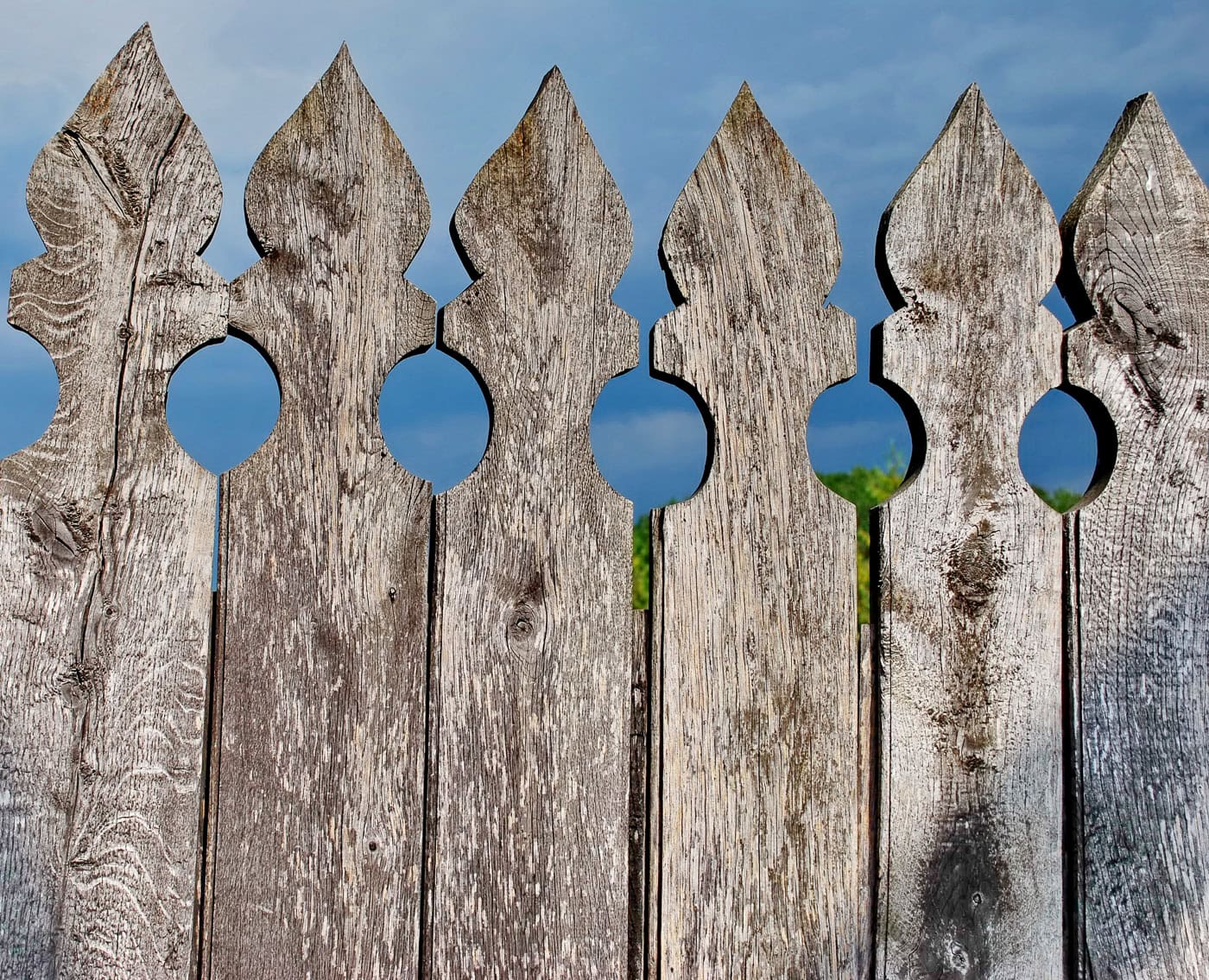
I also like that you can customize the tops of the pickets to make it feel a little more unique.
![close up of decorative pickets at the top of a fence]()
Instead of the standard pointed shape, you can cut curves or patterns so it feels more like a design feature than a basic fence.
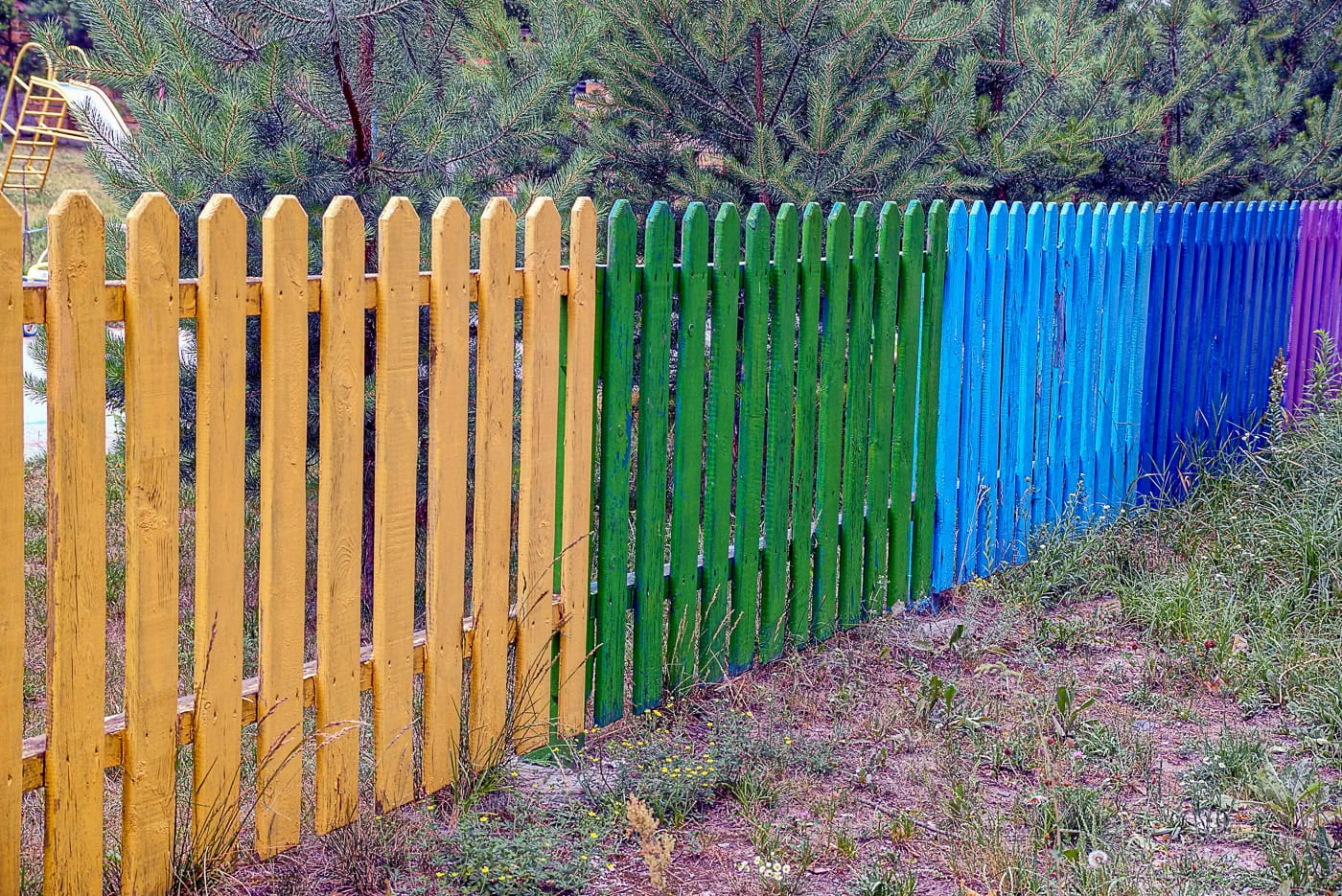
14 | Multi-color fence design
![A wooden picket fence painted in a gradient of yellow, green, blue, and purple stands next to tall grass and trees.]()
Painting each section of a fence a different color is an easy way to make it stand out.
Instead of fading into the background like most fences do, it becomes part of the design.
And it doesn’t have to be a new fence to make this change. So it’s a very economical way to update the look of your fence if it’s still structurally sound.
If you don’t want to deal with repainting, using different stain colors would give you a similar look with less upkeep.
Note: This picture happens to be of a picket fence, but you could use the same idea with any style.
This would be an HOA fail in my neighborhood. So if you also have HOA rules you have to follow, I would check first before starting to paint.
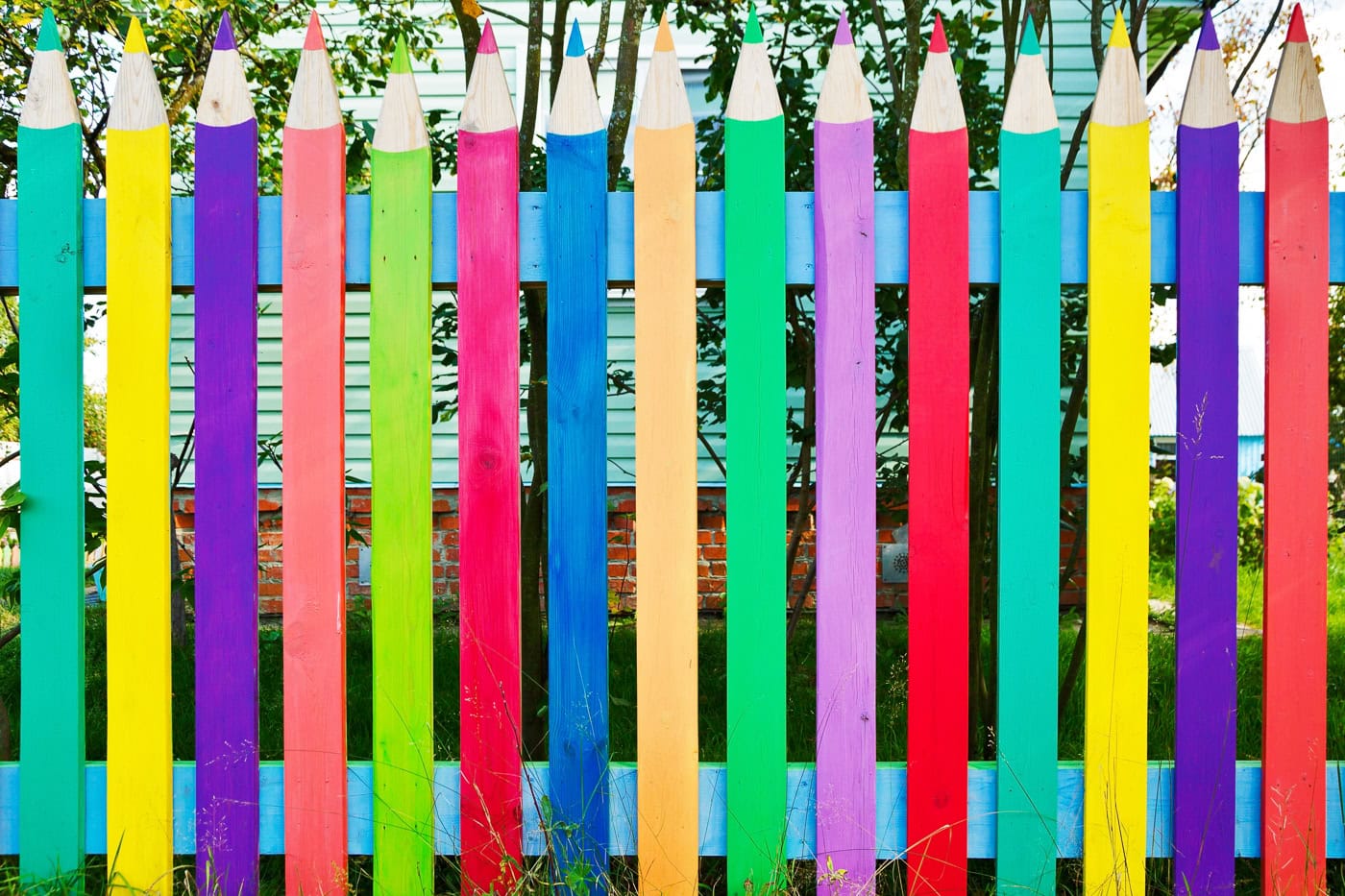
15 | Pencil pickets
![A wooden fence painted in bright colors to resemble upright pencils, with greenery and a building visible in the background.]()
© Kushch Dmitry – stock.adobe.com This is one of those ideas that’s just fun.
Shaping and painting each picket to look like a colored pencil turns the fence into something totally unexpected.
It’s obviously not for every yard, but if you want something playful or you’re designing a space around kids or a creative theme, this would definitely be memorable.
It’s basically functional art that just happens to be a fence.
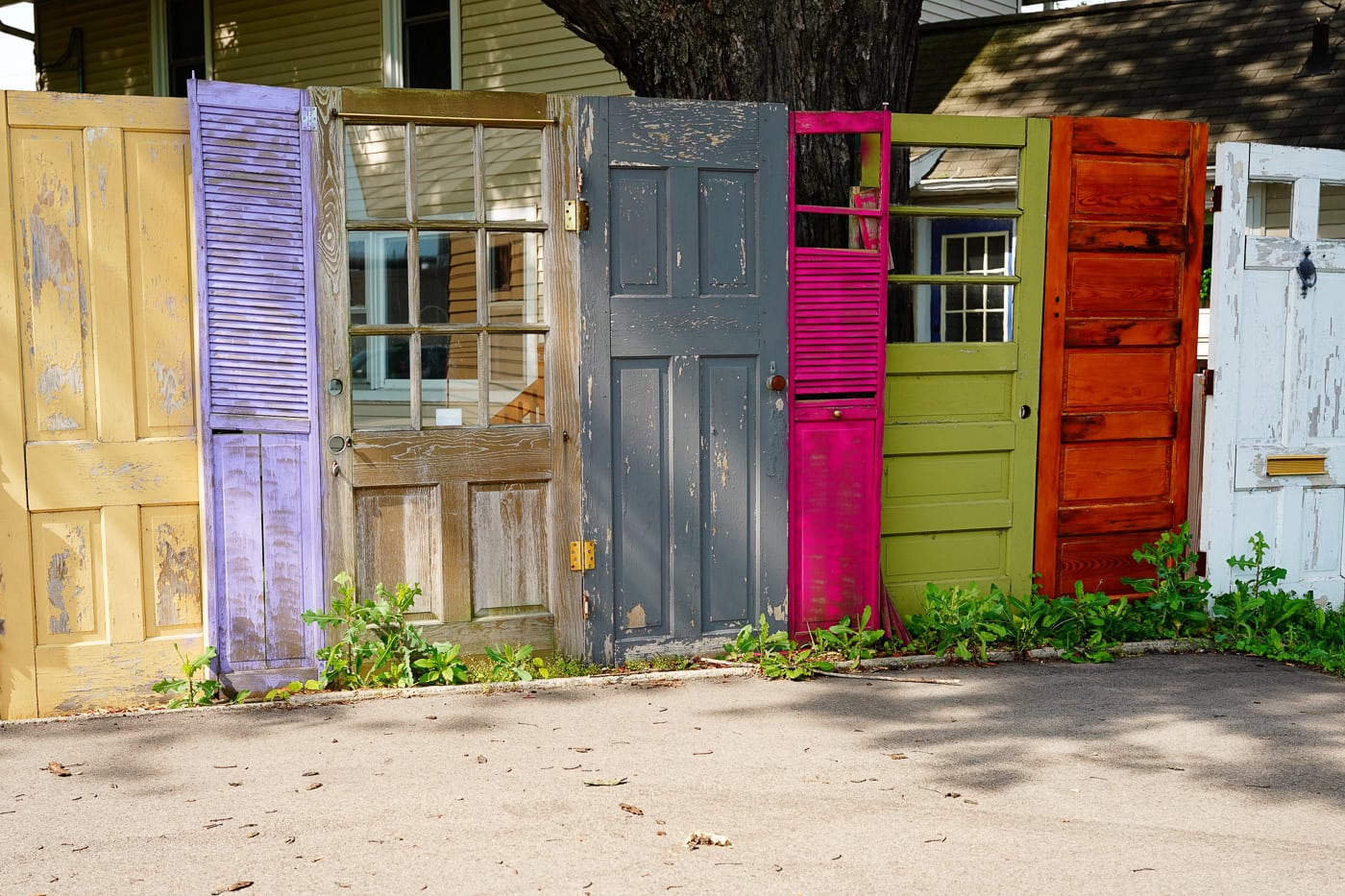
16 | Old doors
![A row of old, colorful doors and shutters is arranged upright outdoors in front of a house, with grass and weeds growing at their bases.]()
Using old doors as fencing gives you a really eclectic, collected look.
Since the doors are all different shapes and sizes, you automatically get a lot of variation without having to design it from scratch.
Painting (or leaving) them in different colors really leans into that one-of-a-kind feel.
But if you want it to feel more cohesive, you could paint them all the same color to help tie everything together.
Either way, it’s a great way to reuse materials and create something that feels one-of-a-kind. Definitely not your standard backyard fence.
Make sure the doors are wood or metal. Cheap hollow core doors will not stand up to the weather for very long.
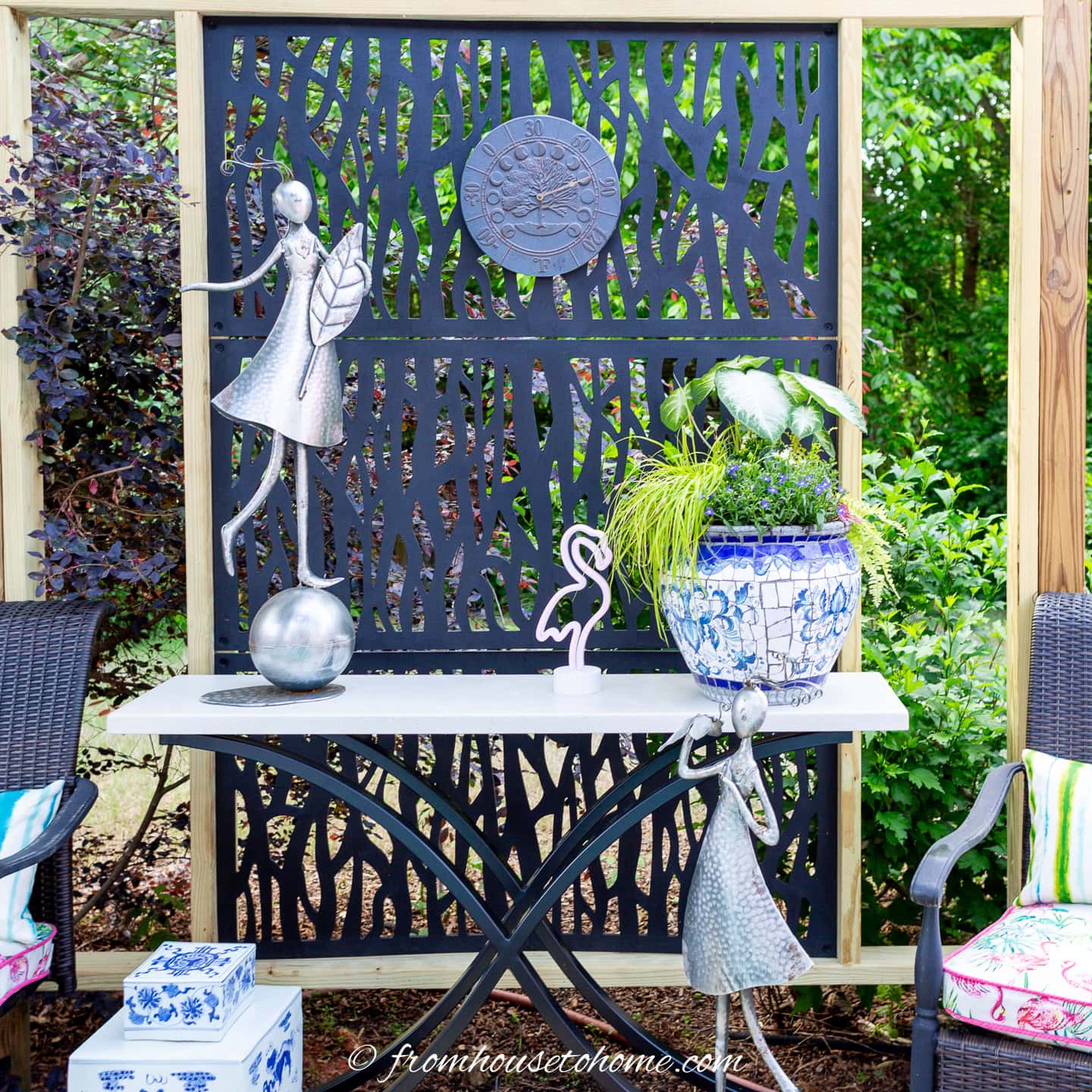
17 | Privacy screen fence
![Outdoor garden scene with a decorative black privacy screen, metal fairy sculptures, a white table, a blue and white planter with greenery, wicker chairs, and accent pillows.]()
I am actually leaning towards doing this design. Which uses this black decorative panel* (that looks like wrought iron but isn’t) and my DIY privacy screen design as its basis.
My old deck (where I originally had the privacy screen) was falling apart so I replaced it with a screened in porch (stay tuned for a post about that.)
And I didn’t want to just get rid of the privacy screen, so I replaced a section of my existing fence with it. And I love it!
I will probably do something to the final design so that there is less of a gap on either side of the screen. But the basic idea will stay the same.
If you wanted to use this idea without making the whole fence out of it, the black panels could also be used instead of lattice at the top of the fence.



What to read next
Have comments or questions about our wood privacy fence ideas? Tell us in the section below.