
How To Plant And Care For Rose Of Sharon
Learning how to care for Rose of Sharon will bring vibrant blooms and attract butterflies and hummingbirds to your garden all summer long. With my years of experience, I’ll share simple tips to help you grow this easy, beautiful shrub and enjoy its stunning flowers season after season.

I have quite a few Rose of Sharon (Hibiscus syriacus) in my garden, and they’ve become some of my favorite shrubs.
They’re incredibly low maintenance.
Especially if you pick varieties that don’t self-seed all over the place.
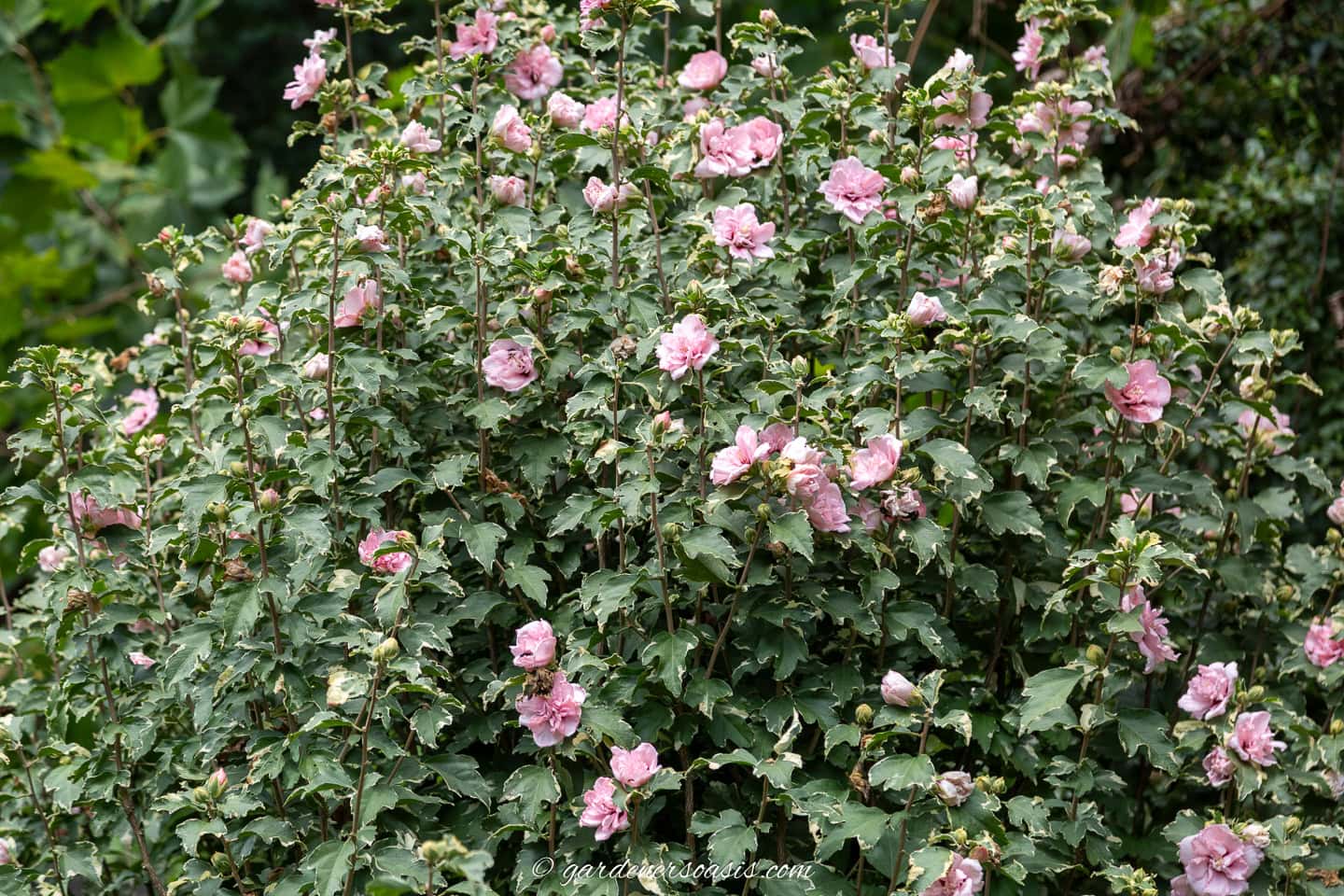
I love that they’re taller than they are wide, so they add privacy and a nice vertical accent at the back of my borders without taking over the whole space.
They’re also fast growing, so you don’t have to wait years to enjoy their full size and impact.
One of the best things about them is their timing.
They’re one of the last plants to leaf out in the spring, but then reward your patience with loads of flowers in mid-to-late summer, right when the rest of the garden is starting to fade.
Looking for more fall blooming plants? You'll love Fall Blooming Shrubs and Fall Blooming Perennials.
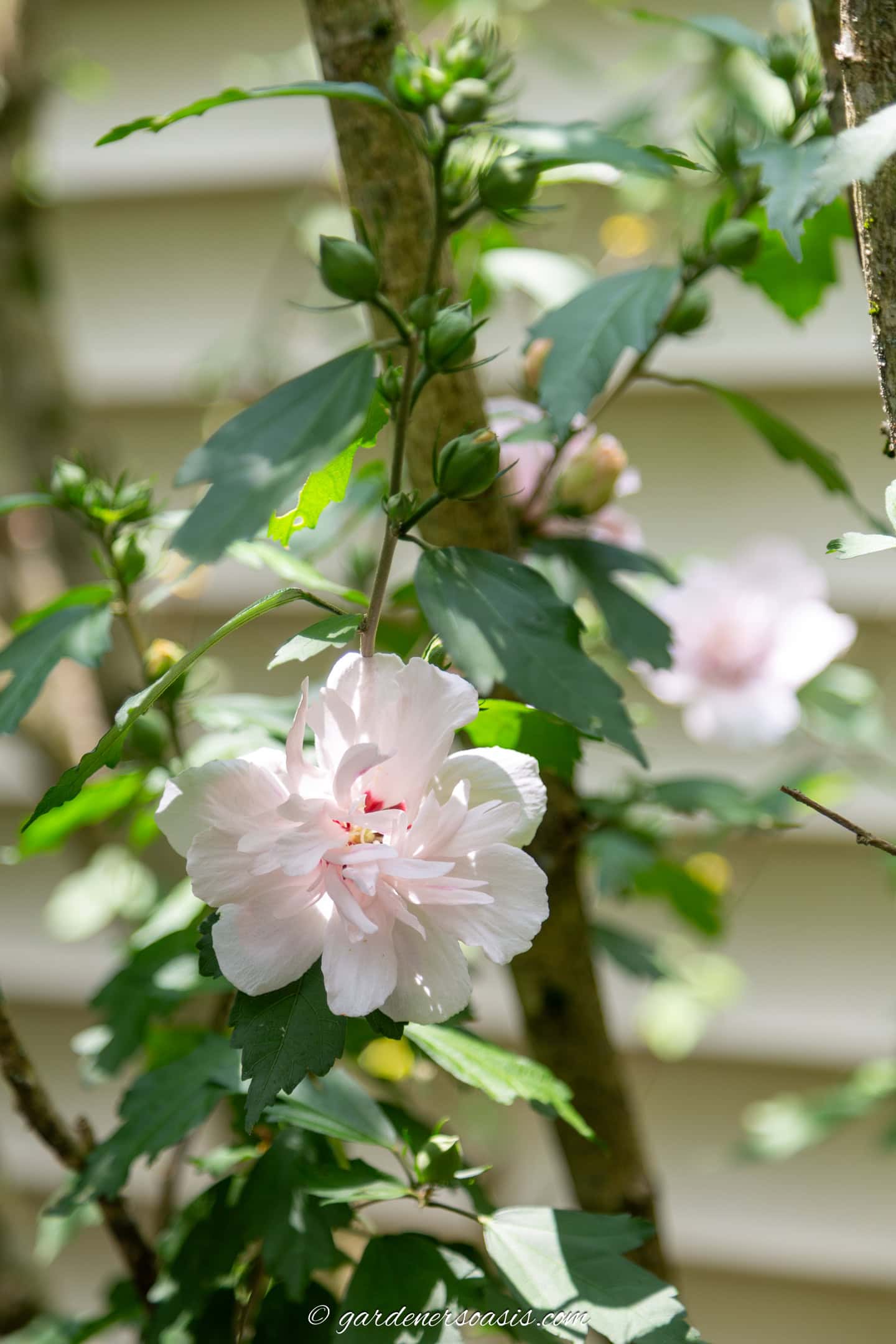
1 | Plant description
![A pale pink double hibiscus flower with green leaves and buds, growing on a branch in sunlight, with a blurred background.]()
Scientific name: Hibiscus syriacus
Zone: 5 to 9
Exposure: sun to part shade
Height: 3′ to 12′
Width: 3′ to 6′
Bloom time: summer to fall
Flower color: pink, purple, red, blue, or whiteSize
Rose of Sharon (Hibiscus syriacus, also known as althea) is a deciduous shrub that can easily reach 8–12 feet tall and 4–6 feet wide. Although there are smaller varieties if you don’t have the space.
Most grow taller than they are wide, making them a good choice for narrow spaces or as a vertical accent in the garden.
Growth rate
They also grow quite fast.
In my zone 8 South Carolina garden, these shrubs reach full size in 2 to 3 years.
When I lived in Toronto (American zone 5, Canadian zone 6) where the growing season is shorter, the growth rate was more like 1′ to 2′ per year.
Flowers
The flowers can be single, semi-double, or double, and they come in a wide range of colors (pink, purple, blue, white, and red) often with a contrasting eye in the center.
They start blooming in mid-summer and keep going right into fall, giving you color long after many other shrubs have finished.
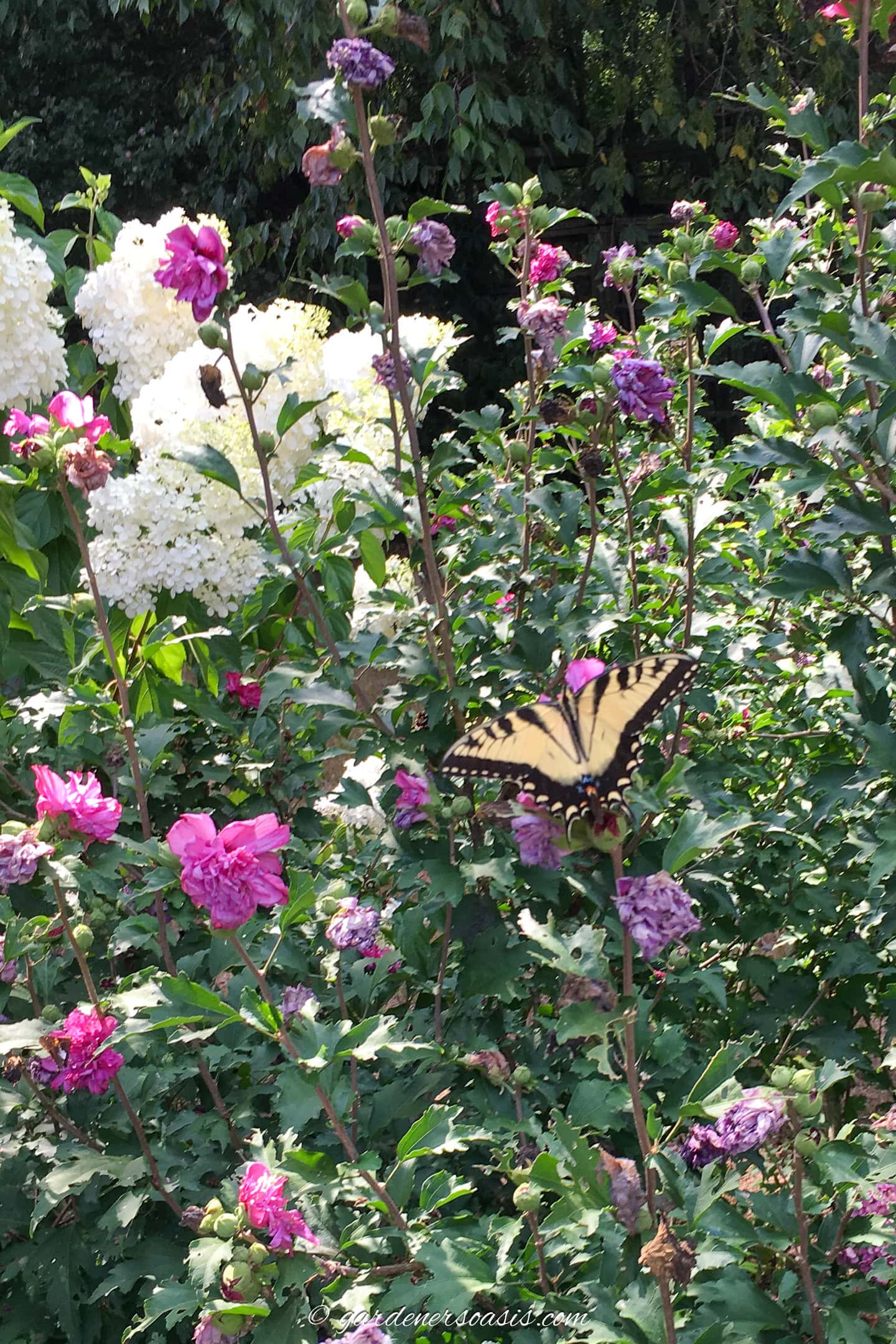
![A butterfly on a rose of sharon bush]()
They’re also a magnet for hummingbirds, butterflies, and bees. The pink and red blooms, in particular, are favorites of the hummingbirds in my yard.
Leaves
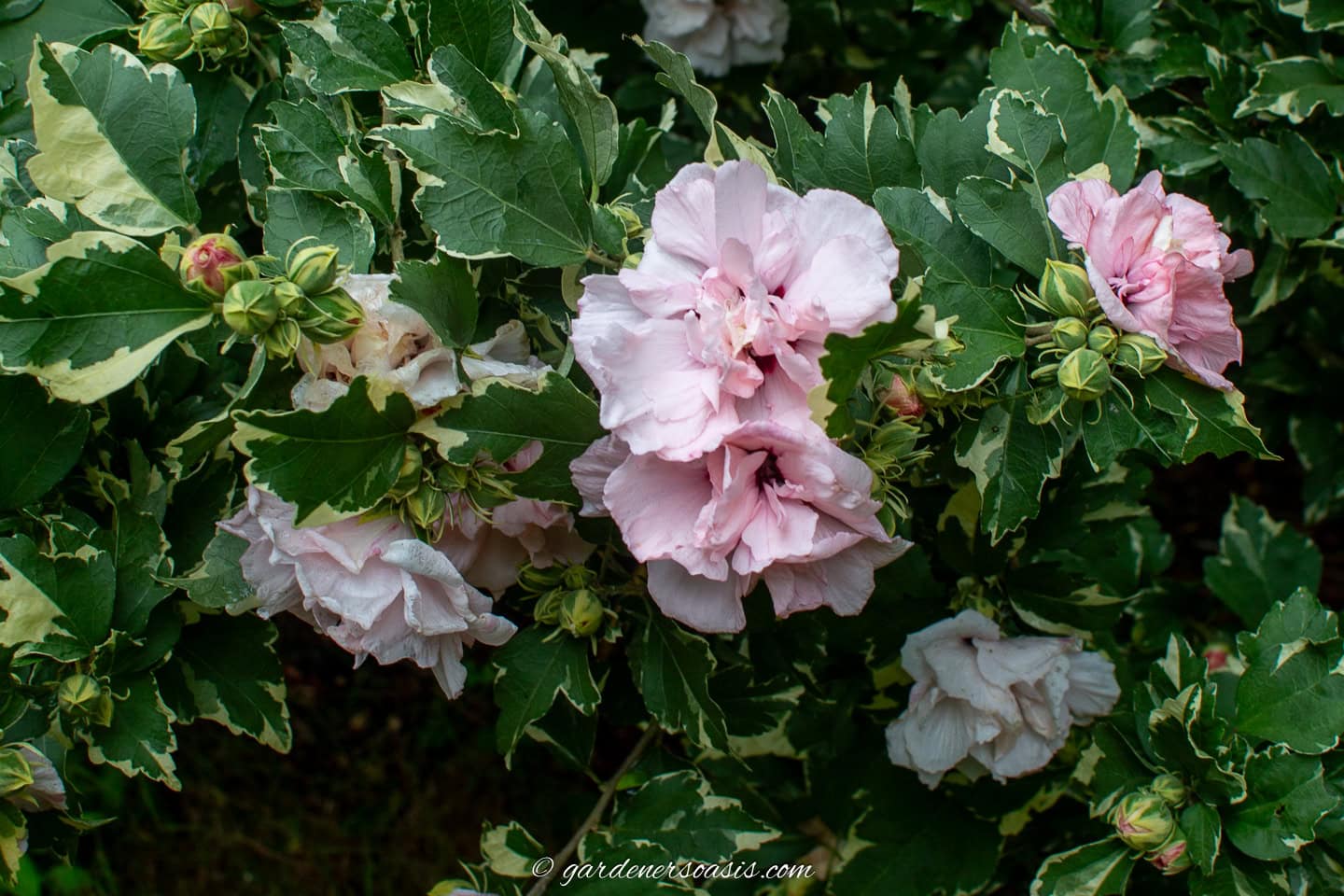
The leaves are a medium size and color, with some varieties being variegated.
They don’t show up until fairly late in spring. So don’t give up on them too early and think the plant has died.
2 | Where To Grow Rose of Sharon
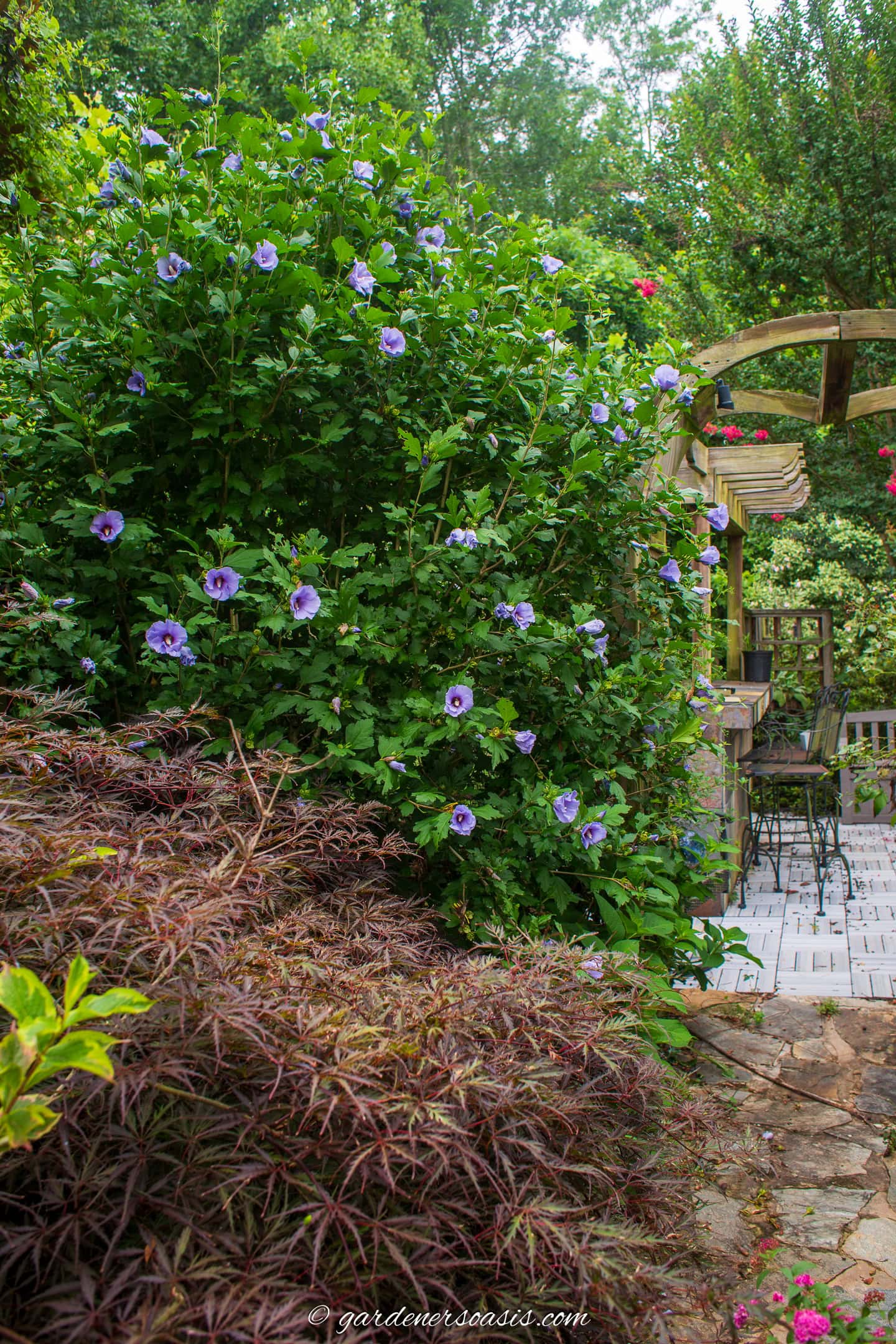
![A garden with blooming purple hibiscus bushes, a Japanese maple, and a patio with chairs and a pergola in the background.]()
Hardiness zones and climate
Rose of Sharon thrives in USDA zones 5–9, flourishing in heat, humidity, and urban environments.
I never have any problem with them wilting in our hot, humid South Carolina summers.
Sunlight requirements
It does best in full sun (6–8 hours a day) for maximum blooms.
Having said that, I grow many of mine in part shade and they still do really well. In shadier spots, they just tend to get a little taller as they reach for the light.
Soil
Like most plants, Rose of Sharon prefers well-draining, nutrient-rich soil.
But it adapts to slightly acidic, neutral, or even alkaline soils, and stands up well to poor soil conditions.
Mine are growing in less-than-perfect clay, and they still bloom like crazy as long as it drains well.
Space and placement
Ideal planting locations include mixed borders, specimen spots, hedges, or patio containers for dwarf types.
To prevent overcrowding, space plants 6 to 10 feet apart, with 3 to 4 feet sufficient for compact varieties.
3 | How To Plant
![A close-up of a pink hibiscus flower with ruffled petals, surrounded by green leaves in bright sunlight.]()
When to plant
Plant in spring once the danger of frost has passed, or in fall if you live somewhere with mild winters.
Steps
1. Dig a hole about the same depth as the root ball and up to twice as wide.
2. Set the plant in the hole so the top of the root ball is level with the soil surface.
3. Backfill, water well, and add about 2 inches of mulch to help hold moisture and keep weeds down.You can mix a little slow-release fertilizer into the planting hole to give your shrub a head start, but it’s not absolutely necessary—Rose of Sharon will usually take off just fine without it.
4 | Watering
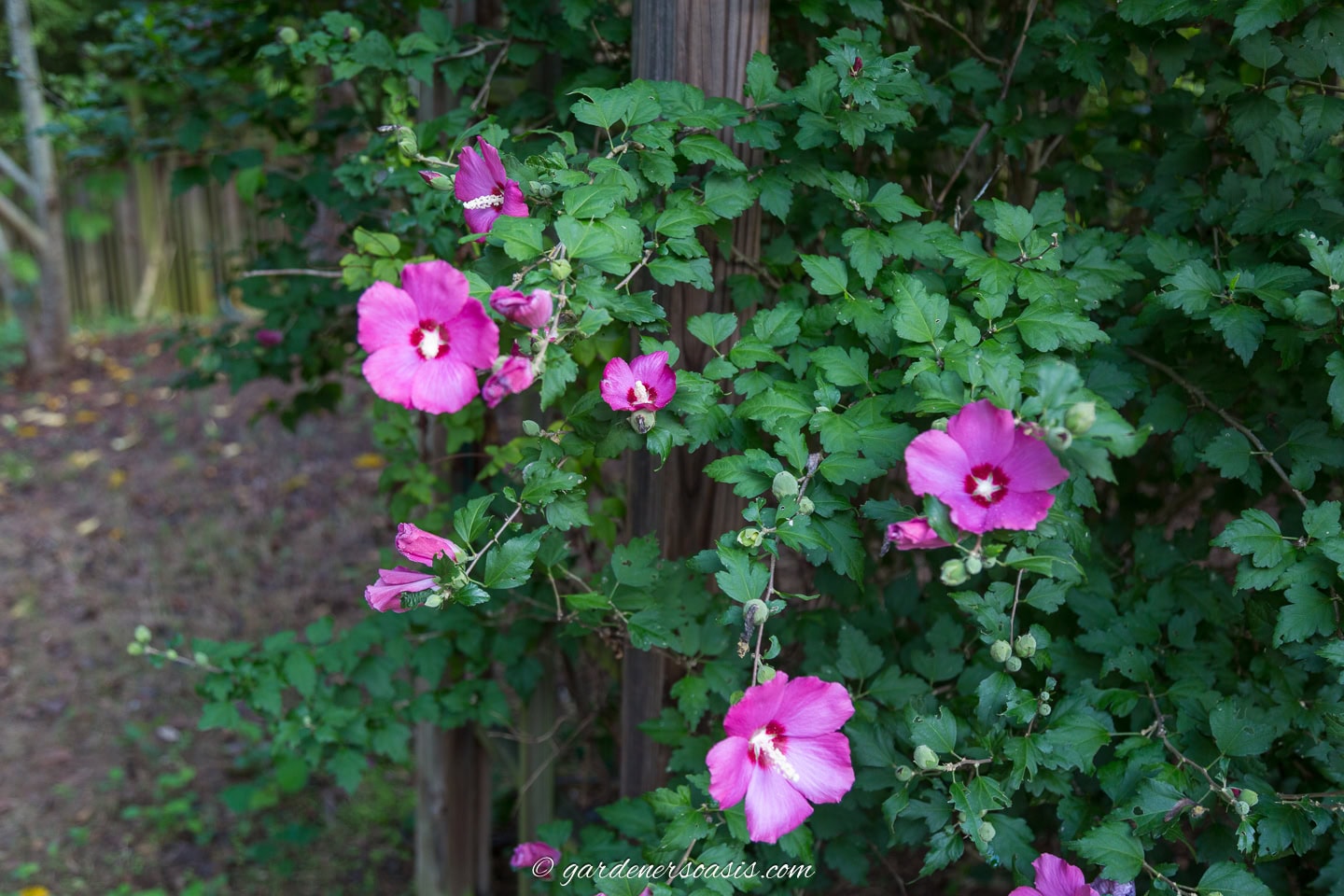
![Several bright pink hibiscus flowers and buds are growing on a leafy green shrub next to a wooden post outdoors.]()
When they’re young, Rose of Sharon plants need regular watering (about once a week if you don’t get rain) to help their roots get established.
In hot weather or sandy soil, you may need to water more often.
Once they’re established, they’re fairly drought tolerant and only need extra water during long dry spells.
If your plant starts dropping buds or the leaves turn yellow in midsummer, it’s usually a sign it’s too dry.
Adding a 2″ to 3″ layer of mulch will help keep the soil consistently moist.
5 | Fertilizing
![A dense bush with numerous pink hibiscus flowers and green leaves, pictured outdoors in a garden setting.]()
I don’t fuss much with fertilizer for mine.
But if you want to give them a boost, sprinkle a slow-release balanced fertilizer around the base in spring.
Just don’t overdo it. Too much nitrogen means more leaves and fewer flowers.
6 | Pruning
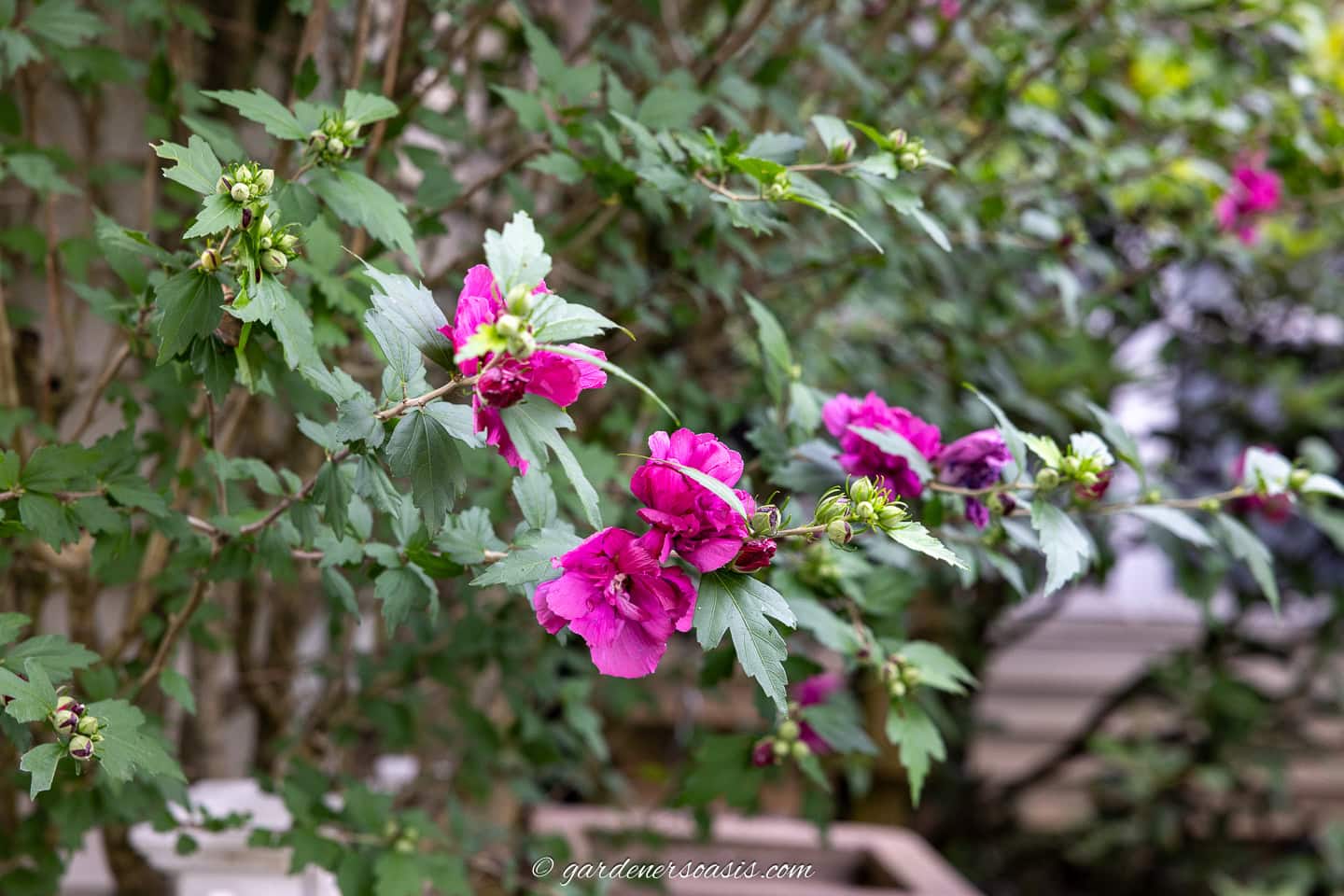
![Branch with clusters of vibrant purple-pink flowers and green leaves, set against a blurred outdoor background.]()
Rose of Sharon doesn’t require pruning unless you want to make it smaller or re-shape it.
If one gets too big for its spot, you can cut it way back (even to the ground) and it will grow right back the following year.
It also blooms on new wood, so you don’t have to worry about ruining next year’s flowers when you prune.
7 | Common Problems
Rose of Sharon really doesn’t have many problems, but there are a few things to watch out for.
Self-seeding
Some varieties (especially older ones) will drop seeds and pop up everywhere.
I stick with sterile cultivars or deadhead the spent blooms to keep them from spreading.
Pests
Occasionally you might see Japanese beetles or aphids. A quick spray with insecticidal soap (or a bucket of soapy water for beetles) usually takes care of it.
Leaf drop or yellowing
Leaf drop or yellowing leaves are usually caused by drought stress or overly wet soil.
Young plants especially need regular water in hot weather.
8 | My Favorite Varieties
![Light pink double hibiscus flowers with green and white variegated leaves on a bush.]()
Sugar Tip® – Double blooms in soft pink with a deep red center, set against striking variegated foliage. The leaves add interest even when it’s not in bloom.
![blue satin rose of sharon flowers]()
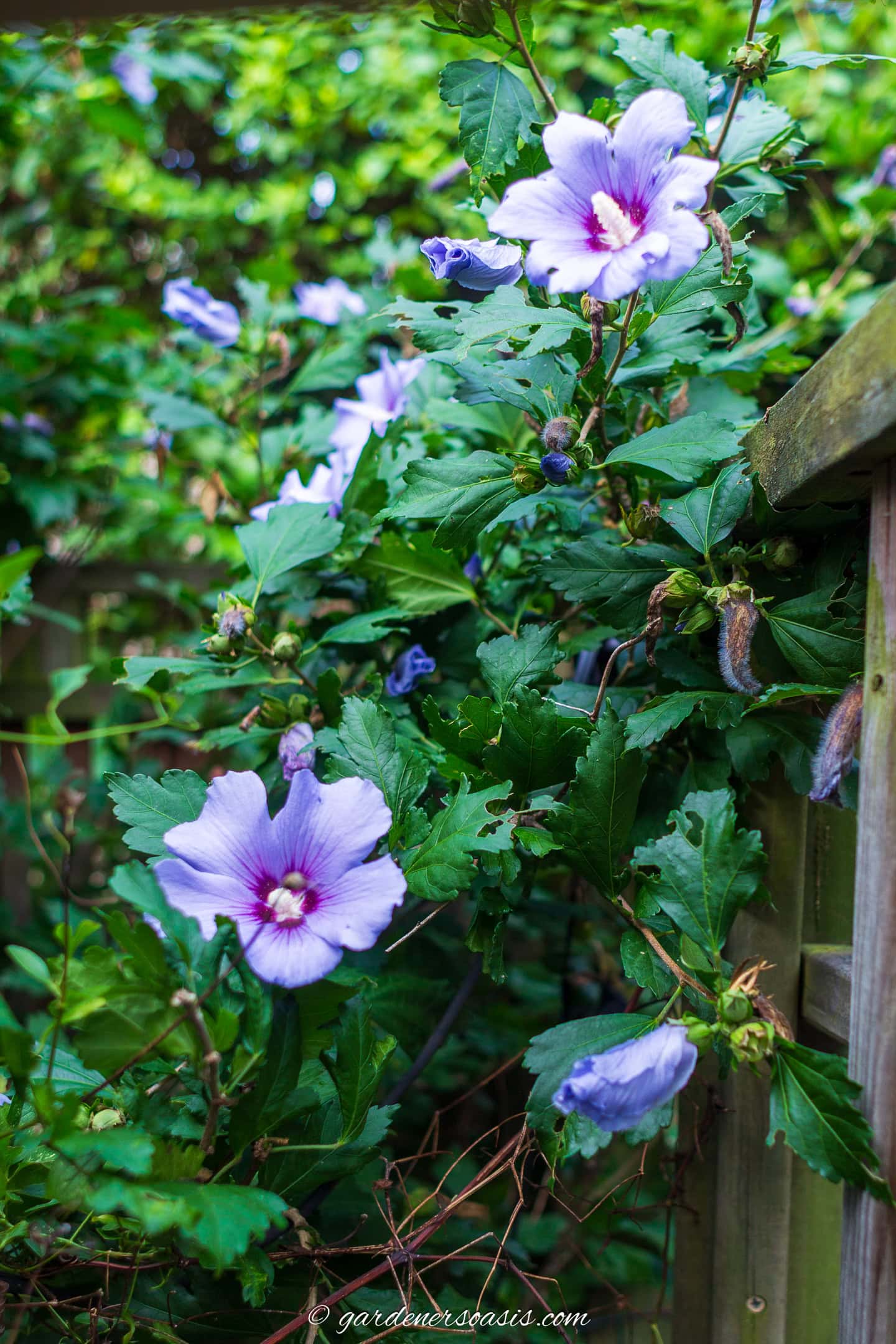
Blue Satin® – Single blooms in vivid blue-purple with a small red eye. Fewer seeds than older varieties, and the color really pops in the summer sun.
![Rose of sharon 'magenta chiffon']()
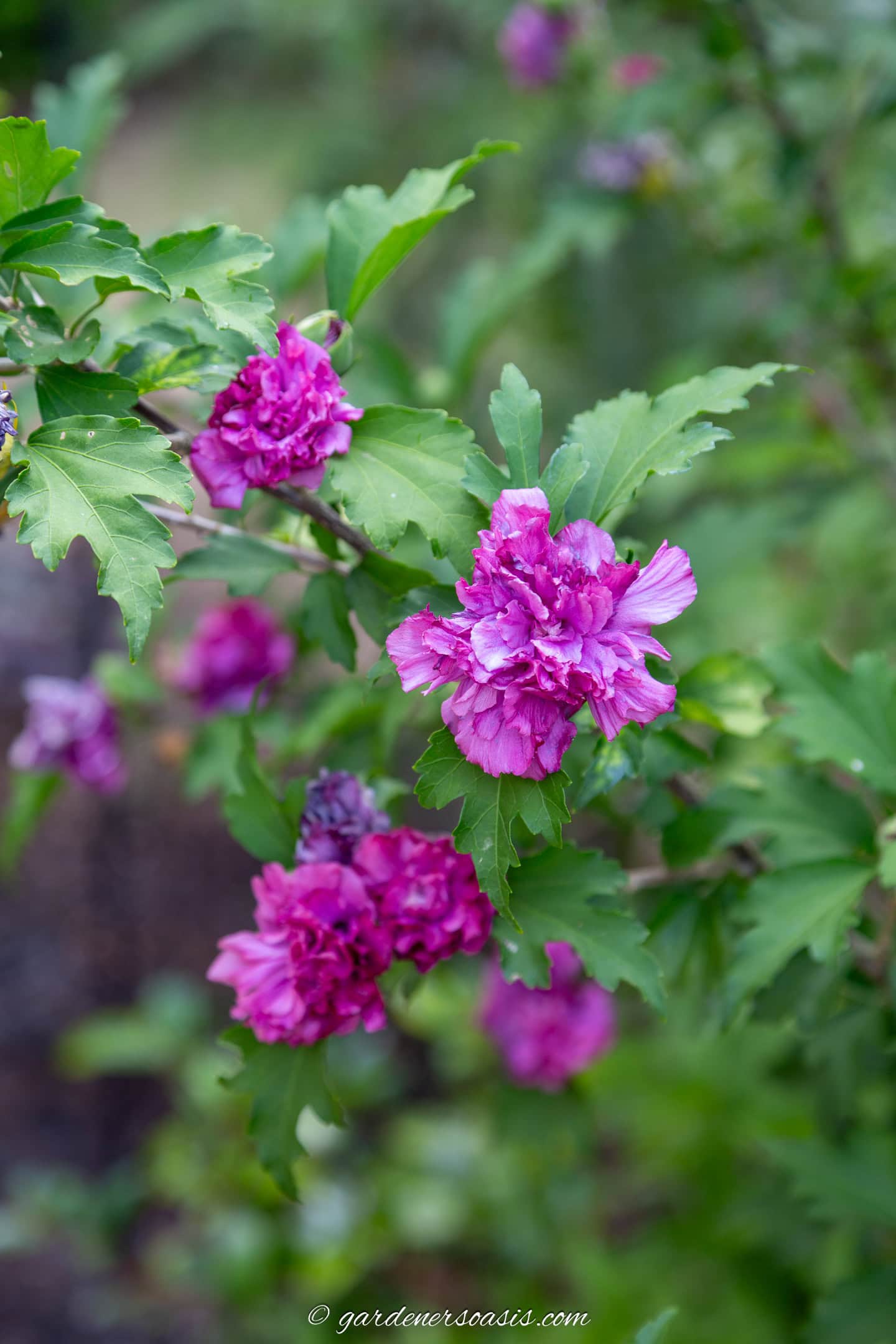
Magenta Chiffon® – Semi-double blooms in a rich magenta color. The frilly, layered petals give them a lush, full look, and they keep blooming into fall.

Have comments or questions about how to care for rose of sharon? Tell us in the section below.