
How To Grow Bare Root Plants (So They Thrive)
Planting bare root perennials so they flourish and thrive can be a bit tricky. But with the right tips, you can enjoy a garden full of vibrant blooms. Learn how to grow bare root plants with my tried-and-true formula for success.

If you’ve ever wandered through a garden center and felt a bit overwhelmed by the price tags on potted plants, you’re not alone.
That’s where bare root plants come in.
They’re usually less expensive and offer a wider variety of choices, making them a gardener’s secret weapon.
But, let’s be honest, they can be a bit tricky to grow successfully.
I’ve had my fair share of bare root plant failures, but after some trial and error, I’ve figured out a formula for success.
So, if you’re curious about how to grow bare root plants and want to see them flourish, you’re in the right place.
Whether you’re a seasoned gardener or just starting out, these tips will help you make the most of your bare root plant purchases.
1 | Buy good quality plants

This probably seems very obvious. But when you’re planting bare root plants, it’s super important to start with good quality plants.
The ones that have been sitting on a shelf at a big box store for months are much less likely to survive.
I always go for quality bare roots from a nursery.
They generally grow better than those pre-packaged varieties.
And they have often started sprouting before you even take them out of the package. Which lets you know for sure that they’re alive.
2 | Don’t keep them too long before planting
Timing is everything when it comes to planting bare root plants.
The shorter the time your plant is out of the soil, the better its chances of growing well.
If you’re ordering them online, nurseries will send them to you at about the time you should be planting them.
Ideally, you shouldn’t wait too many days after that to get them in the soil.
However, it isn’t always possible to do that. In which case, leave them in a cool, dark location that isn’t too damp until you are ready to put them in the ground. (I have left bare roots like this for up to a month and still had them grow).
3 | Soak the roots
Immediately before you plant your bare root plants, soak them in a bowl of water for an hour or two.
This little bath gives them a much-needed drink and helps the roots get ready to grow.
4 | Cut off any rotted pieces
Before planting, take a close look at the roots.
If you spot any mold, rotted sections, or soggy parts of a tuber, it’s time to do a little trimming. Just grab a sharp knife and cut them off.
If you don’t, the bad parts may spread to the rest of the roots. In which case, the whole plant won’t survive.
5 | Decide where to plant them
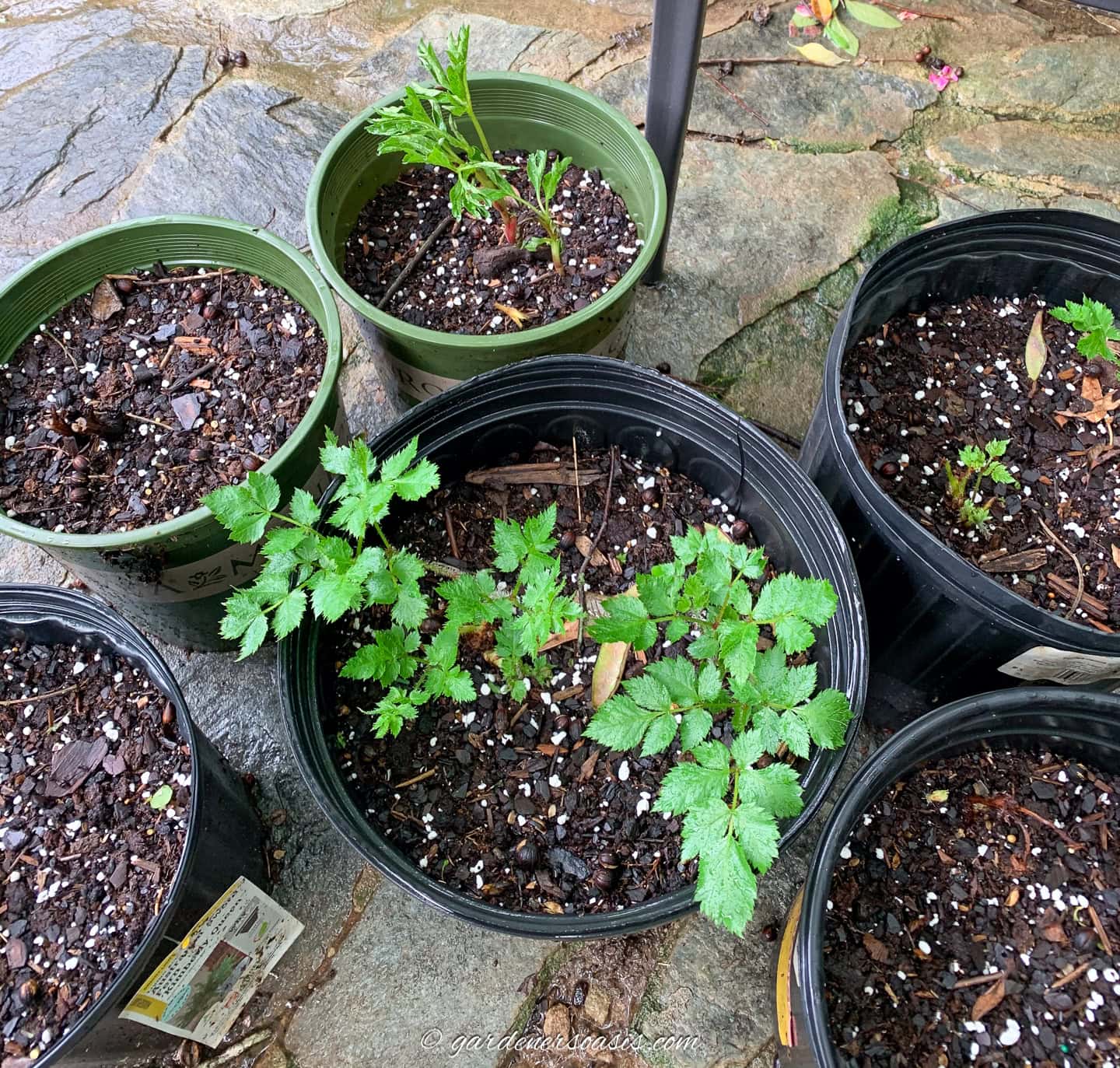
I find the easiest way to start bare root plants is in containers (like the ones you buy plants in).
This way, they’re easier to keep watered and you have fewer pests to deal with.
Once they’ve grown to a decent size, you can put them in the ground, just like you would with any other potted plant.
However, you can also plant them straight in the ground if you prefer.
In which case, you’ll need to find a location in your garden that has the correct lighting and soil conditions for the perennial you’re planting.
The one time that I like to put bare roots directly in the ground is when I’m planting them in a place where there isn’t much space. Or under trees where the tree roots make it hard to dig a big hole. Since bare root plants require a much smaller hole, it is much easier to fit them into these tight locations.
6 | Use good soil
Using the right soil is one of the most important things when planting bare root plants.
Make sure you’re using good quality, loamy garden soil, triple mix or potting mix. This gives your plants the nutrients they need to get going.
If you’re planting directly in the ground, you’ll want to mix these soil enhancements in with your regular garden soil.
7 | Dig a wide hole
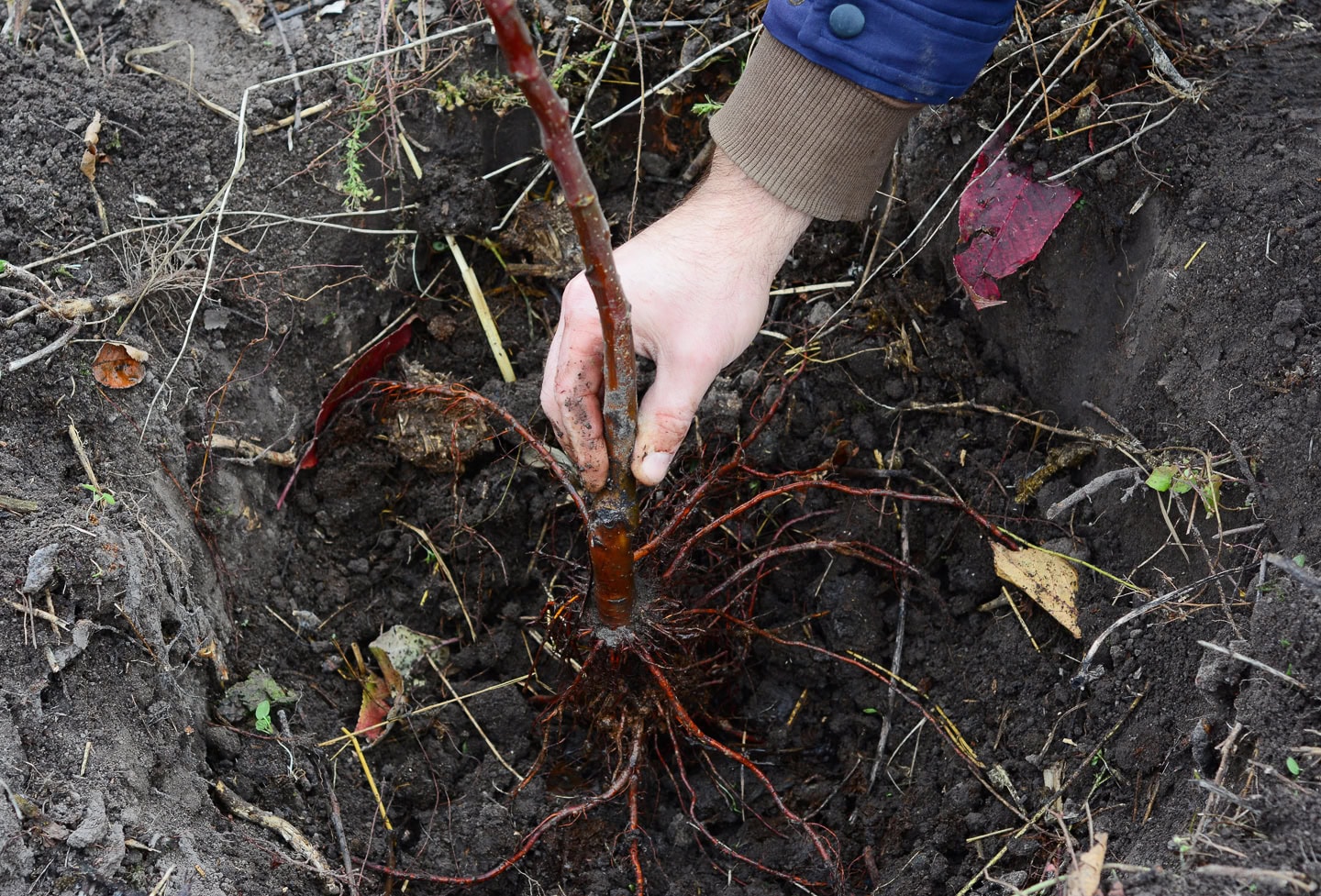
When you’re ready to plant your bare root plants, make sure to dig a wide hole.
You want it to be wide enough to spread the roots out comfortably.
This encourages root growth in all directions, which will lead to stronger, healthier plants.
8 | Plant at the correct depth
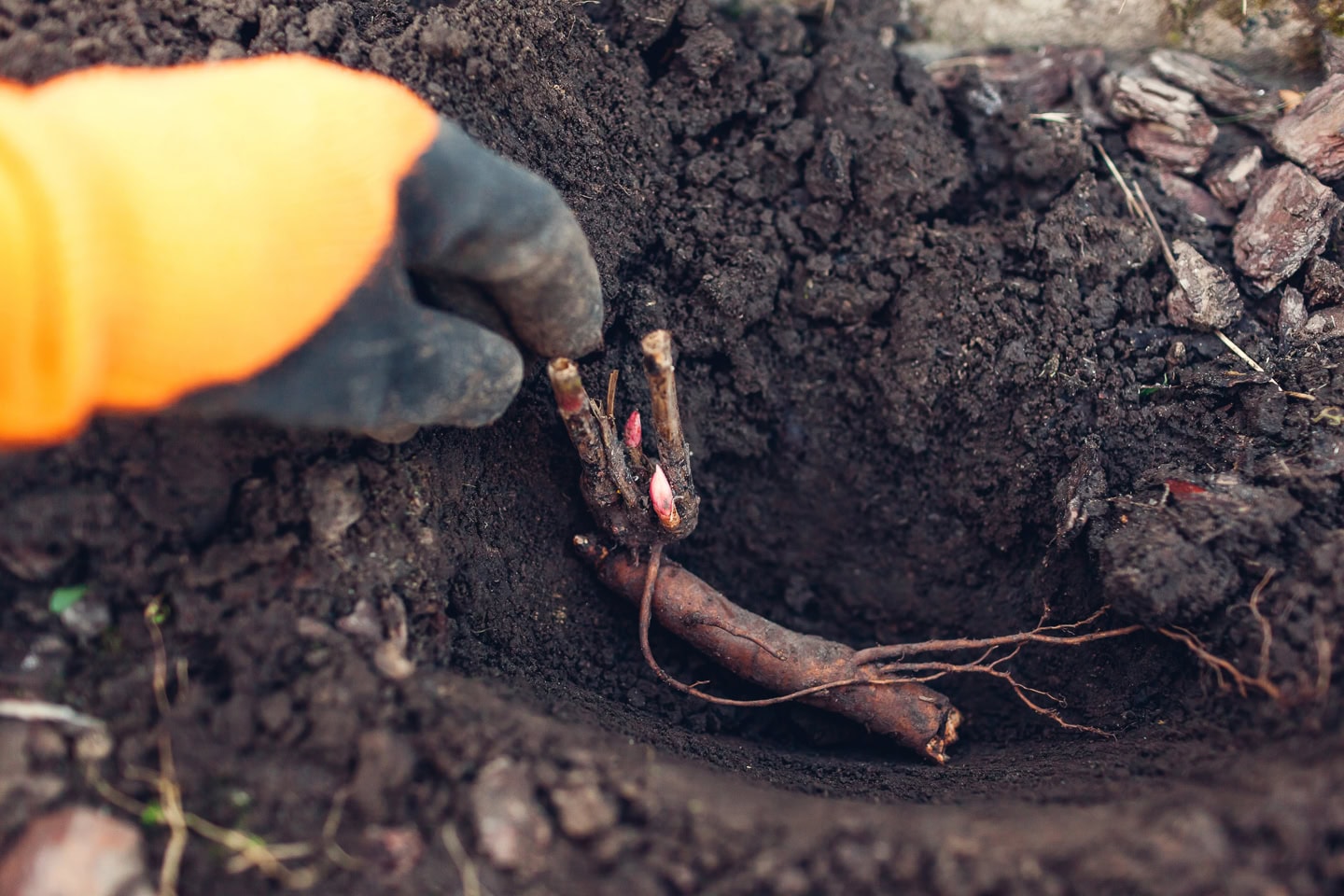
Getting the planting depth right is key when you’re working with bare root plants.
Most perennials should have the top of the root ball at, or an inch or two below the soil surface. It varies by plant species, so follow the directions for your specific plant.
Some plants, like peonies, can be quite picky about this.
If they’re planted too deep or too shallow, they might not grow or bloom as well.
9 | And right side up
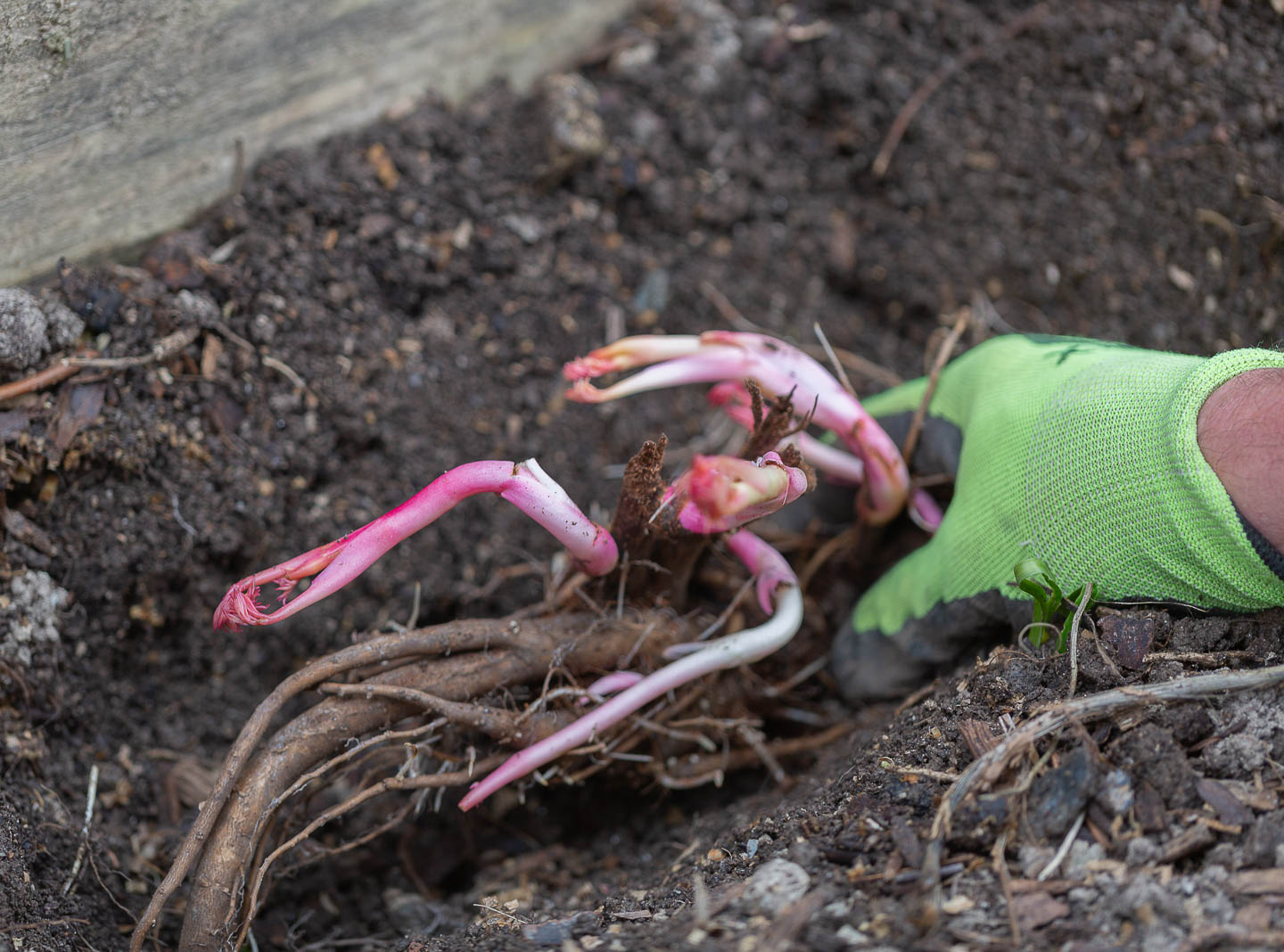
Making sure your bare root plants are right side up is important, but don’t stress too much about it.
In most cases, it’s pretty easy to see which way they go—the roots go down and any new growth goes up.
But sometimes, it can be a bit tricky to tell.
When that happens, I just use my best guess.
Plants are surprisingly good at figuring out which way is up.
Even if you accidentally plant them upside down, most will still grow. It might just take them a little longer to get going.
So, do your best, and don’t worry too much if you’re unsure. Your plants will likely sort it out themselves!
10 | Backfill and water
Once you’ve got your bare root plant in the ground, it’s time to backfill and water.
Start by filling the hole halfway with soil. Then, give it a good watering to help settle the soil around the roots.
After that, fill in the rest of the hole with soil and water again.
This ensures the roots are snug and have good contact with the soil.
11 | Mark their location
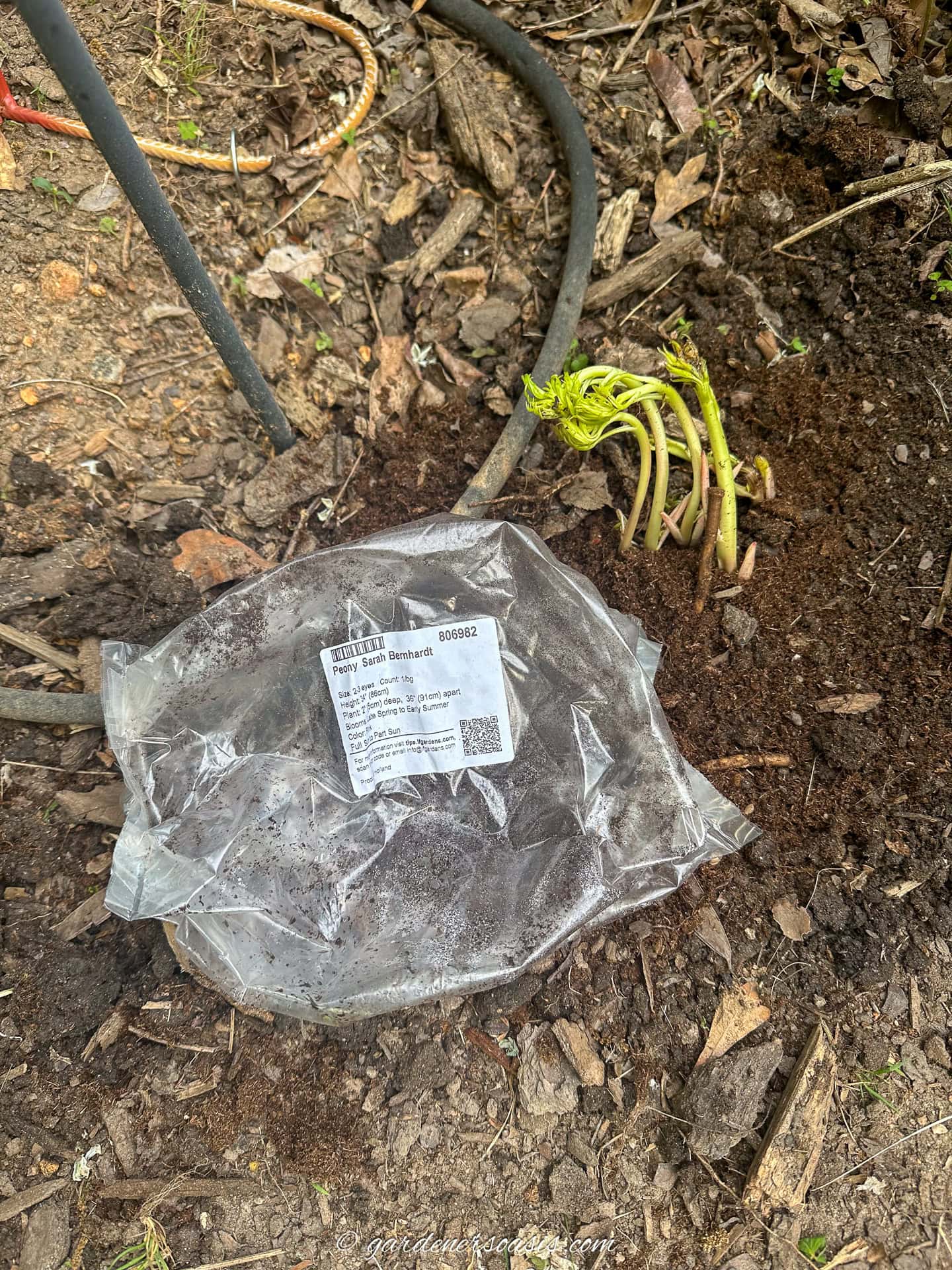
Don’t forget to mark the location of your bare root plants.
This is especially important if you’re planting a bunch of different ones at the same time.
If they’re in pots, I tape a label to the side of the pot.
For those in the ground, I like to take a picture with my phone of a label in the spot where they’re planted.
This way, I know exactly which variety is where.
Plus, it comes in handy a couple of years down the road when I can’t quite remember what it was called.
12 | Water well and often
Keeping your bare root plants well-watered is crucial for their growth.
I treat them just like my other container plants, giving them a good drink every day or two, even if they are planted in the ground. (Of course, the watering frequency will depend on how much rain you’ve had.)
Keep up this routine until you see them growing well (usually a month or two).
Then they can go onto your regular garden watering schedule.
13 | Watch for squirrels
Finally, keep an eye out for squirrels if you live in an area where they’re common.
These little critters love to dig up bare root plants, probably thinking they’ll find some food.
But they don’t usually eat them.
So if you get the bare roots back in the ground before they dry out, they can still grow.
I check my bare roots a couple of times per day for a few days after planting to make sure I fix them in time.
It’s a bit of a hassle, but it’s worth it to protect your plants.

Frequently asked questions
What are bare root plants?
Bare root plants are sold without soil around their roots. They’re typically dormant, which makes them easier to transport and often less expensive than potted plants. They come in a wide variety of types, from trees and shrubs to perennials.
When is the best time to plant bare root plants?
The best time to plant bare root plants is during their dormant season, usually in early spring or late fall. This timing allows them to establish roots before the growing season begins or before winter sets in.
How do I store bare root plants before planting?
If you can’t plant them right away, store bare root plants in a cool, dark place with their roots wrapped in damp newspaper or burlap. Keep them moist but not soaking wet, and try to plant them as soon as possible to ensure they stay healthy.
What should I do if my bare root plant doesn’t seem to be growing?
If your bare root plant isn’t showing signs of growth, be patient. Some plants take longer to break dormancy. Ensure it’s getting enough water and is planted in the right conditions. If you’re still concerned, gently check the roots to see if they’re healthy and not dried out or rotted.
Have comments or questions about how to grow bare root plants? Tell us in the section below.
Excellent advice on how to plant bare root Hostas.