What Gardening Zone Am I In? (6 Things You Need To Know)
Are you wondering “What gardening zone am I in?” Then you’re in the right place! Your zone number is easy to look up on the map, but that doesn’t always tell the whole story. We’ll show you the secrets of using gardening zones effectively and why the number assigned to your region isn’t the only factor to consider.

When you’re picking out plants for your garden, the first thing you probably check is whether they’ll survive in your gardening zone.
And for good reason. It’s one of the easiest ways to tell if a plant should make it through the winter.
But what most people don’t realize is that the garden zone assigned to your region doesn’t tell the whole story.
In fact, it leaves out quite a few important details that can make the difference between a thriving garden and a disappointing one.
Over the years, I’ve had my fair share of surprises.
Plants that were “definitely hardy” didn’t make it.
Others that weren’t supposed to survive somehow did.
So today I’m sharing a few things I’ve learned (sometimes the hard way) about planting zones.
And why answering the question “What gardening zone am I in?” isn’t always as straight-forward as looking it up on the USDA Hardiness Zone Map.
What is a gardening zone?

But first, if you’re new to gardening and aren’t sure what a garden zone actually is, here’s a quick overview: (If you already know this, you can skip to the next section).
Gardening zones, also called hardiness zones or planting zones, are regions created by the USDA based on their average lowest winter temperatures for the last 30 years.
Each region is given a number between 1 and 13, with lower numbers meaning colder winters and higher numbers meaning warmer winters.
Then each number is subdivided into “a” and “b” with the “a” part of the region being slightly colder than the “b” part. (Plant labels do not always include the letters in which case the plant should be able to grow in both sub zones).
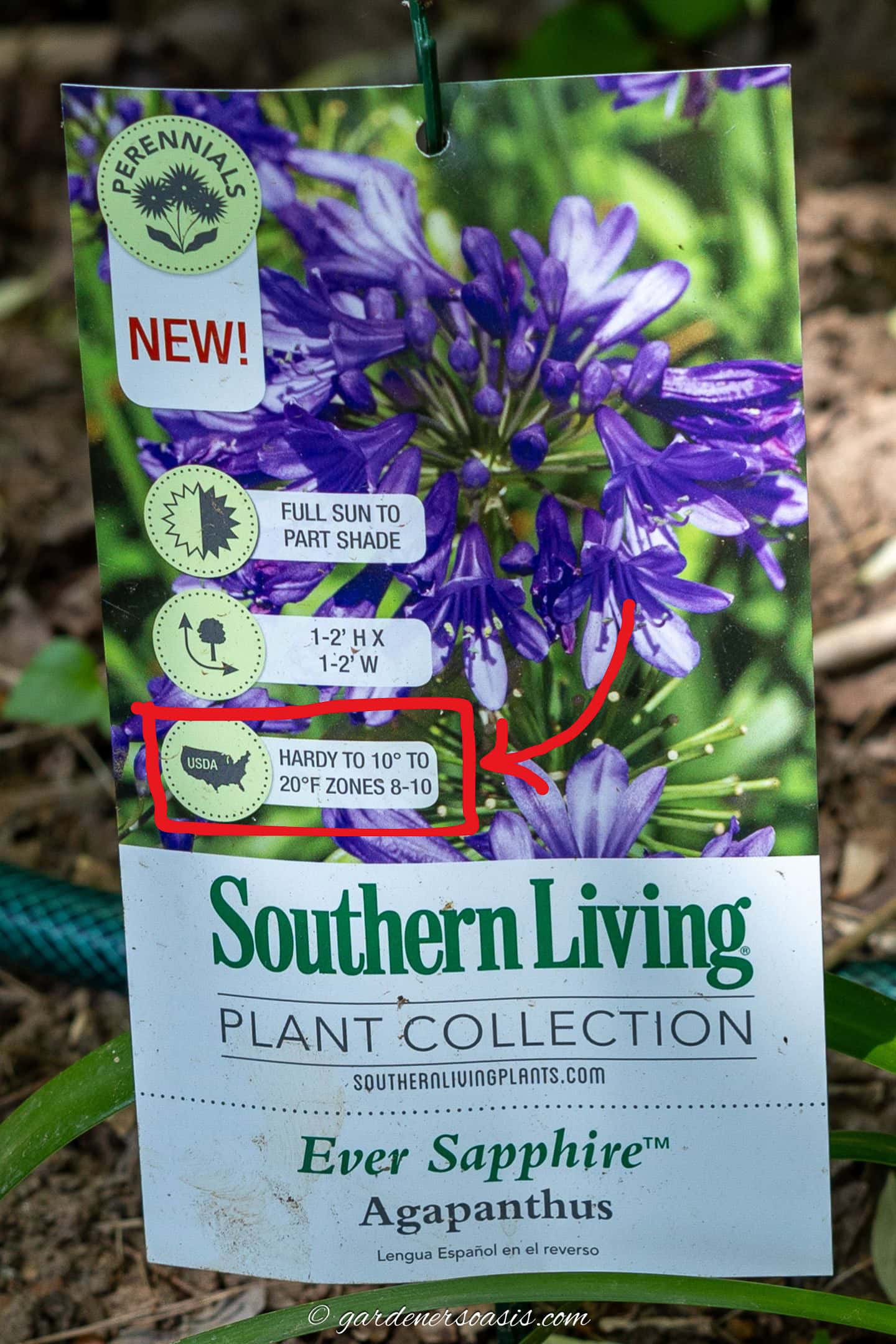
So when you see a plant labeled “Zones 8-10”, that means it will survive the winter in areas where the lowest annual temperatures fall somewhere between 10°F and 40°F.
If you happen to garden in an area that is designated as zone 8a (like I do), you should be able to grow this plant because your zone falls within that range.
If you garden in an area that is designated as zone 5 (like my mother does), this plant won’t survive the winter and isn’t a good choice for your garden.
These zones apply to all plants that are expected to live over the winter, such as perennials, bulbs, shrubs, and trees.
Since annuals are intended to be re-planted every spring, cold hardiness zones aren’t necessary for them. (Although you may still see zone labels on plants that are treated as annuals in colder zones and perennials in warmer ones.)
You can find out what zone has been assigned to your location in the next section.
And then keep reading to learn why it may not be exactly accurate.
1 | The USDA Zone Map was updated in 2023
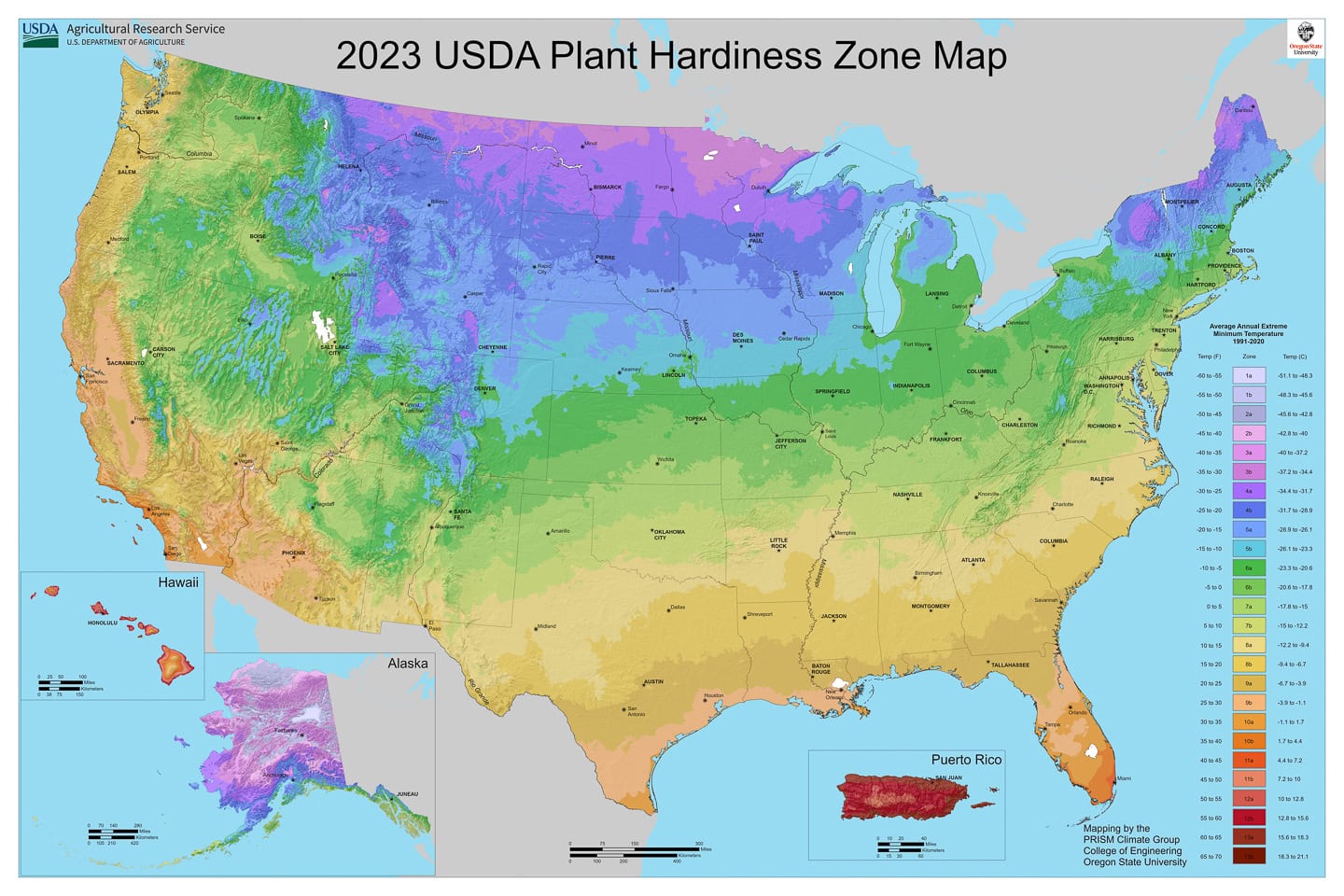
The USDA updated the hardiness zone map in 2023 using more recent weather data.
Many areas of the country moved up by a half or even a full zone.
That means some plants you used to consider risky might now be officially hardy in your area.
And some that used to grow just fine may no longer thrive (if your winter weather is now warmer than the plant likes).
To find your current hardiness zone:
1. Locate where you live on the USDA zone map above.
2. Match the color to the zone number grid on the right hand side of the map. (Or in the Zone grid in the section above which is a little easier to read).Or you can look up your specific zone by searching for your zip code on the USDA website.
If you life in Canada, there is a separate cold hardiness map that was updated in 2020 which you can find here. (Keep in mind that the Canadian zones are 1 higher than the American ones. So a zone 7 in Canada is a zone 6 in the United States).
Then continue reading the rest of our tips to find out if that is the zone number you should actually be using.
2 | The hardiness zone map only looks at average low temperatures
The USDA zone map is based on the average lowest temperature your area gets in the winter.
Not the coldest it’s ever been, and not the average temperature for the season overall.
So I find it very helpful to look at the actual lowest temperatures for my area in the last few years.
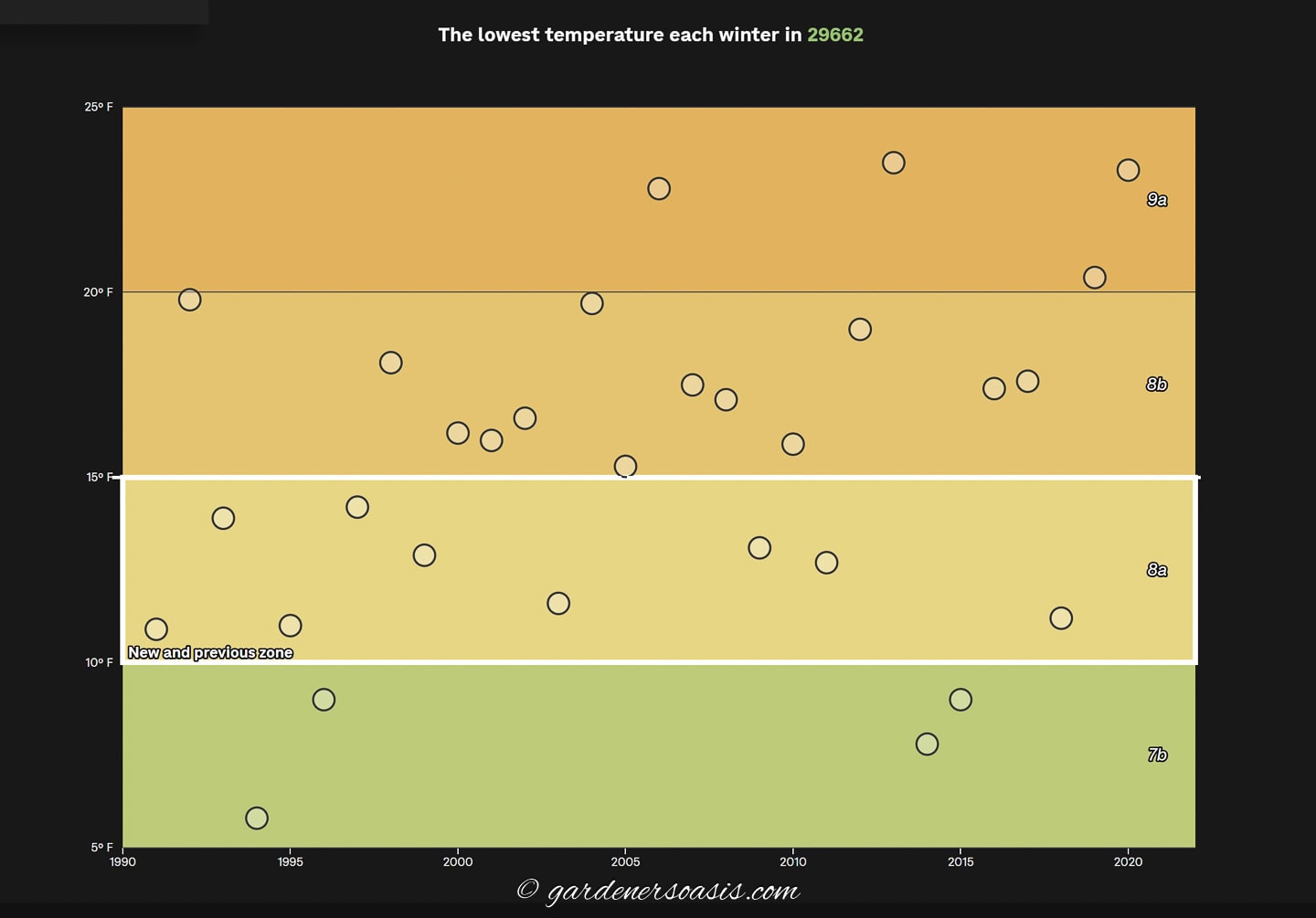
As an example, where I live in Upstate South Carolina, the winter lows are mostly at or higher than our zone 8a rating.
Which means I don’t lose many plants to winter cold.
But I have a really hard time growing bulbs like tulips that are rated up to zone 8 and need a cold spell to bloom.
According to our assigned zone, they should grow.
However, as you can see on the graph, our lowest winter temperatures are often in (or close to) the zone 9 range. Not cold enough for tulips.
So even though I live in zone 8, I only plant bulbs that will grow up to zone 9.
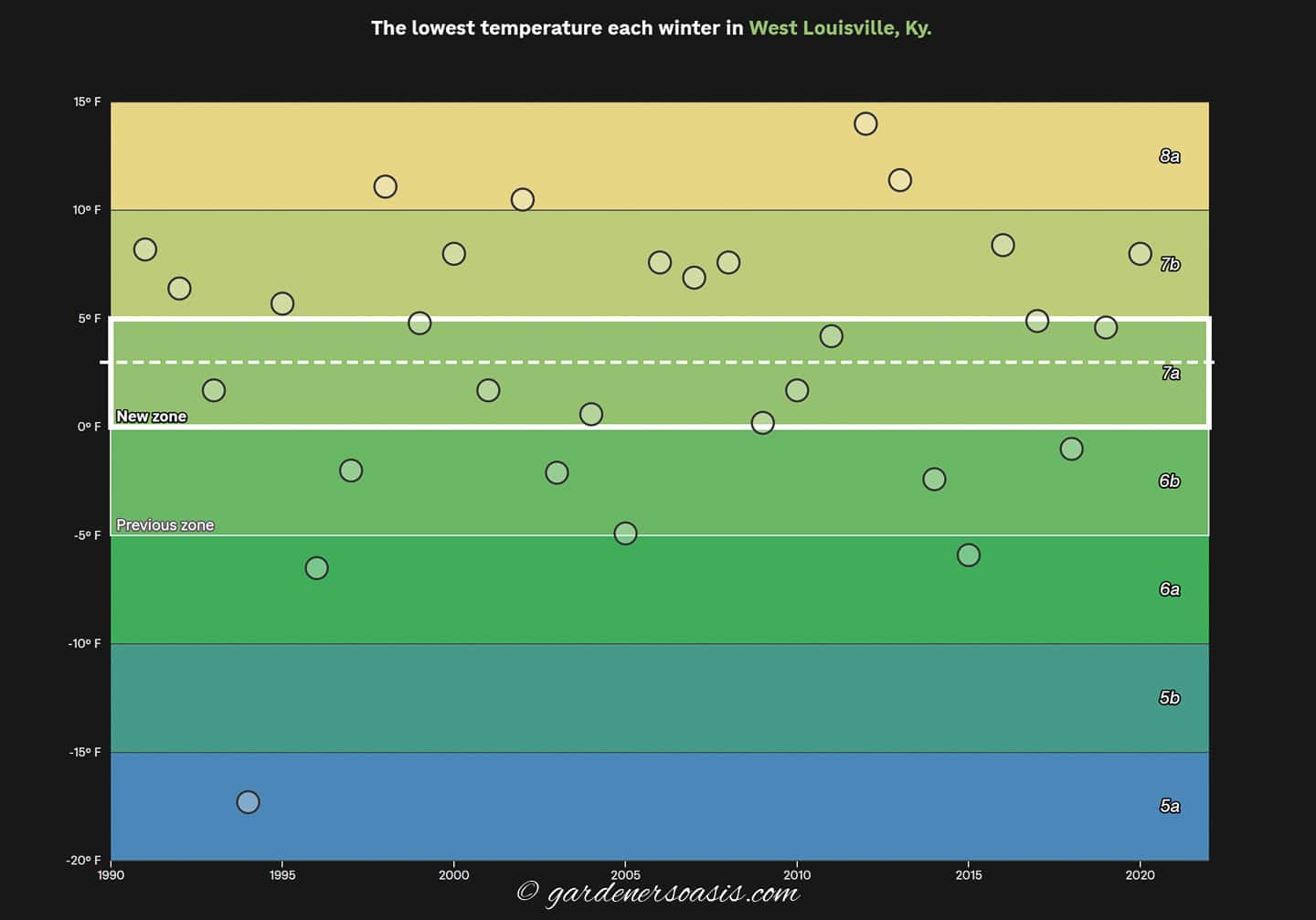
On the other hand, in West Louisville, Kentucky, the zone is listed as 7a.
But they still have many winters where the low temperatures are in the zone 6 range.
If I lived here, I would probably stick to growing zone 6 plants since there are a lot of winters that are too cold for zone 7 plants. So they may not survive.
To see the graph of your low temperatures, use this NPR app. Put in your zip code then scroll down until you see the screen with the colored zone/lowest temperature chart that looks similar to the ones above.
3 | How long it stays cold makes a difference
Something else your zone doesn’t account for? The duration of those low temperatures.
Where I live in upstate South Carolina, our lowest cold temperatures usually only last for a day or two.
Because it warms up quickly, the cold doesn’t have time to sink deep into the soil or kill off borderline plants.
And it’s pretty easy to protect any plants I’m concerned about for that short period of time.
But in areas where freezing temps stick around for longer, it’s a different story.
That extended cold has more time to damage roots and foliage.
So even if two places are technically in the same zone, the one with longer freezes might need tougher plants or extra protection.
And the one with fewer cold days might not be able to grow plants that require a longer cold spell to bloom. (Another reason zone 8 tulips won’t grow in my garden).
4 | It doesn’t tell you anything about summer heat
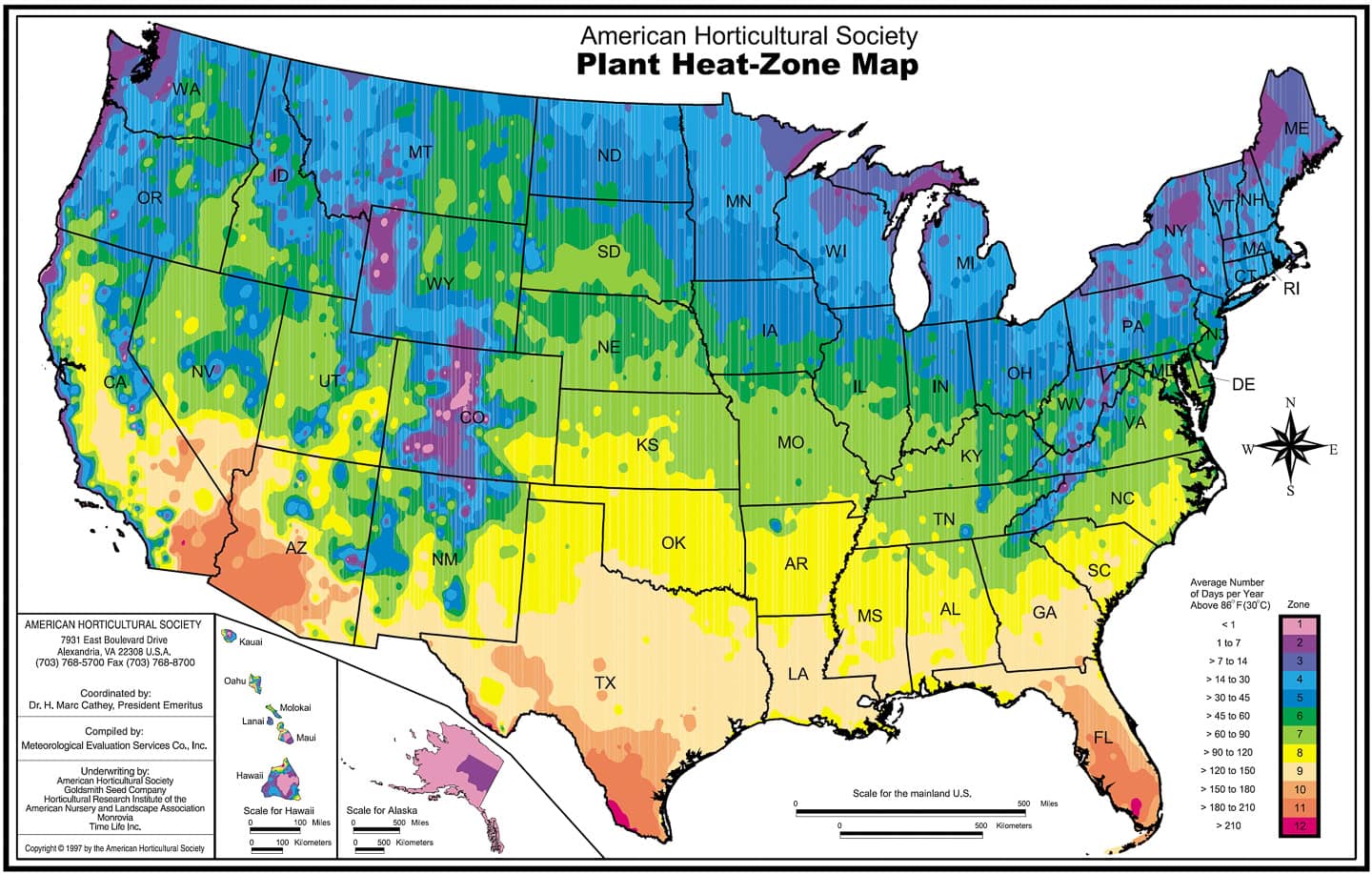
via American Horticultural Society Just because a plant can survive your winters doesn’t mean it will love your summers.
Some plants are sensitive to high heat, even if they’re cold-hardy in your zone.
If your summers are hot and humid (or just plain scorching), it’s worth doing a little extra research to find plants that can handle both ends of the temperature spectrum.
Back in 1997, the American Horticultural Society created a Heat Zone Map, which ranks areas by the number of days over 86°F.
This is helpful if you can find a plant tag that includes the Heat Zone on it (it will be a separate zone rating than the cold hardiness zones).
But unfortunately, the heat map hasn’t been updated or widely adopted, and most plant tags don’t include this information.
So you may have to ask local gardeners, nurseries or outreach programs what summer limitations your area has.
You can read more about the AHS Heat Zone Map here.
5 | Microclimates can change everything
Even if a plant is rated for your zone, conditions in your actual yard can play a huge role in whether it survives.
Some things that matter just as much (or more) than your zone:
- Microclimates: A south-facing wall or a corner sheltered from wind can stay much warmer than other parts of the yard.
- Urban vs. rural: Cities hold heat better than open country, so if you live in an urban area, your garden might behave more like a warmer zone than your map says.
- Snow cover: Believe it or not, a deep layer of snow is actually good for your garden. It works like a blanket, insulating your plants and protecting roots from freeze-thaw cycles. So cold climates with lots of snow often see fewer plant losses than cold areas with bare, exposed soil.
- Soil drainage: Wet, heavy soil that freezes solid is a recipe for root rot, even in hardy plants.
- Wind exposure: Cold wind can be just as damaging as cold air, especially for evergreens.
And to complicate things further, not all plants react to cold the same way.
Some (like peonies) actually need a cold winter to bloom well.
Others (like rosemary) might tolerate cold, but die from too much winter moisture.
So the more you learn about each plant’s specific needs, the better your chances of success.
6 | You can push the limits
I’ll admit it. I love testing the limits of my zone.
And if you’re willing to give your plants a little extra TLC, you can sometimes grow things that are rated for a higher zone than your area.
A few tricks I’ve used to “cheat” my zone:
- Plant near south-facing walls that absorb and reflect heat.
- Add a thick layer of mulch in late fall to insulate roots.
- Cover tender plants with frost cloths or burlap covers when temperatures drop.
- Grow in raised beds or large planters lined with styrofoam insulation and great drainage to avoid soggy winter roots.
- Tuck plants near cement patios, stone paths, or paved driveways. Those surfaces soak up warmth during the day and release it at night, giving nearby plants a helpful temperature boost.
Of course, these don’t guarantee success. And you’re not likely to have a zone 9 plant thrive in zone 6.
But they can give borderline plants a better chance at survival, especially if your low temperatures are at the warm end of your zone’s range.
Have comments or questions about our gardening zone tips? Tell us in the section below.